

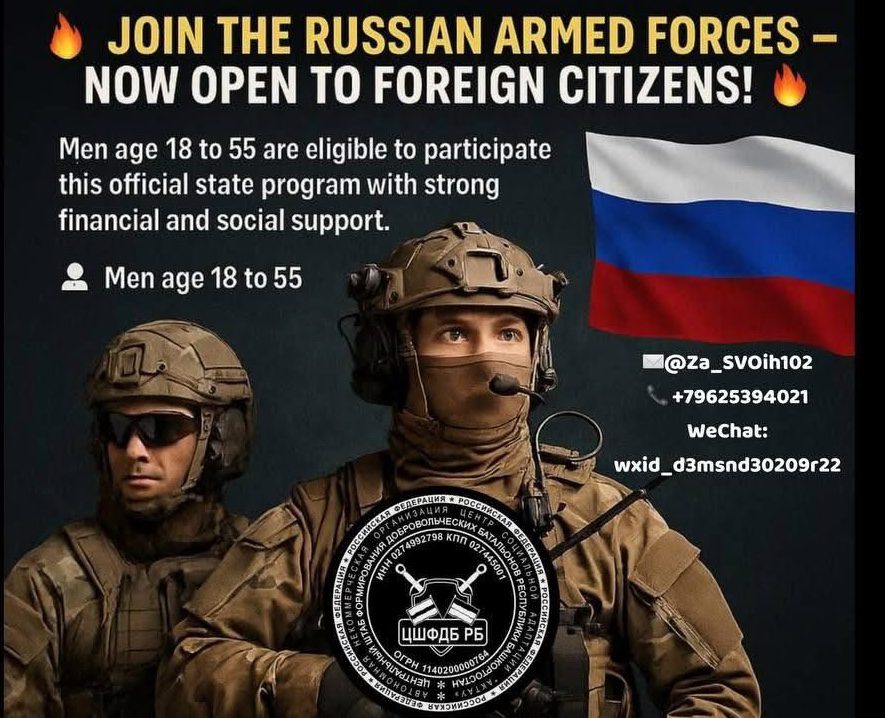
The Ministry of Foreign Affairs and International Trade has warned Zimbabweans to exercise caution when accepting foreign job offers amid growing reports of citizens who are lured abroad under false promises of lucrative employment, noting that “most” of the recruitment agencies operate in digital spaces outside the country’s regulatory reach, making their activities difficult for authorities to monitor.
The warning comes after investigations by CITE revealed cases in which Zimbabweans were recruited to travel to Russia under the pretext of civilian employment opportunities, only to reportedly undergo short-term military training and be deployed to the frontlines in the ongoing war between Russia–Ukraine War.
CITE’s investigation found that some Zimbabweans were recruited locally while others were approached in neighbouring South Africa, with recruiters allegedly offering attractive salaries and benefits.
However, testimonies from families and individuals already in Russia suggest the reality on arrival has been markedly different.
In response to questions from CITE, Ministry spokesperson Philisiwe Chidawanyika issued a general warning about fraudulent recruitment agencies operating online and outside Zimbabwe’s regulatory jurisdiction.
“The Ministry of Foreign Affairs and International Trade wishes to address recurring questions and concerns surrounding the increased cases of Zimbabwean nationals being lured to work under extremely unfavourable conditions in foreign countries on the promise of lucrative employment contracts,” Chidawanyika said.
She warned many of the agencies involved operate largely in digital spaces, making it difficult for authorities to monitor their activities.
“The Ministry warns Zimbabweans of the prevalence of fraudulent recruitment agencies, most of which operate in digital spaces and outside the regulatory jurisdiction of the country. These bogus agencies usually dangle attractive remuneration packages but are silent on the unfavourable working conditions and the personal sacrifices to be made by the recruits,” she said.
According to the foreign affairs ministry, in some cases the jobs offered during recruitment are not the roles recruits ultimately find themselves performing.
“In some cases, the jobs offered at recruitment are not what the recruits find themselves deployed into,” Chidawanyika said.
She urged Zimbabweans who receive offers to work or study abroad to first verify them through government channels before committing.
“The Ministry reiterates its call for Zimbabwean nationals who may get an offer to work or study in a foreign country to contact the Ministry or the nearest Zimbabwean Embassy or Consulate for assistance in verifying such offers, to avoid falling victim to scams, which in some cases may lead to injury or loss of life,” she said.
The ministry said the government remained committed to protecting the welfare of Zimbabweans living abroad, including investigating cases where citizens have issued distress calls after allegedly being scammed.
“While the Government of Zimbabwe is fully committed to promoting, protecting and safeguarding the safety and welfare of its citizens living abroad and continues to investigate cases where Zimbabwean nationals have issued distress calls after being scammed, citizens are strongly encouraged to heed the call for due diligence before committing themselves, to avoid situations that may lead to crises,” Chidawanyika said.
However, the ministry’s response did not directly confirm whether the government is aware of Zimbabweans recruited specifically to fight in Russia’s war with Ukraine.
CITE’s investigation documented multiple accounts from Zimbabwean families whose relatives are currently in Russia after travelling there for what they believed were civilian jobs.
Some relatives said they later learned their family members had undergone brief military training lasting between seven and 14 days before they were deployed to combat zones.
Others who managed to communicate from Russia described harsh conditions and said the situation was not what they had expected when they accepted the offers.
While some recruits reportedly travelled believing they would work in construction or other civilian roles, others are said to have knowingly signed up to fight in exchange for financial incentives.
The investigation suggests the recruitment networks operate across borders, targeting Zimbabweans both inside the country and within the diaspora in neighbouring states.
CITE sought clarification from the Ministry on several issues, including whether authorities were aware of Zimbabweans recruited into military service in Russia, what measures were being taken to verify the circumstances under which citizens were travelling there and whether any bilateral agreements existed between Zimbabwe and Russia permitting such recruitment.
Questions were also raised about whether the government planned to issue public advisories warning citizens about the risks of human trafficking, labour exploitation, or involvement in foreign conflicts, and what support mechanisms were in place for Zimbabweans already in Russia who might wish to return home.
The ministry’s response did not provide specific details on these questions, focusing instead on the broader warning about fraudulent recruitment schemes.
Human trafficking experts have previously warned that deceptive overseas job offers can sometimes be linked to exploitative labour practices or forced participation in armed conflicts.
For ‘many’ Zimbabweans facing economic hardship, promises of well-paid work abroad can be difficult to resist, particularly when recruiters advertise high salaries and quick travel arrangements.
However, experiences shared by families and recruits interviewed during the CITE investigation suggest that for some, the opportunities have come at a far greater cost than expected.
Read the full investigation titled “Zimbabweans lured to Russia’s war: Inside the deceptive recruitment network drawing civilians to the frontlines,” here which details the recruitment methods used and the testimonies of those affected.
Support CITE’s fearless, independent journalism. Your donation helps us amplify community voices, fight misinformation, and hold power to account. Help keep the truth alive. Donate today
Need job