

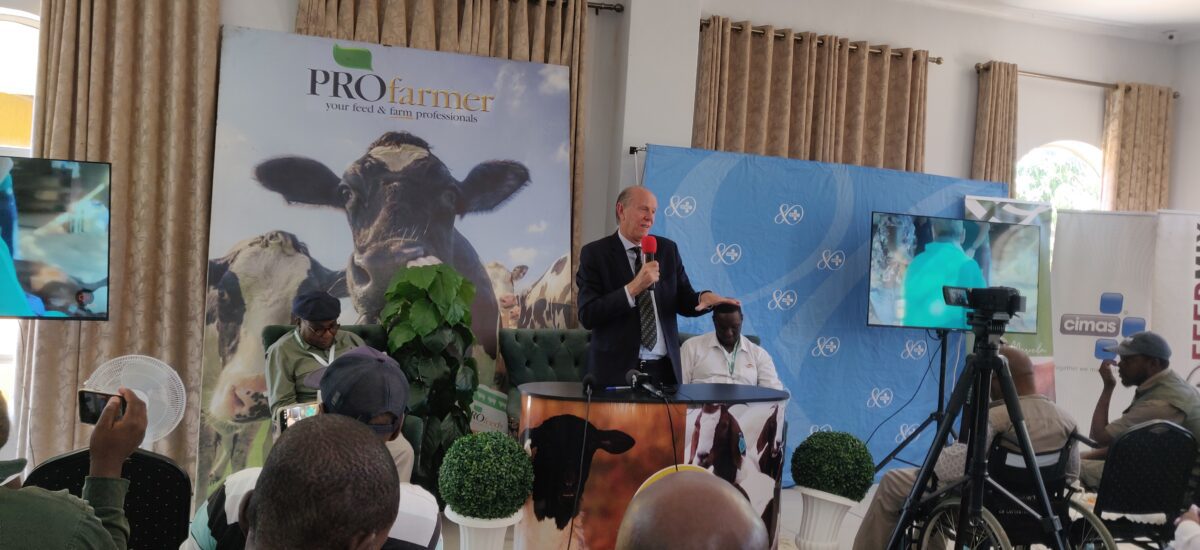
Bulawayo Mayor David Coltart has called on goat breeders to adopt environmentally sustainable practices, warning that unsustainable goat farming is contributing to land degradation and the desertification of the city’s water catchment areas.
The remarks came during the Goat Indaba held in Bulawayo and organised by the Goat Breeders Association Zimbabwe, under the theme “Preserving Our Indigenous Goats: Understanding the Matabele and Mashona Breed Standards.”
The event brought together goat breeders to discuss ways to commercialise goat farming, equip farmers with business skills, and prepare them for export markets with support from ZimTrade.
In his address, Mayor Coltart highlighted the environmental impact of overgrazing, noting that while goats are natural browsers, mismanaged herding practices lead them to dig up roots and damage vegetation.
“Goats are browsers, not grazers. However, when they are subjected to overgrazing, they dig up roots, contributing to land degradation,” Coltart said. “Your Association has a major role to play in ensuring that environmentally sustainable practices are adopted in goat breeding.”
The Mayor also drew a parallel between short-term economic pursuits and unsustainable farming practices, cautioning that treating goat breeding like gold panning, driven solely by immediate profit, threatens long-term viability.
“If goat breeding becomes a short-term economic activity, it is not sustainable. We have seen the devastating consequences of this approach, primarily through gold panning,” he said.
Coltart said the city’s catchment areas are under threat, with dams currently operating at below 50 percent capacity despite a strong rainy season last year. He attributed part of the problem to overgrazing by goats, which has forced them to graze rather than browse in fragile areas.
“The devastation of river systems and catchment areas is primarily due to gold panning, but overgrazing exacerbated by goats is contributing to desertification,” Coltart explained.
Urging breeders to strike a balance between economic gain and environmental protection, the Mayor concluded with a plea for collective responsibility.
“As Mayor, my primary responsibility is to provide water to 800,000 residents. There needs to be a balance between production and environmental protection. I trust your organisation will endorse this and, through training and support programmes, ensure the balance is achieved,” he said.
Support CITE’s fearless, independent journalism. Your donation helps us amplify community voices, fight misinformation, and hold power to account. Help keep the truth alive. Donate today