

By Mary Wambui
Caught in the rising tide of inflation and battered by harsh economic hardship in Kenya, 39-year-old Gerald Gitau has been among millions of young people desperately hunting for job opportunities to support their families.
Gitau, a holder of a Diploma in Business Management, previously worked as a driver in Middle Eastern countries for over a decade, and returned home to Nairobi two years ago when his contract ended.
With dreams of building a new life, Gitau planned to invest his savings in a small business, but Kenya’s tough economy in Nairobi dashed those hopes, forcing him to depend on temporary jobs that barely kept his family afloat.
At the time, the Kenyan government, led by President William Ruto, was promoting foreign jobs through licensed labour and travel agencies. The Ministry of Labour and Social Protection played a key role in the initiative, which was presented as part of broader efforts to tackle unemployment. The programme has since been linked to a monumental scandal.
So when an opportunity emerged in October 2025, offering him an opportunity to return to his old driving job, this time in Russia, Gitau felt a wave of relief and without hesitation, approved the processing of his travel documents and secured his flight ticket.
His brother, Peter Kamau, recalls that one evening, while heading home from work, he received a call from Gitau asking him to drive him to the airport to catch a flight by 6am the following morning.
According to Kamau, his brother said he had found a new job that needed him to leave early, and promised to share more when they met the following day.
“My brother has worked abroad all his life, and so when he said he had received an offer, I was not surprised. I woke up at 2:30am to pick him up in time, and while on the way to the airport, I started questioning him about the offer. At first, he was reluctant to share details, but eventually he confessed he was traveling to Moscow for a driver’s job. I asked him why Russia, and he answered that ‘the money is good’ and since he had been out of work for two years, he needed to go,” Kamau recalls.
The mention of Russia alarmed Kamua; he remembered he had heard of the war happening in the region, and so, he immediately thought to ask his brother to turn down the offer.
“I shared my reservations with him, based on the limited information I had on whatever was happening there at the time, but Gitau insisted on going. At some point, we started arguing at the airport parking lot, and I noticed we were attracting the attention of some onlookers, including some police officers who were on duty, so I decided to let him go. I convince myself that he is an adult of sound mind, and having worked abroad before, he would find his way around,” he adds.
On the morning of October 8 last year, his brother boarded his flight and left the country. The following morning, after arriving in Doha, he contacted Kamau to let him know where he was.
“He said they were having a three-day layover, another red flag because, why would an employer who is covering the costs of your tickets be spending money on you and not rush to get you to start working? Has the employer not planned how you will travel directly to Moscow? I asked my brother, and he explained that the layover was probably part of the recruitment process,” Kamau recalls.
Though Kamau let his suspicions slide, he took a mental note of that bit of information.
On October 11, his brother again made contact with him and shared his picture showing that he had arrived in Moscow.
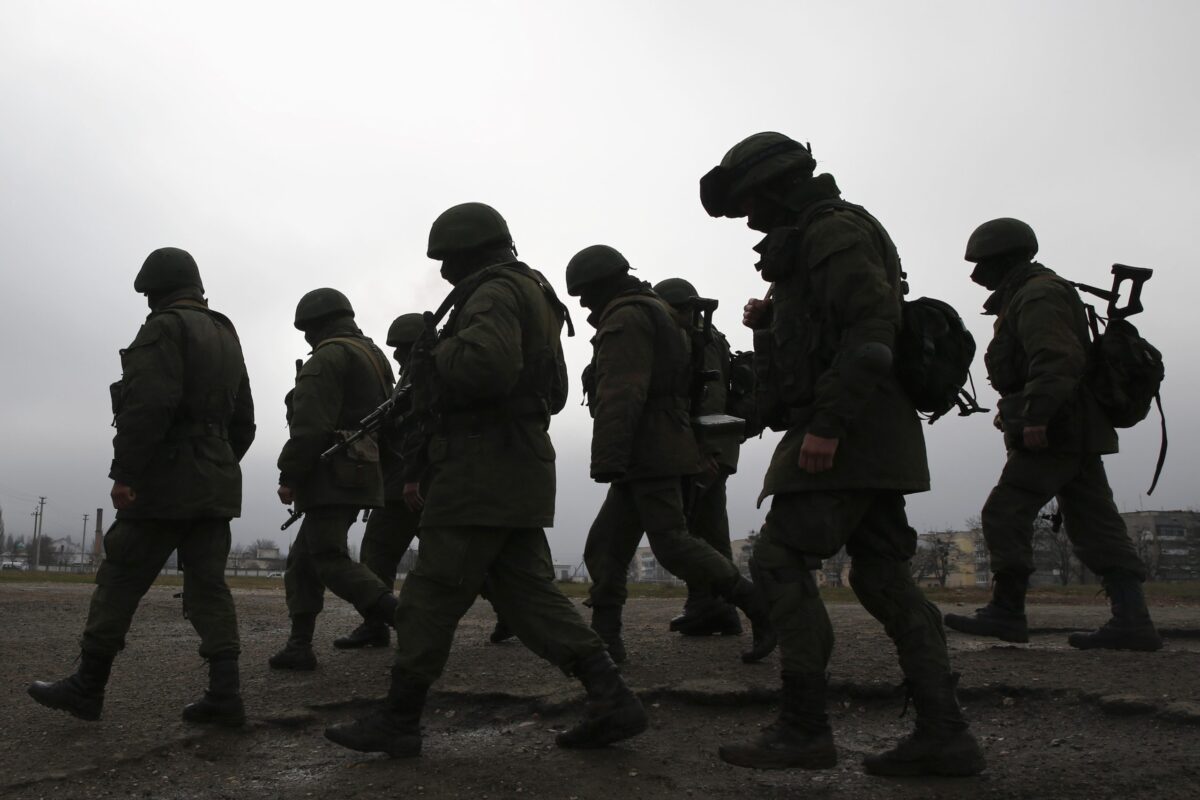
Unknown to Kamau, his brother was joining the growing number of Kenyans recruited for jobs in Russia, only to be killed or become trapped in the war-torn country.
In some cases, victims have returned home with injuries or psychological trauma after they are sent to the front lines of the vicious war between Russia and Ukraine, where Russia is fighting to annex part of Ukraine’s territory.
Meanwhile, the two brothers kept in touch casually until 11 days later, when Gitau told his brother that he had yet to begin work.
“Gitau said he was waiting for his documents to be processed. He also told me that he had been asked to transport food to the military on the frontlines, at some point even divulging that he would be without his phone while on duty. I was alarmed by the mention of the word military and raised my suspicions again,but the more I did, the more he began to decline the invitation to divulge more details,” Kamau adds.
Occasionally, the siblings would then catch up, until Gitau suddenly went silent.
“I spoke to him last on November 14, last year. Today, I cannot tell if he is alive, in the hospital or anything. Texts would at the time get to him, but he would not respond; nowadays, they don’t even get through,” Kamau says.
Over 1,000 Kenyans are estimated to have travelled to Russia to fight against Ukraine on the frontlines in what, in what the Kenyan government’s own admission, has turned out to be the worst employment frauds that has been linked to some government officials, politicians and dubious labour and travel agencies that are collecting millions of dollars from it.
Inspector General of Police Douglas Kanja said the government was investigating the fraud shrouded in secrecy, vowing to make sure anyone found to have played a role in the syndicate is arraigned in court.
“We are working hard to get to the bottom of this. Many inquiries are ongoing. I know the Directorate of Criminal Investigations (DCI) is very busy with the investigation, and in the end, we will know who was involved and what roles they played,” the police boss said.
A report published by INPACT that exposed the risks involved in getting conscripted to a foreign army, out of desperation for a better life, listed 10 Kenyans who had died on the frontlines in Russia.
“My brother’s name was not on the list, but we have identified three names and are trying to link up with their kin in the country, so that we can ease their anguish of not knowing. We are doing this as a group of Kenyans with relatives in Russia because we believe with that information, one is able to make a decision on what is next, even as we push to know the whereabouts of those missing and the repatriation of the bodies of those killed in action. Some families have, however, been notified of their kin’s fate by the Department of Diaspora Affairs,” he adds.
Today, Kamau, who has spoken to and assisted other returnees upon arrival back home, says he believes his brother must have been recruited by Global Face Human Resources Limited, which has been ferrying people to Russia via other countries to avoid detection.
Victims, according to sources, are transported either directly, depending on who is recruiting them.
The firm and other rogue agencies are said to be targeting ex-military, ex-police officers, as well as civilians aged between the mid-twenties and up to fifty years who are desperate for job opportunities abroad.
“Some firms engage you directly online and tell you exactly what the job entails, after which you are trafficked and made to sign some documents printed in Russian, meaning you cannot even tell what you are signing up for. Others subject the victims to detours, to monitor their behaviour before finally getting them to Moscow, where the reality of what they are getting themselves into dawns on them,” an official privy to the matter says.
Kamau believes that when his brother learnt what he was to do in Moscow, he opted not to share with him because of the reservations he had about his travel.
“Gitau couldn’t say because I had warned him,” says Kamau in hindsight.
Investigations by the National Intelligence Service (NIS) and the DCI show that recruitment agencies have been enticing Kenyans, promising them lucrative terms of service, including salaries of about approximately USD3,000 per month and hefty bonuses starting at USD9,000, as well as eventual issuance of Russian citizenship.
Kamau believes his brother also received the amount, but only about USD389 was sent to his wife.
“When they are signing the documents given during the recruitment process,we later learnt there’s a clause that allows third parties, in this case the Russian contact or the rogue Kenyan agent that assisted them, to access the account that they open in Russia, which the money gets deposited to,” said Mr Kamau.
Families of the victims have been organising protests in the streets of Nairobi to exert pressure on the government over the matter.
As pressure mounts on the state to intervene and save those that are still alive from dying, the DCI has confirmed that rogue agents in collusion with officials from the Immigration department are now trafficking recruits through Uganda, the Democratic Republic of Congo (DRC), South Africa and other neighboring countries to avoid detection at the Jomo Kenyatta International Airport (JKIA).
They are then taken to military camps, trained in weapons and explosives handling training between nine days and three weeks before they are subsequently deployed to the battlefields against Ukraine.
“Additionally, the agencies have been colluding with rogue airport staff from the Directorate of Immigration Services (DIS), the DDCI, the Anti-Narcotics Unit (ANU) and the National Employment Authority (NEA) to facilitate the recruits’ passage through the JKIA without interception. They have also been colluding with staff at the Russian Embassy in Nairobi and the Kenyan Embassy in Moscow, who have been issuing the recruits with Russian visit visas,” two reports tabled by the NIS and DCI at the National Assembly last month revealed.
While Mr Festus Arasa Omwamba, the man behind Global Face Human Resources Limited, which has trafficked individuals to Russia via its Koinange Street office in Nairobi, has since been arraigned in court over human trafficking, critics argue his arrest is an attempt to cover up for the main suspects behind the syndicate.
They allege the network comprises individuals with ties to senior government officials.
“Investigations established the role of Festus Arasa Omwamba, the individual whose details were furnished to Parliament last week by the Member of Parliament for Kilgoris. Investigations established that Festus Arasa Omwamba is believed to be the Kenyan-based mastermind associated with other agents in Moscow. Festus organised accommodation, Russian bank accounts, and coordination with employers in Russia. Victims were promised bonuses ranging from Ksh910,000 to Ksh1.2 million approximately (approximately USD6,976 to USD 9,240). Victims were required to open Russian bank accounts upon arrival,” reads the report from Kenya’s intelligence unit.
The agency was registered on February 15 last year, but has taken multiple Kenyans to Russia without any accreditation by the National Employment Authority.
One of Mr Omwamba’s links to agents in Moscow had been one Mikhail Lyapin, alias Sargevich, a Russian national who was deported from the country a day after his arrest on September 26, last year.
Other facilities linked to the syndicate are two medical facilities; Inspocare Health Limited, situated near Muthaiga Square along the Thika Road Superhighway, and the Universal Trends Medical and Diagnostic Centre, located near City Hall within the Nairobi Central Business District (CBD), which, according to the DCI, were being used to conduct medical examinations for potential recruits.
Other agencies found to be conducting similar recruitment include the Talent Shepherd Agency, which is not registered under the NEA, Ecopillars Manpower Ltd as well as several brokers and agents whose identities are yet to be made public.
INPACT identified questionable job listings on the NEA, including one seeking 84 livestock managers and 11 butchers for the Russia/Kazakhstan region with unusually high requirements. These included a master’s degree in animal nutrition for pig farm work and a veterinary science degree to qualify as a butcher.
Further investigation revealed that some positions advertised to be in Kazakhstan were actually located in Russia.
This suggests that Kenyans are not enlisting in the Russian army individually through shadowy networks but are instead recruited through systematic labour schemes into a foreign conflict that has already claimed 10 lives.
According to Criminal Lawyer Dola Magani, corruption, economic and social desperation amongst Kenyans, and weak institutions are the major push factors in this developing scandal.
On one hand, the lack of readily available jobs, due to corruption in the hiring processes, has led to desperation. The effects of which are civilians being unable to resist the temptation that comes with the lucrative but risky offers, and on the other hand, corruption has left institutions weak, in terms of ability to protect civilians from rogue offers, such that when someone comes with money, officials become vulnerable,” he says.
The advocate says the recruitment is likely to continue in the shadows, despite the much-awaited Prime Minister Musalia Mudavadi’s visit to Moscow.
“If the government has been unable to stop corruption, going to Russia will not stop anything, as the institutions involved remain vulnerable. Furthermore, if our labour laws were strong, they would filter this and stop it before it gets too far,” he adds.
For now, Magana says Kenya will have to contend with an internationally dented image, especially contradicting its standing as a non-North Atlantic Treaty Organisation (NATO) ally.
Though Kenya has in recent times projected itself as a non-aligned nation, the presence of Kenyans in the frontlines fighting against Ukraine, which enjoys NATO’s support in the war, sends mixed signals of the country’s loyalty, even if the fighters are acting ‘independently’.
The effects he notes may later haunt not just the country as a whole but also citizens in their individual capacity, as they search for jobs and scholarships abroad, being subjected to extra vetting for military and paramilitary links, as well as their travel history.
“There’s also the risk of increased future exploitation by unscrupulous recruiters who now see Kenyans’ vulnerability as a point of exploitation. I, however, still have hope for this country; we only need to be civilised as a country. A corrupt person is an uncivilised person; if we civilise ourselves and our minds, things will change,” Magana concluded.
Mary Wambui is a Security Reporter based in Nairobi, Kenya with a decade plus of experience in reporting on security challenges across Kenya as well as the war against al shabaab in Somalia and the conflict in Eastern DRC.
Leave a comment