

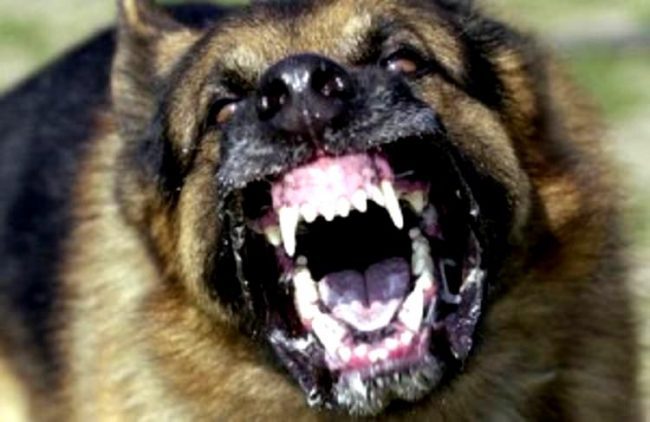
Fear has gripped Bulawayo residents as stray dogs continue to prowl the streets, attacking people and spreading panic across several suburbs.
Between January and the end of July this year, the city recorded 425 dog bite cases, alongside confirmed rabies infections that have already claimed one life.
Evening walks, once a source of relaxation, have now become dangerous.
Patrick Moyo, a resident of Khumalo, said he was attacked while walking home from work.
“I was coming from work when a stray dog came out of nowhere and bit me on the leg. I managed to chase it away, but the pain was terrible. I went to the hospital for treatment, and luckily, I did not suffer any serious injuries or infections,” said Moyo.
In Killarney, another resident, Patience Ngulube, recounted a similar ordeal.
“I was just going to the shops when a dog suddenly jumped on me and bit my arm. I ran for help, and people nearby came to my rescue. I went to the hospital and got treated. I was told I was lucky that there were no serious infections,” she said.
The Society for the Prevention of Cruelty to Animals (SPCA) has warned that most of Bulawayo’s stray dogs are unvaccinated, creating a high risk of rabies transmission.
Inspector Dumisani Sibanda from the SPCA said the city remains one of Zimbabwe’s rabies hotspots, with children being the most affected.
“Almost three-quarters of dogs are not vaccinated and have rabies in Bulawayo. Most stray dogs bite people from ages 5 to 14 years, nearly 80 percent. The other 10 percent are dogs biting people from home, and the other 10 percent are dogs biting the elderly,” said Sibanda.
He added that the SPCA was working with the Bulawayo City Council (BCC) to capture and vaccinate stray dogs.
“To protect people, traps are being made for dogs so that when they are caught, they are vaccinated at the SPCA,” he said.
Sibanda urged residents to take responsibility for their pets.
“From three months, dogs are supposed to be vaccinated and licensed at the city council. A 2000-square-meter home is equivalent to two dogs. If someone has excess dogs, they must be released to the SPCA. If someone gets bitten by a dog, they must report to the nearest police station for immediate action,” he added.
The City Council says it is developing a new policy to control dog breeding and reduce the number of dangerous dogs. This is being done in collaboration with the SPCA, the police, and the Veterinary Services Department.
In July, the Council enforced a Dog Tie-Up Order, resulting in 79 dogs being put down. After the operation, dog bite cases dropped from 71 in July to 62 in August, although the move drew mixed reactions from residents.
According to the latest council minutes, Ward 25 Councillor Aleck Ndlovu criticised the use of firearms in culling the animals.
“Council should consider using tranquilizers. So far, 79 dogs have been killed during the 10-day tie-up order,” said Ndlovu.
However, Ward 2 Councillor Adrian Moyo defended the council’s decision.
“Residents who fail to properly care for their dogs are leading them to stray in the neighbourhood. This has given Council no option but to enforce a tie-up order. The situation of stray dogs is capable of spreading rabies. Before a tie-up order is implemented, a lot of consideration would have been made. This was done by a Technical Committee. The City would continue to advocate for the banning of keeping and breeding of dangerous or vicious dog species,” said Moyo.
Authorities have since urged residents to ensure that their pets are properly cared for, regularly vaccinated, and confined within secure premises.
Bulawayo dog breeder Nhlanhla Bahlangene Dube welcomed the city’s measures, saying they promote responsible ownership and public safety.
“The council is doing a good thing in controlling the dog population. Dogs must be kept safely within a premise and should not be crowded. When you walk them, they must be on a leash and should have at least basic training to follow commands,” said Dube.
He added that dogs play important roles in households but must be well cared for.
“Dogs in towns are mainly for guarding and family protection. They are loyal, friendly, and good with people. They must also be looked after, dewormed, fed properly, and never allowed to become skinny. You should only keep a dog you can afford to feed well,” said Dube.
Dube further noted that dog control laws benefit both animals and the public.
“It’s good that the council has these laws so that dogs don’t spread diseases, get hit by cars, or infect people with rabies. Dogs have to be vaccinated, and when the situation is controlled, it’s a benefit to everyone,” he said.
Support CITE’s fearless, independent journalism. Your donation helps us amplify community voices, fight misinformation, and hold power to account. Help keep the truth alive. Donate today