

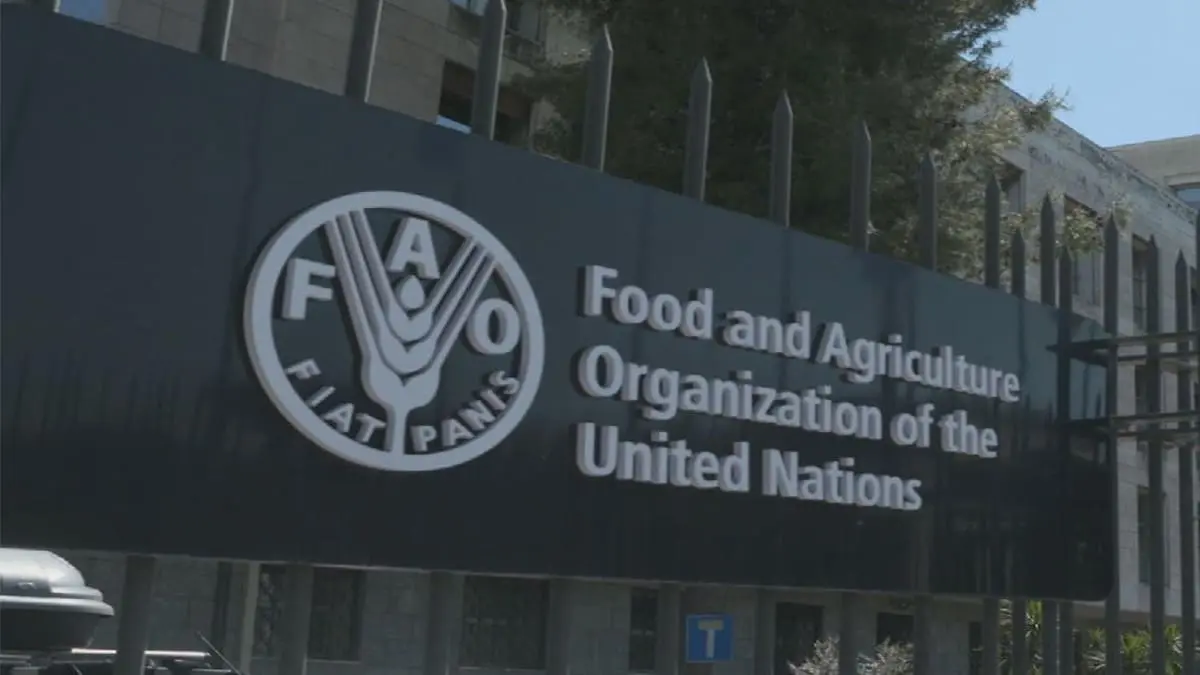
A new report by the Food and Agriculture Organisation (FAO) has found strong scientific evidence linking global food systems and farming to climate change, warning that the agricultural sector contributes roughly a third of all human-caused greenhouse gas emissions.
The report, Update on Scientific Findings on the Interactions Between Agriculture, Food Systems and Climate Change, highlights that while agriculture is a major emitter, it also has significant potential to curb global warming through the adoption of climate-smart practices.
Edited by Eleanor Milne of FAO and Colorado State University, Carlos Eduardo Cerri of the University of São Paulo, and FAO researchers Laure-Sophie Schiettecatte and Martial Bernoux, the paper builds on the Intergovernmental Panel on Climate Change (IPCC) Special Report on Climate Change and Land and compiles new studies published since 2018.
“Globally, agriculture and food production systems account for about one-third of anthropogenic greenhouse gas emissions, of which 40 percent originates from agricultural production and 32 percent from land use and land-use change,” the paper states.
However, researchers say the sector also offers hope. “In addition to being an emissions source, agricultural systems can also mitigate climate change if they act as a net carbon sink,” the report says. “Reducing emissions and enhancing carbon storage and sequestration in agriculture will require an enormous transformation of agricultural systems.”
The white paper calls for the implementation of low-carbon or climate-smart agricultural systems, methods such as cover cropping, mulching and green manuring, which can restore degraded soils and store up to 0.9 gigatons of carbon annually. This, the report notes, could offset about 34 percent of the annual rise in atmospheric carbon dioxide.
“These recent studies summarise the multifunctionality of cover crops, mulching and green manures in mitigating climate change by increasing carbon storage and decreasing emissions, improving soil health and nutrient cycling, increasing agricultural productivity and food security, and controlling pests, diseases, weeds and erosion,” the authors write.
Contributions to the section on soil management were made by scientists from Morocco, Brazil, Nigeria, India, New Zealand and France. Their research underscores that improving soil health and land-use practices remains one of the most effective tools for cutting agricultural emissions.
The FAO says the white paper will inform future work by the UN, the IPCC and other research partners, and will help guide discussions at a major FAO climate meeting scheduled for 2026 in Rome.
“The survival of human beings is at stake,” the report concludes, stressing that transforming the way food is produced is essential to achieving global climate targets and building more resilient food systems.
Support CITE’s fearless, independent journalism. Your donation helps us amplify community voices, fight misinformation, and hold power to account. Help keep the truth alive. Donate today
Leave a comment