

The Ministry of Primary and Secondary Education says there are proposals to remove the Basic Education Assistance Module (BEAM) from the Ministry of Public Service, Labour and Social Welfare and place it directly under the education ministry to allow faster disbursement of funds to schools.
This proposal comes amid persistent delays in BEAM payments to schools and the Zimbabwe Schools Examination Council (ZIMSEC), which have disrupted learning and examinations for thousands of vulnerable pupils across the country.
Currently, the Treasury releases BEAM funds to the Ministry of Public Service, Labour and Social Welfare as part of its social services budget, which then transfers funds to the Ministry of Primary and Secondary Education, that disburses them to schools.
However, this multi-step process has resulted in chronic delays, leaving schools without fees for BEAM-supported learners and exposing marginalised children to exclusion from education.
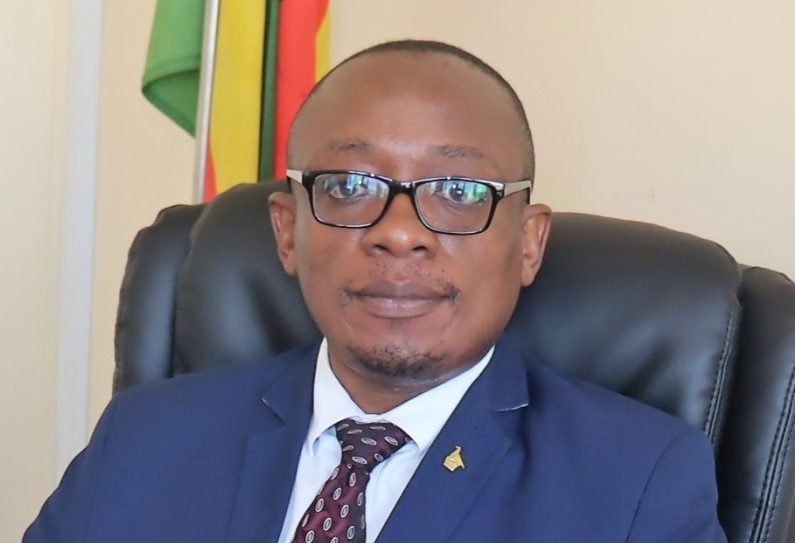
Director of Communications and Advocacy in the Ministry of Primary and Secondary Education, Taungana Ndoro, confirmed that discussions are underway to restructure the flow of BEAM funding.
“The issue of BEAM is that the budget line item rests in the Ministry of Public Service, Labour and Social Welfare as a social services fund in that ministry,” Ndoro said.
“We actually have to wait for that money to come from the Ministry of Public Service, Labour and Social Welfare to come to us and then we disburse to our schools. What we only do with BEAM funds is receive the money and send it to the schools.”
Ndoro said failure to receive funds means the ministry is unable to pay schools.
“If we have not received it, we can’t send it to the school,” he said.
While this proposal is under consideration, Ndoro said the government has set up a tripartite committee comprising the Deputy Ministers of Finance, Public Service and Education to address the bottlenecks.
“So now there’s a tripartite team committee that has been set up, who are now discussing to say, ‘Treasury, could you release the BEAM funds? The BEAM funds go to the Public Service Ministry and then the Public Service Ministry sends it to us,’” Ndoro said.
“There are negotiations around that as I am speaking.”
BEAM was established to support underprivileged children to access education by paying school fees and examination costs.
However, the programme has struggled in recent years, defaulting on payments to schools and ZIMSEC, raising fears that learners from poor households could be barred from classes or examinations.
At the end of 2024, the government owed US$98 million to BEAM and US$50 million to ZIMSEC.
Parents and education stakeholders have raised alarm over the impact of the funding gaps, especially for learners sitting for national examinations.
Concerns have also been raised over reports suggesting BEAM funds may have been diverted.
“In February 2025, there were news reports that sometime in August 2024, funds for BEAM were diverted towards the building of infrastructure during the country’s SADC chairmanship era,” one parent said, noting how such reports were disputed by state-controlled media.
“Then in December last year, we saw a headline saying ‘BEAM Under Scrutiny as Cabinet Moves to Probe Abuse of Education Funds.’”
The parent questioned whether this meant BEAM resources had been redirected away from learners.
“The question is, does that therefore mean that BEAM funds could have been diverted to the SADC infrastructure, and what does that mean to the children?” the parent said.
“If BEAM funds are under scrutiny or said to have been abused, what is the ministry saying? Because we are looking at beneficiaries not being able to partake in education.”
Ndoro said the education ministry does not control BEAM funds until they are transferred from Public Service.
“We wait to receive that money from the Ministry of Public Service. This is why there’s always this glitch,” he said.
He added that while negotiations continue, the ministry expects some funding to be released this year.
“We should be able to receive some BEAM funds for this year, whilst the issues of the previous outstanding amount are being handled,” Ndoro said.
However, he said the long-term solution lies in restructuring the programme.
“But the bigger proposal that is coming up in terms of BEAM is why does the Treasury not remove that line item from the Ministry of Public Service and put it straight into the Ministry of Education?” he said.
“So if that happens, we’re able to then disburse this quickly.”
Ndoro suggested competing priorities within the Ministry of Public Service may be contributing to the delays.
“Remember, the Ministry of Public Service has their own budget, and if BEAM funds come for them, they may be saying maybe we may do virement later, and so on and so forth. We don’t know,” he said.
Meanwhile, the ministry says it is reviewing concerns around alleged favouritism and political interference in the selection of BEAM beneficiaries.
“There are concerns that some children qualify due to favouritism, political affiliation, as freebies of being close to political persons,” Ndoro said.
“We are going to be reviewing that very, very seriously.”
He said future beneficiaries would be prioritised based on vulnerability.
“Those that are going to benefit from BEAM are mainly going to be orphans and vulnerable children,” Ndoro said.
“An orphan meaning you don’t have both parents. Those are the ones who will be considered first. Then those who have one parent.”
Ndoro said children with both parents, including those whose parents are working outside the country, would face stricter scrutiny.
“Those children with both parents, even if they are in South Africa, it’s going to be very difficult,” he said.
“So the list could be a little bit leaner. We are working on that one.”
Support CITE’s fearless, independent journalism. Your donation helps us amplify community voices, fight misinformation, and hold power to account. Help keep the truth alive. Donate today
Leave a comment