

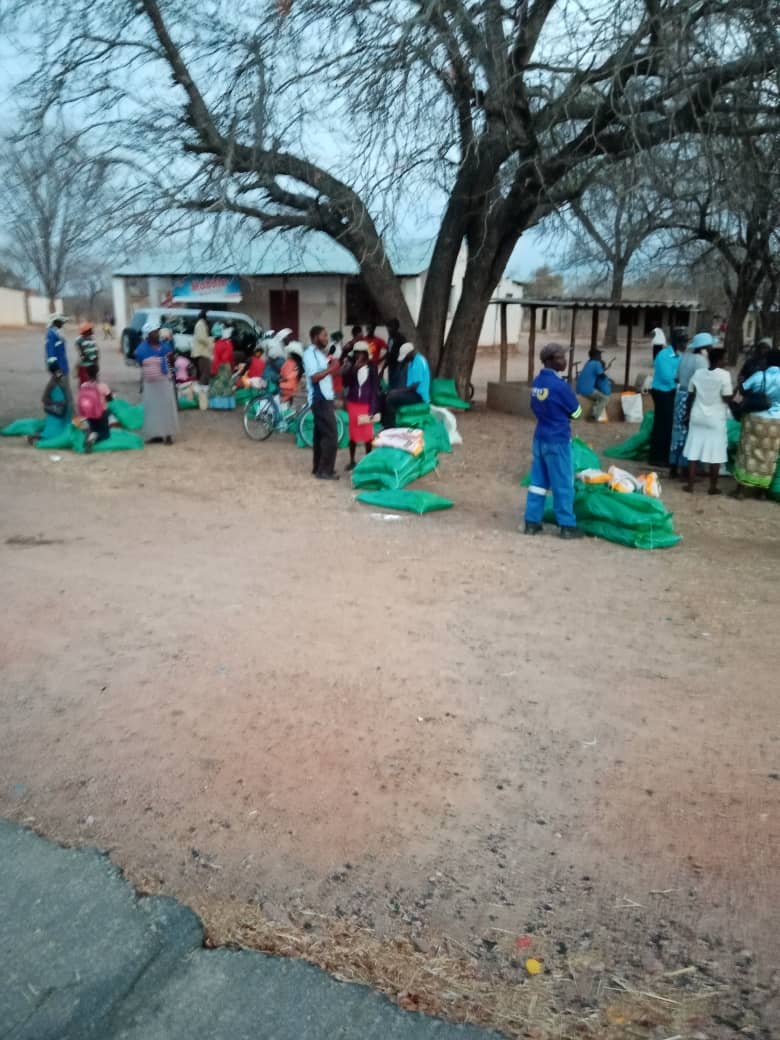
Zimbabwe’s efforts to build a climate-resilient agricultural sector are being undermined by delays in the distribution of farming inputs, Members of Parliament have warned, amid increasingly unpredictable rainfall patterns.
During a Question-and-Answer session on Wednesday, MPs raised alarm over the late delivery of seed and fertiliser under the Pfumvudza/Intwasa model, a key climate-proofing programme introduced in 2020 to support small-scale farmers with inputs and conservation farming techniques.
Proportional Representation MP Nkomo asked the Minister of Lands, Agriculture, Fisheries, Water and Rural Resettlement to explain what measures Government was taking to ensure farmers received inputs before the start of the rainy season, noting that climate variability meant rains were now coming “early or at times late”.
“Due to climate change, rains are now coming early or at times late. What is the Government policy in making sure that farmers receive seeds on time?” she asked.
Responding on behalf of the ministry, Minister of Skills Audit and Development Professor Paul Mavima said distribution under both the Presidential Inputs Scheme and the Pfumvudza/Intwasa programme had already begun.
“The programme to deliver inputs has already started in earnest and in some cases, such inputs have already been delivered to the extent of 50%. In other cases, it is slightly below 50%, and this is happening in all parts of the country,” he said. “For the Pfumvudza Programme, there are provincial launches taking place in the various provinces as we speak.”
He added that beneficiaries would receive inputs at district level following the launches, saying Government expected full distribution “within a short space of time”.
But the assurance drew concern from the Acting Speaker, who warned that delivering only half the required inputs when the rains had already started left smallholder farmers exposed.
“I think you ought to try and change your times of giving out these inputs because you are talking about 50% now when the rains are already upon us. Is it not already too late? It did affect our food security status,” he said.
Professor Mavima conceded that climate uncertainty required Government to improve delivery timelines. “We should work to ensure that we deliver the inputs early given the changing climate conditions where we do not know when rains will be upon us,” he said.
Lawmakers also raised concern over delayed payments to commercial and contract farmers who delivered grain to the Grain Marketing Board (GMB). Proportional Representation MP Perseverance Zhou said many farmers relied on timely payments to fund preparations for the next farming season.
Professor Mavima acknowledged the backlog, saying Government was “very concerned” about outstanding payments.
“Our farmers need to be motivated and enabled for them to go back and continue to farm in order to achieve food security. An instruction has actually come from His Excellency to expedite the process for paying our farmers,” he said.
MPs warned that unless Government speeds up both input distribution and farmer payments, the country risks compromising food security at a time when climate shocks are becoming increasingly severe.
Support CITE’s fearless, independent journalism. Your donation helps us amplify community voices, fight misinformation, and hold power to account. Help keep the truth alive. Donate today
Leave a comment