

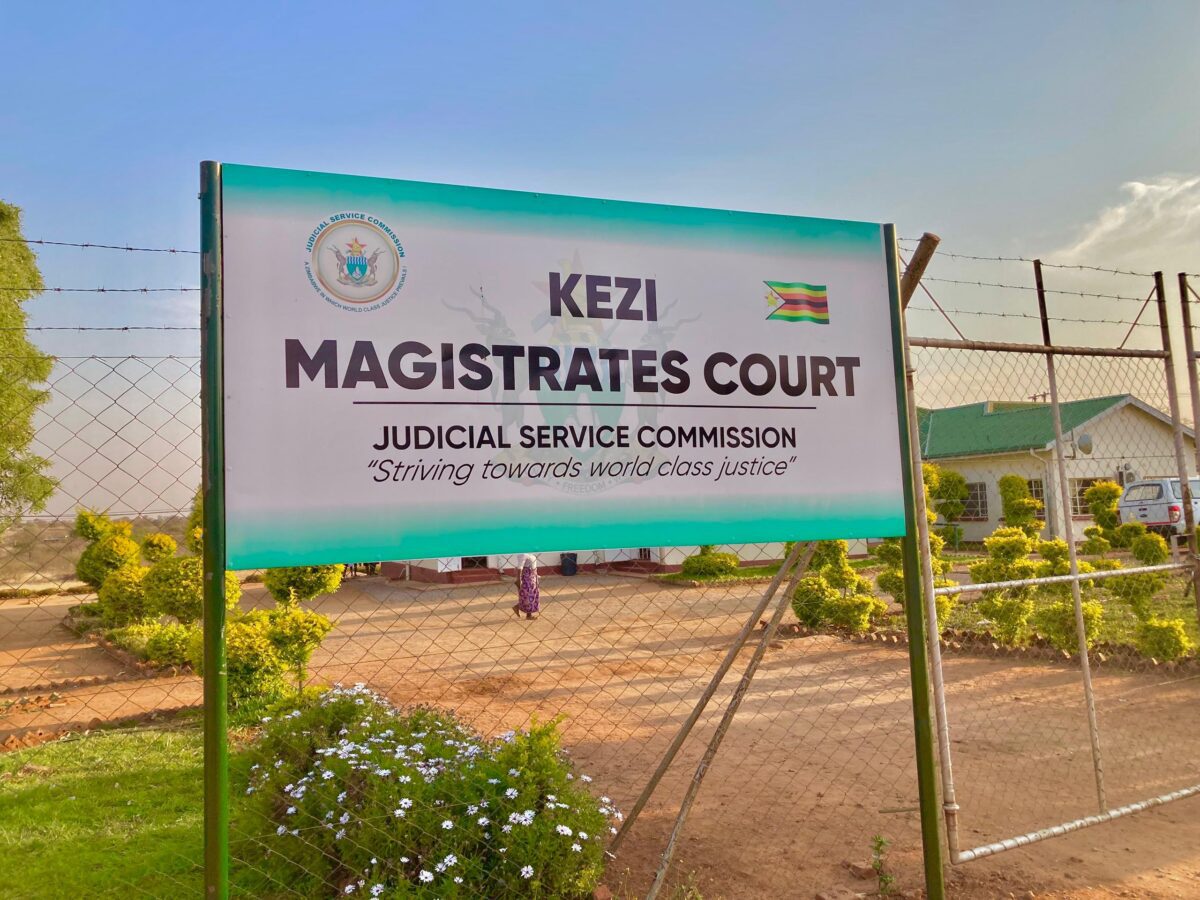
The case of three police officers accused of assaulting schoolchildren during a “crime awareness campaign” at Mahetshe Primary School in Maphisa has continued to expose painful contradictions and community tensions as witnesses take the stand at the Kezi Magistrates Court.
The matter, which began on September 23, 2025, has drawn strong public attention, with parents, traditional leaders and community demanding justice for the pupils allegedly beaten by police officers on May 21, 2025.
The three officers face charges of assault under Section 89 (1), paragraph 8 of the Criminal Law (Codification and Reform) Act, after allegedly injuring 13 pupils during what was supposed to be a police outreach event.
All three police officers, Nhlalo Ndlovu, Vimbai Madlabuzela and Trust Chizodza, pleaded not guilty.
On the opening day, four of the 13 assaulted children testified, recounting how the officers lined them up and beat them with canes. Their cross-examinations were lengthy and often emotional, as both the state and defence pressed them to recall details of the May 21 incident.
The remaining pupils gave their testimony on October 6, 2025 while one could not attend due to illness.
When the case reconvened on Monday, October 13, 2025, it was postponed after the defence lawyer, Taboka Nyathi, informed the court she had a case before the High Court.
Proceedings resumed the following day, Tuesday, October 14, 2025 with the appearance of three key witnesses, village head Shakespeare Ndlovu, community members Dingindlela Ncube and Felistus Ndlovu, the school’s deputy headmistress alongside another teacher from the same school.
The community witnesses who testified told CITE after the hearing that defence questioning delved into controversial territory, even touching on historical wounds related to Gukurahundi.
“They asked if, since the issue of Gukurahundi is still fresh, parents were accusing the police of being Shonas when they saw them approaching the school,” one of the witnesses said.
“I told them two of the police officers, Ndlovu and Madlabuzela, are Ndebele, so why would we accuse them of being Shonas? We were asked if we know where they come from to say they are Ndebele and we said where one comes from doesn’t matter, what matters is their surname, that’s how we know who one is from their surname.”
The witnesses added that the defence’s attempt to frame the incident as a misunderstanding between parents and law enforcement missed the point.
“They said the children were put into groups so they could be taught how to behave, but we pointed out we stopped one of the police officers from actually beating the children,” said one witness.
“When we arrived, the police were already hitting the children. Maybe what they are describing happened before we went there, but we saw the beatings ourselves.”
CITE understands the village head told the court that community members recorded parts of the incident on video, but that evidence was not entertained during Tuesday’s proceedings.
“That was not even entertained. We don’t know what will happen or when the verdict will be delivered. Maybe the court will tell the children’s parents when it’s made,” said the witness as the court adjourned on Tuesday.
The witness said the prosecution also pressed witnesses to give detailed accounts of that day.
“They asked how many we were, what time our (water committee) meeting (by the school gate) was and how far we were from where the children were being beaten,” said a witness.
“They wanted to know which police officers we saw beating the children. We clearly stated we saw two of them. The third officer hid their cane when they saw us approaching.”
According to witnesses, the defence lawyer claimed the police had been called to the school because of bullying among pupils and that the scars attributed to the beatings were actually the result of fights between the children themselves.
“The lawyer said our children are bullies and were fighting each other, that’s why they had scars,” said one of the witnesses.
Tension also heightened when two teachers, including deputy headmistress, allegedly testified that no beatings took place.
“We heard that the teachers sided with the police, saying they didn’t beat anyone,” said one community witness.
“That shocked us because those same teachers were there when it happened.”
The witness said one of the teachers had previously asked for the canes used by the police after parents confiscated them in protest.
“I gave that teacher the canes that day,” one witness said.
“Now that same teacher says no one was beaten. That was a very huge blunder giving them back the canes.”
The witnesses believe the teachers may have felt pressured to protect the police.
“We suspected this may happen where the teachers connive with the police to cover it up,” said one.
The witnesses also questioned the defence’s claim that the officers were conducting an awareness campaign.“If the police were doing a campaign, first we were going to be informed as parents that on such a day police officers are coming for this. Second, all the police officers would have been dressed in such a way to show it was official police duty, dressed respectively in their uniforms but one of the cops was wearing amapatapata (slippers), which implies it was something that they just thought of there and then to hit the children,” said the witnesses.