

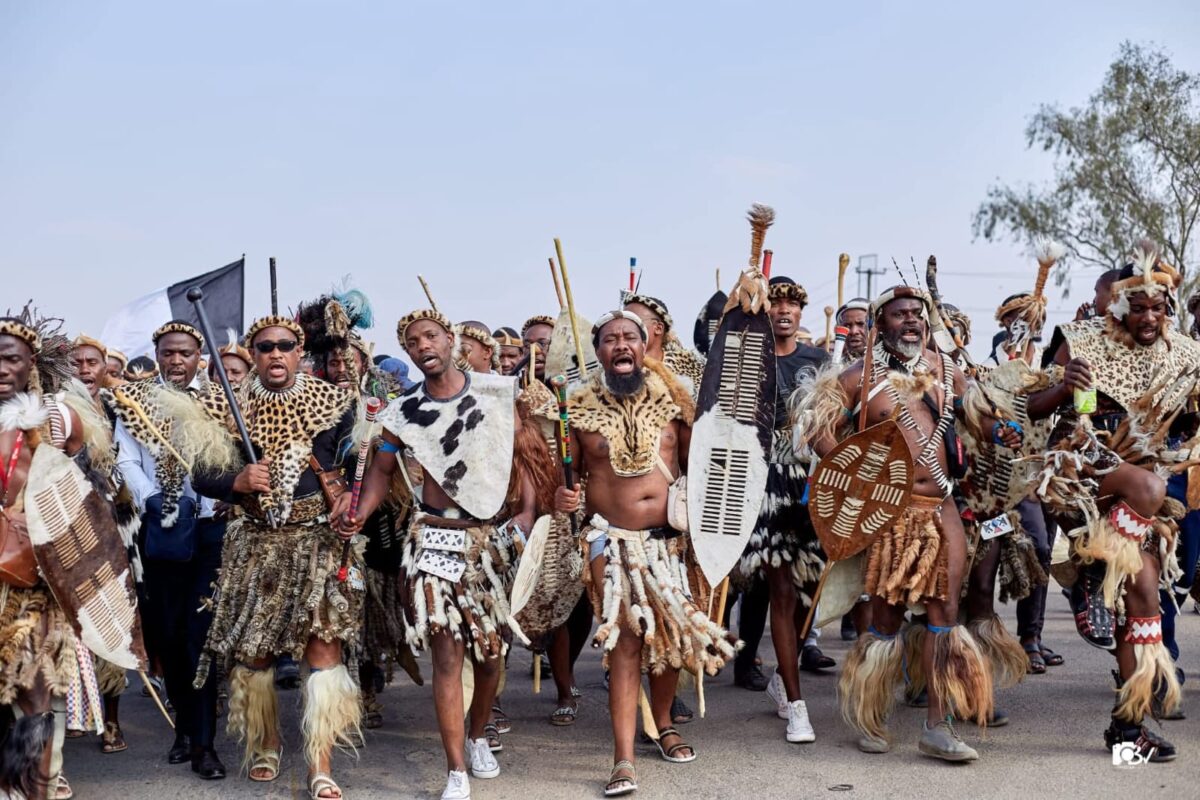
By BM Mkwananzi – Prince of Mthwakazi
There is a growing effort to discredit the cultural revival movements sweeping across Mthwakazi and beyond. Some have gone as far as branding gatherings like Mhlahlandlela as “religious” or “un-Christian,” attempting to sow confusion and shame where there should be pride and purpose.
It is time we ask, what drives such narratives?
For years, our people drifted between borrowed identities and spiritual dislocation. The reawakening of culture was, to many, a closed chapter. “Idabane selifile,” they thought. But now that it has risen, “ngumaf’ avuke.” The cultural flame they assumed had died has returned, and its light unsettles those who thrived in the darkness of our disconnection.
Today, cultural activism has become a heavily contested terrain. Those who stand for it find themselves attacked from religious corners, political corners, and even within their own communities by those who wish to control the narrative. There are agent provocateurs who exist solely to derail the revival, to inject suspicion, to divide, and to turn our progress into quarrels. But they will fail. What has reached its time cannot be submerged.
Let it be known: Mhlahlandlela is not a cultic or religious ritual. It is a national renewal platform, a moral, cultural, and economic ecosystem. It celebrates chastity, discipline, unity, and collective identity. It promotes cultural tourism, creative economies, and intergenerational continuity. It connects the youth to the wisdom of their elders, reminding them that culture is not superstition, it is structure, it is order, it is the software of a people’s soul.
Yet, even as this revival gains momentum, it is becoming increasingly complex. Religious fundamentalism will contest it, claiming moral authority over cultural truth. Dark opportunistic forces will attempt to hijack it, to twist it into a stage for ego, manipulation, or profit. And where organisers fail to maintain transparency and clear structure, disorganisation becomes fertile ground for hysteria, gossip, and misinformation. Without a well-defined organogram, even the purest vision can be swallowed by confusion.
It is therefore vital to cleanse this space, not by silencing faith, but by reclaiming balance. Culture and faith are not enemies; they are pillars of human order when rightly aligned. The danger is not in our traditions, but in those who exploit chaos for personal prominence.
Around the world, nations that have risen on the strength of culture tell a powerful story. Japan’s identity survived globalisation through its culture. South Korea turned its traditions into billion-dollar creative industries. India, through its cultural pride, fuels tourism, technology, and global respect. Culture is not an obstacle to progress, it is the foundation of sustainable development.
Even technology itself can carry the spirit of culture. When we speak of digital sovereignty and innovation, we speak of reclaiming the power to create tools that reflect who we are. Projects such as FreeMthwa OS, inspired by Ubuntu and the freedom ethos of Linux, show how technology can be infused with identity. It embodies the freedom to chart a digital future that serves a diverse people, on their own terms, for free.
The future belongs to nations that understand that culture is not decoration, it is direction. It is the compass that points a people back to themselves while propelling them forward into the world.
So to those spreading lies, seeking relevance through confusion or ego, know this: you cannot stop a tide whose time has come. You cannot bury what has been resurrected by truth.
The cultural revival is here, it will not ask for permission. It will rebuild dignity, drive innovation, and redefine what it means to be free.
Support CITE’s fearless, independent journalism. Your donation helps us amplify community voices, fight misinformation, and hold power to account. Help keep the truth alive. Donate today