

By Senzeni Ncube and Promise Dube
Bulawayo councillors have raised serious concerns over widespread non-compliance with health and trading regulations, deteriorating sanitation in the Central Business District (CBD), and the threat posed by dangerous dog breeds following a horrific mauling death of a two-year-old child.
The issues emerged during a recent full council meeting, where councillors reviewed inspection findings and called for urgent action across multiple fronts.
Ward 25 Councillor, Aleck Ndlovu, commended joint efforts by the Health Services and Housing and Community Services departments, which conducted 2 188 inspections to enforce compliance.
However, he warned the scale of violations pointed to significant financial losses for the city.
“My concern is about the financial prejudice that appears to be happening because we have people who operate businesses without licences,” Ndlovu said.
He noted some entrepreneurs begin trading while still at the development stage, bypassing regulatory requirements instead of regularising their operations.
“There are some people who are at the development stage instead of regularising their businesses; they start operating. So the licensing part is another aspect,” said the councillor.
The inspections also uncovered serious public health risks, including vendors selling stale food and individuals handling food without mandatory medical clearance, as required by municipal by-laws.
“There are people who were found to be selling stale food from their stocks; it was picked up by these departments. There are people who were found to be handling food, but there is a by-law which requires them to be cleared medically to be fit to handle food. They were picked up by the department,” Ndlovu said.
“There were people who were also found to be operating businesses in unhygienic environments. So it is quite a wide array of violations that were picked up. 2 188 notices and intimations were issued. You can then imagine how much money is being lost by these people who are not complying with trading laws.”
Councillor Ndlovu urged the committee and the department to scale up their inspections, arguing that the true scale of non-compliance could be much higher.
“I want to encourage this committee and the department to make sure they double their efforts because when you look across the city, some people have repurposed their business entities. There are a lot of illegal operations, for example in car parks. You will find that they have subdivided those areas and have people doing multifaceted activities which are not regularised,” he said.
“I encourage the inspection department to apply itself more forcefully because I believe 2 188 is just a small figure. The figure could triple or be four times higher if they apply themselves fully to ensuring compliance.”
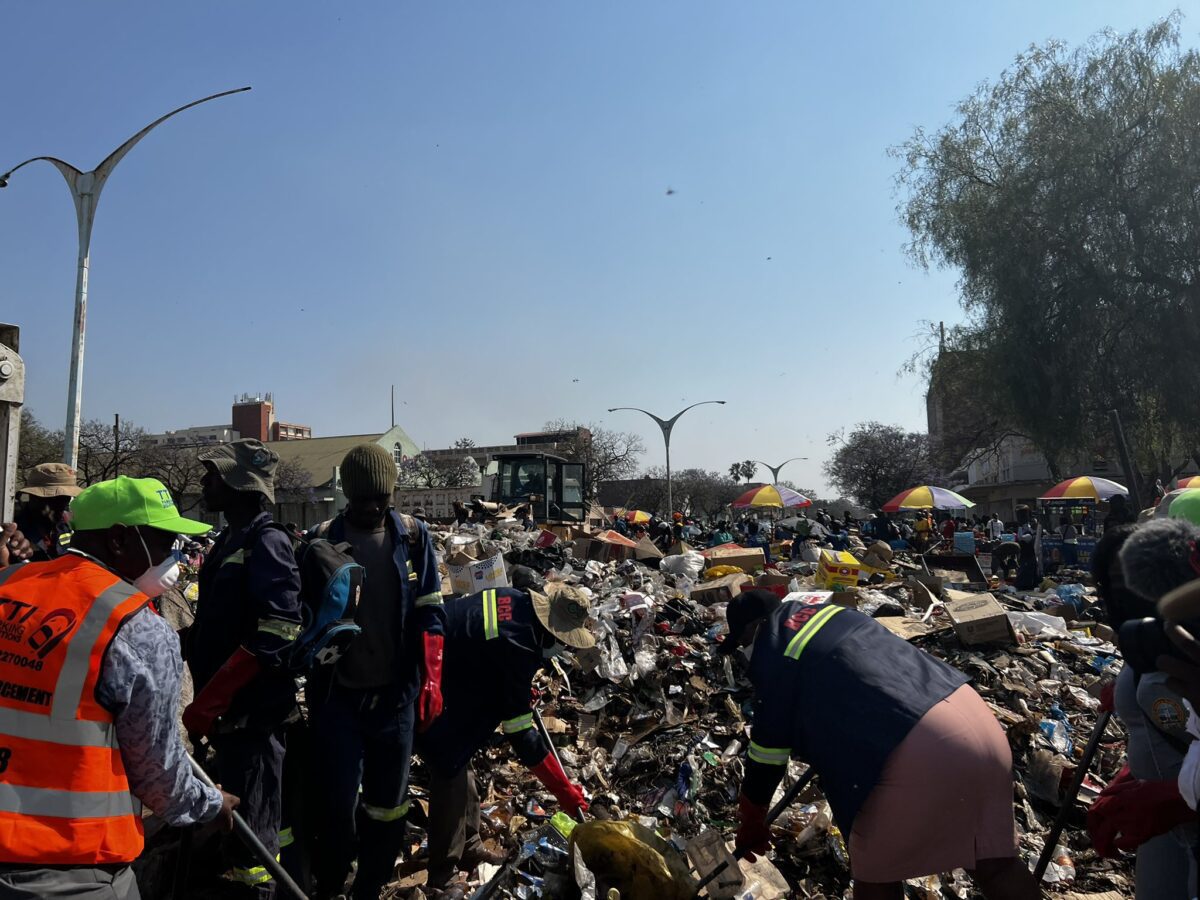
Ward 5 Councillor, Octavius Dumisani Nkomo, expressed concern over deteriorating cleanliness in the city, warning that poor waste management is undermining urban standards.
“I am still worried that after all these efforts, we are fast moving towards ‘growth point’ status just in terms of the filth that is in the city. We are becoming dirtier and smellier than ever as a city,” Nkomo said.
Nkomo called for stricter penalties for public littering, including issuing more tickets to offenders who dispose of waste irresponsibly, particularly motorists.
“I am hoping that as we move forward we can work together to make sure that more people are ticketed, especially for public littering. For example, we expect to see very high figures in terms of public littering, people throwing litter out of their cars,” he said.
Beyond enforcement, he said council should adopt innovative waste management strategies that turn waste into economic opportunities.
“We should also incentivise because we can actually monetise waste. We can monetise plastic waste. We can compost some of that waste, especially at the market. So I am also challenging the committee to look at that,” Nkomo said.
“On one side, enforcement and compliance; on the other side, let us look at ways in which we can incentivise people so that we see waste as a raw material that is part of a production process.”
Citing a crippled rubbish collection fleet and an influx of agricultural debris, councillors expressed alarm over declining sanitation standards in the CBD and adjacent areas.
Councillor Ndlovu also pointed out that the cleanliness department presently operates with just two supervisory vehicles while the rest of the fleet sits idle in workshops awaiting minor spare parts.
He added that the surge in agricultural produce being brought into the city has greatly increased rubbish levels.
“The cleansing section should be capacitated with more vehicles and compactors so as to improve service delivery,” Ndlovu urged, warning that the onset of the rainy season poses a high risk of disease outbreaks if waste is not managed urgently.
Deputy Mayor, Councillor Edwin Ndlovu, expressed gratitude for the suspension of the garbage transfer station in Nguboyenja, which had previously drawn criticism due to its proximity to residential areas, and echoed the need for better sanitation.
In response to the logistical crisis, Bulawayo Mayor, Senator David Coltart, revealed the local authority has taken steps to replenish its aging fleet.
He highlighted that the council has purchased 21 new vehicles using devolution funds.
“Part of the fleet would go to cleansing once delivered,” the Mayor assured, signalling a potential end to the collection backlogs that have plagued the city’s suburbs and business hubs.
Beyond sanitation and trading violations, the council chambers were gripped by reports of a recent tragedy involving domestic animals.
PR Councillor, Perseverance Nyathi, voiced her distress regarding the breeding of dangerous dog species within the city limits.
She cited a horrific incident in Douglasdale, where a two-year-old child was mauled to death by her father’s four dogs outside the family premises.
Fearing for public safety, Councillor Nyathi formally requested that the council establish a stringent policy on dog breeding to prevent further loss of life and regulate the types of breeds permitted in residential neighbourhoods.