

By Nokuthaba Dlamini
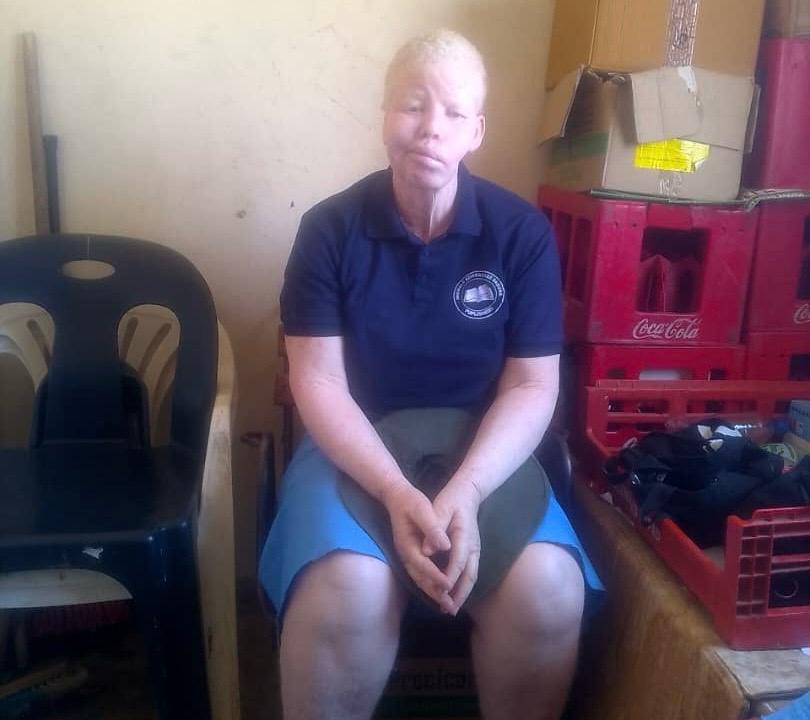
In the remote district of Tsholotsho, Matabeleland North, Simangaliso Abigail Ncube has been fighting a relentless battle against the harsh realities of life with albinism.
Born in 1980, her experiences are a stark reminder of the challenges faced by those with this genetic condition, especially in a society marked by prejudice and misunderstanding.
Research indicates that individuals with albinism in Africa face very high mortality. This arises from the absence of melanin, which not only leads to diminished vision but also significantly increases the risk of skin cancer from sun exposure.
For many, including Ncube, this can mean a lifetime of struggle and health battles.
“Living with albinism is not easy,” Ncube, a vendor and a general handworker explains. “We have just come out of winter, and with rising temperatures, those of us without melanin are particularly vulnerable. With every hot season, we risk developing skin cancer. I have been fighting this disease since 2010, and it feels like a continuous struggle against the dual threats of cancer and ignorance about how to protect ourselves from the effects of climate change.”
Despite knowing the importance of sunscreen, Ncube, like many others from impoverished backgrounds, cannot easily obtain it.
“The reality is, over 90 percent of us come from disadvantaged communities. In a place where poverty is rampant, understanding and access to necessary protective measures like sunscreen are severely lacking.”
Ncube recounts her journey, noting that she began using sunscreen only after completing her Form Four studies.
“I didn’t excel academically, not only due to family poverty but also because I had to walk ten kilometers to school every day. This constant exposure without protection eventually led to the skin cancer that I have been battling for over a decade.”
By the early 2000s, Ncube noticed a small scar developing on her cheek. It wasn’t long before doctors confirmed her fears, a biopsy revealed she had Squamous cervical carcinoma.
“This is how climate change affects us,” she reflects, “yet we are often left behind, facing exclusion and discrimination without guidance or support.”
Over the past thirteen years, Ncube has spent countless hours in hospitals, undergoing operations, radiotherapy, and chemotherapy treatments, battling the physical and emotional toll of her illness.
“Even after my first operation, I faced complications,” she shares. “I lost significant blood and needed transfusions, which cost $150 per pint, an unaffordable amount for someone in my situation. Despite the challenges, some healthcare providers have shown a commitment to my care.”
Her experiences highlight a broader crisis in Zimbabwe, where stigma, discrimination, and a lack of healthcare access plague individuals with albinism. The situation is particularly severe in regions such as Matabeleland North, where poverty limits access to even the most basic protective measures against the sun.
Climate change is worsening the vulnerabilities faced by people with albinism, as rising temperatures and prolonged periods of intense sunlight increase the risk of sunburn, skin damage, and skin cancer.
Erratic weather patterns and droughts push many into outdoor livelihoods such as farming, exposing them to dangerous conditions while limiting their ability to access shade, water, or protective resources. At the same time, poverty and economic stress, exacerbated by climate shocks, make sunscreen, wide-brimmed hats, and protective clothing unaffordable for many families. As a result, climate change compounds health risks, shortens life expectancy, and deepens social and economic exclusion for people with albinism.
Sanders Musaka, Treasurer of the Zimbabwe Albino Association, highlighted the dire circumstances facing those with the condition.
“People with albinism have lighter skin that is far more vulnerable to sun damage. Their likelihood of developing skin problems and cancer increases significantly in hot areas like Binga District, Hwange and Victoria Falls where access to sunscreen is often restricted by poverty.”
A single bottle of sunscreen can cost around twenty dollars, and a monthly supply might require four bottles, totalling nearly eighty dollars, an overwhelming expense for many families.
“In addition, proper protective clothing is essential; long-sleeved shirts, long pants, and wide-brimmed hats are necessary to shield our skin from harmful UV rays. However, these basics are often unattainable.”
Musaka reflects on the burden of seeking medical care, where reliance on a fragile healthcare system compounds the struggles.
“In Binga District alone, we have the highest concentration of individuals with albinism (60 of 120 in the whole province), yet the healthcare system is stretched thin. Appointments, and in Bulawayo or Harare can take months, and essential treatments are frequently delayed.”
Tragically, the losses from cancer are deeply felt within the community.
“Last year, we lost two Binga members to skin cancer, one a boy and the other an elderly woman, both lacking access to the protective measures necessary to fight the disease. We only rely on donations from organisations like Zimplats that provide us with sunscreens on goodwill basis. But we receive no support from the government,” he said.
Adding to these challenges is the heavy stigma that surrounds albinism. Musaka notes how this discrimination seeps into everyday life.
“In public spaces like hospitals, people with albinism are often treated differently. This stigma extends into social interactions, making it particularly challenging to build connections because they cannot even share a cup of water with you.”
The O’Neill Institute for National and Global Health Law at Georgetown University recently published a report, “The Forgotten Ones: The Impact of Climate Change on the Health and Well-being of Persons with Albinism.” This report, developed with civil society organisations in Zimbabwe, noted the urgent need for recognition and support.
Sarah Bosha, the report’s lead author, sheds light on the systemic discrimination faced by individuals with albinism.
“In many African countries, they are seen as cursed, leading to widespread mistreatment and misunderstanding. We must advocate for their rights and ensure that their health needs are not forgotten.”
Efforts to educate the public about albinism and to highlight the capabilities and strengths of those who live with it may start to change perceptions.
“Albinism is not a disease or a curse; it is simply a condition,” Bosha asserts.
Support CITE’s fearless, independent journalism. Your donation helps us amplify community voices, fight misinformation, and hold power to account. Help keep the truth alive. Donate today