

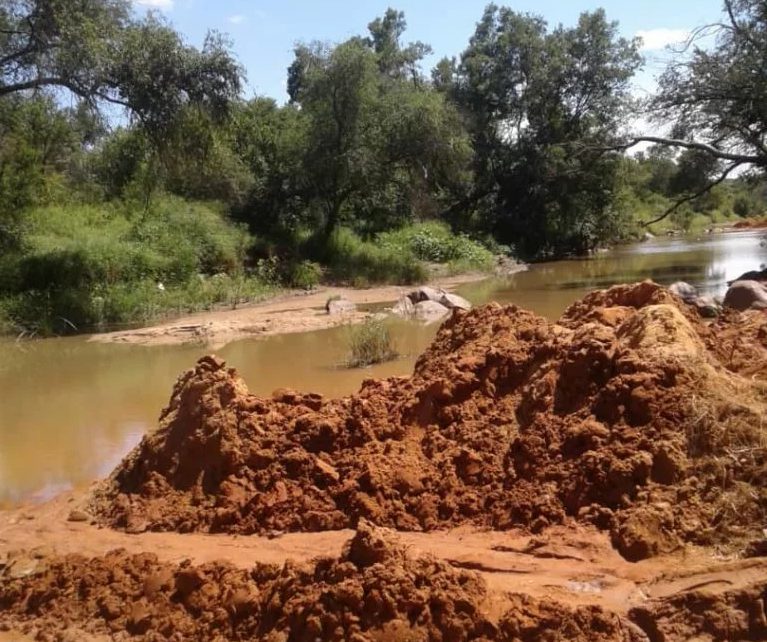
Concerns are mounting over Bulawayo’s worsening water crisis, with city authorities blaming mining activities, particularly those linked to a Chinese company operating along the Mzingwane River, as a major contributing factor.
The concerns emerged during a recent Future Water Supplies and Water Action Committee meeting, where councillors and city officials debated persistent water shortages despite recent rainfall.
Ward 22 Councillor, Mmeli Moyo, criticised the Chinese company for mining and processing gold along the riverbed.
“Residents needed to be informed about these activities so as to reduce expectations on trying to end the water crisis in the city,” Moyo said in the latest council minutes.
Moyo called on Bulawayo Mayor, David Coltart, to escalate the matter to President Emmerson Mnangagwa.
Coltart echoed the concerns, describing the situation as “alarming and unsustainable.”
He revealed that a borehole had been discovered within the riverbed itself, which was an unusual and controversial development.
“This should not be allowed,” said the mayor.
“Mtshabezi Dam is now spilling. Mtshabezi and Mzingwane rivers share the same catchment area, less than five kilometres apart. Mtshabezi is spilling because there are no mining activities on its riverbed.”
Coltart added that efforts were underway to engage the parent ministry as well as the Office of the President and Cabinet.
Across Zimbabwe, concerns have repeatedly been raised over the environmental impact of some foreign-led mining operations, including those run by Chinese firms.
Regulators, communities, and environmental groups have cited riverbed mining, which alters natural water flow, along with siltation from excavation and soil dumping, and chemical pollution from gold processing, particularly involving mercury and cyanide.
Meanwhile, Ward 24 Councillor Tavengwa Zidya questioned the continued water shedding despite recent rains.
“Water shedding should now be suspended,” he said.
Zidya noted that while the city had drilled several boreholes to ease the crisis, these had introduced new challenges.
“Residents whose water supplies were disconnected due to non-payment have mainly relied on those boreholes, and some of these boreholes were electrified. The challenge arose when electricity units depleted,” said the councillor.
Zidya added residents are now required to contribute towards purchasing electricity units.
Ward 10 Councillor, Khalazani Ndlovu, said dam levels currently stand at 53 percent and stressed the need to share this information with residents to explain why water shedding continues.
She also noted the riverbed had many dug pits and heaps of soil preventing smooth water flow to the dam, adding that council’s enforcement needed assistance from other stakeholders.
Councillor Ndlovu also emphasised the need to engage the Chinese company involved in the mining operations.
“Council should organise this meeting immediately,” she said in the latest council minutes.