

By Bekezela Mguni
Community members from Mzilikazi, Bulawayo, have urged the government to introduce stiffer laws to curb corruption in the health sector, as citizens are now becoming willing participants in corrupt practices.
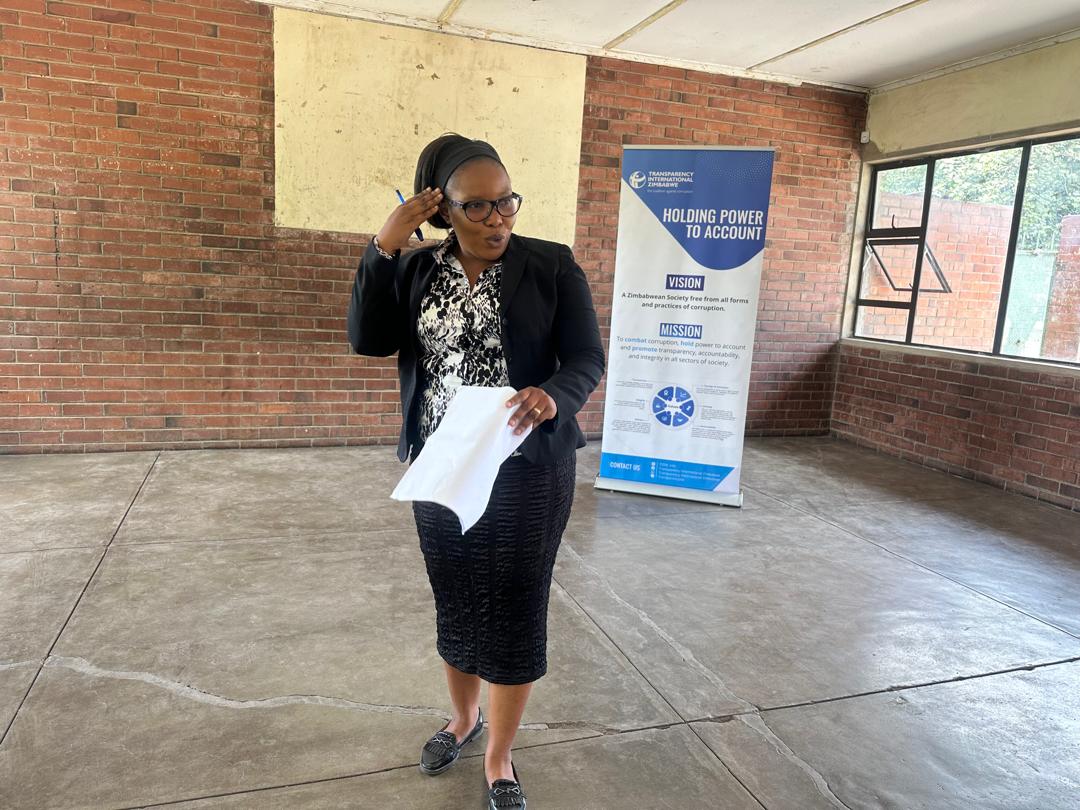
This call emerged during an empowerment circle meeting in Mzilikazi, hosted by Transparency International Zimbabwe (TIZ), under the Inclusive Service Delivery in Africa project seeking to promote equitable access to public services particularly in health and education for women, girls and marginalised groups.
The community dialogue aimed to strengthen inclusive governance and accountability in service delivery by enabling women to share their lived experiences and propose solutions to corruption-related challenges in health.
Sources on condition of anonymity revealed that corruption in the health sector is mainly through the illegal sale of medicines through backdoor channels in clinics and hospitals.
There are allegations that in some hospitals and clinics, health practitioners sell medicines through unofficial means, some of which are leftover medications from patients who have been discharged.
One participant highlighted she had always been told there was no medication whenever she went to the hospital until a friend told her to pay a bribe to access health services.
“Whenever I sought health services, I was always told that there is no medication and referred to pharmacies until a friend told me that you have to pay a certain amount of money if you want access to services in hospitals, despite the medication being free,” she said.
Clara Ndlovu, a community member highlighted that when they want to do scans there are always stories that scans are not working and there are always people waiting to do these scans outside the hospital’s premises.
“It is funny that whenever we have patients who want to do scans, we are told the scans are not working, but there are always people waiting outside to do these scans, and because sometimes you want to help your relative who is struggling, you end up giving in,” Ndlovu said.
She further spoke about bogus doctors who are giving fake prescriptions.
“I won’t mention the exact hospitals but there are bogus doctors who make us pay only to be given a fake prescription”, Ndlovu said.
Juliet Phiri, a community member, highlighted how patients are asked to pay bribes to access health services that are supposed to be free because they do not know their rights.
“The challenge we have here is that people do not know their rights, patients continue to pay for services that are supposed to be free because of fear and not knowing their rights”, Phiri said.
Phiri further highlighted the need to have pressure groups to educate communities about corruption.
“We need to have pressure groups within our communities that are going to educate citizens about their rights and the impact of corruption and encourage reporting corruption”, Phiri said.
Thulisile Skapman, a programmes Officer from Christian Legal Society encouraged women from Mzilikazi to use organisations like TIZ and local residents association to report these issues.
“We need to make use of organisations like TIZ, residents associations and the Zimbabwe Republic Police Anti-Corruption Unit to report cases of corruption happening within our communities”, Skapman said.
She further highlighted that they can mobilise each other and do awareness campaigns about reporting corruption.
“We can also be part of or form movements where women mobilise themselves, organise dialogues, train communities on how and where to report and demand accountability from local health authorities,” Skapman said.
Support CITE’s fearless, independent journalism. Your donation helps us amplify community voices, fight misinformation, and hold power to account. Help keep the truth alive. Donate today