

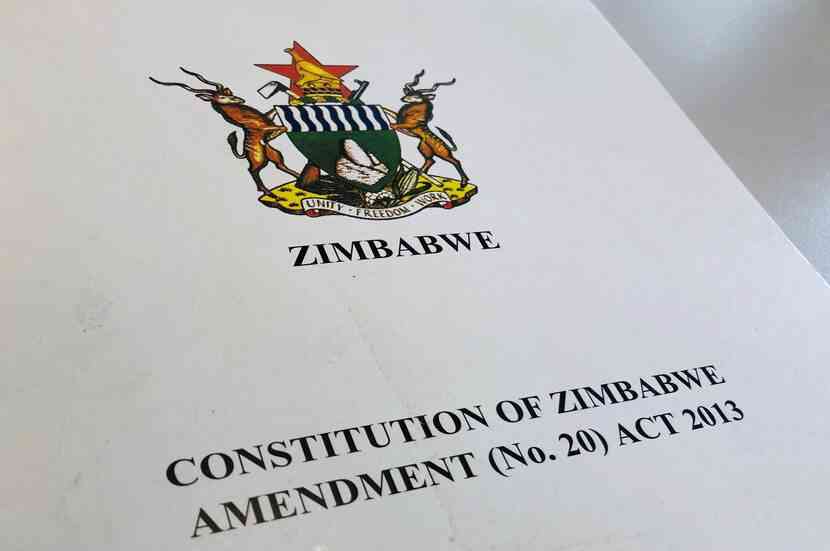
Debate over the new proposed constitutional amendment that would extend presidential terms from five to seven years and remove direct presidential elections has ignited fierce discussion among residents in Bulawayo North, exposing deep anxieties over Zimbabwe’s democratic trajectory.
The proposed Constitution of Zimbabwe Amendment Bill, 2026, yet to be tabled in Parliament, has already become a magnet for public debate, with many residents accusing the ruling Zanu PF of employing calculated political strategy while others are worried about the shrinking democratic space.
The bill seeks to prolong the life of Parliament and the President from 2028 to 2030, change the format of elections so that people will no longer directly elect the President and change the mandate of the Zimbabwe Defence Forces from protecting the Constitution to protecting the country.
In a lively discussion on the constituency WhatsApp group, Bulawayo North residents described the proposals as potential “monster amendments,” lamenting the lack of a coordinated civic leadership to clearly explain the implications.
“The problem faced by Zimbabweans at the moment is that we have no leadership to properly inform us what is really going on,” said a resident identified as Benjamin, who stated constitutional law experts were needed to unpack the implications and educate citizens.
“I watched a video of Professor (Lovemore) Madhuku explaining the steps that might be taken and how impossible it might be to complete the bill and have it signed into law before 2028. The explanation by the professor was clear that tabling of the bill in Parliament is their right and no one can stop them but the problem comes when they refuse people to participate in a referendum.”
Benjamin argued Zimbabwe’s Constitution belonged to the people, not any political party.
“It’s not a Zanu PF constitution, it’s a national constitution for the people of Zimbabwe,” he said, adding that if the amendment proceeds, “the only best possible route is the legal route through courts.”
“If it is the road to the courts obviously we need big brains in legal matters such as Professors Madhuku and Welshman Ncube,” he said.
However, others warned against what they called psychological surrender.
“We are definitely cornered and it would be naive and regrettable for us to be defeated psychologically and break down before any form of pushback against such malicious pressure intended on mutilation of our democratically approved constitution,” said another resident identified as Tichareva.
“Remember the story of David and Goliath. A cornered dog has no alternative except to fight its way out of that corner. It’s only impossible until we try.”
Another resident struck a more pessimistic tone, questioning whether meaningful opposition was even possible.
“You believe we have democratic space to fight this and other governance failures. On my side I firmly believe we don’t have any platforms to oppose what Zanu PF wants. Secondly, the people of Zimbabwe have been cowed into submission,” the resident said.
Another cheekily responded: “I am not sure about the above, the President said he is a constitutionalist, so whatever is amended and passed becomes part of the constitution and he will honour that.”
As debate intensified, some warned against internal divisions.
“People have so much negative energy. How will we fight Zanu when we begin to fight amongst ourselves,” wrote one.
Bulawayo North legislator, Minenhle Gumede, sought to calm tensions, clarifying the amendment had not yet been tabled.
“The proposed amendment has not yet been brought before Parliament. However, comments from the responsible Minister indicate that it may be tabled during the second quarter of 2026,” Gumede said.
“As is the norm, I will share the Bill once I have received it. I expect that public consultations will then commence, enabling all residents of Bulawayo North to attend and air their views. In fact, l believe every constituency is currently in conversation with all their representatives as this process will include local government level up to the very top of the chain.”
Another participant said they needed to equip the MP with reasons why they were opposing the amendment.
“We should be discussing the pros and cons of this amendment as a constituency not as Zanu or CCC, we are Zimbabweans for heaven’s sake. Let’s unite and press for a referendum so that we vote according to the constitution. As a nation we are now very suspicious of the motive behind the 2030 narrative…and how they are planning to outwit the populace by stripping us of rights to elect our President as a nation,” said the resident.
Another resident warned others of a pattern of Zanu PF’s strategic political maneuvering.
“I always tell my friends that Zanu PF has some of the best minds and can pay for anyone to strategise for them. In this case they know exactly how people will react and they will manage each step until they get what they want. Good luck with opposing this constitutional amendment,” the resident said.
Another participant said he had chosen to “watch these amendments from the terraces”.
“What Zanu PF wants, Zanu PF will get. We don’t have strong and independent institutions to stand in the way… Courts are captured… attempts to go in the streets will be met with the full force of security forces,” he wrote.
These views were buttressed by another resident who said: “Let’s be pragmatic here, what makes us think that we can stop 2030, when we couldn’t stop the extension of a mere Town Clerk’s contract.”
“The constitutional amendment will sail through, next year ED will be re-elected as party president and in 2028 choose his own successor who will not face direct election. I guess l am one of the few who have decided not to participate in this circus (kuitiswa), of course a few radicals will be paid to be loud mouths opposing on social media.”
Despite the scepticism, some called for unity beyond party lines.
“It’s not time for party affiliation talk. It’s about us Zimbabweans whether Zanu PF or opposition. It affects the future of the country,” another resident said.
“Term limits should be respected full stop. We don’t want to be taken for granted by any political party. Zimbabwe belongs to Zimbabweans regardless of political affiliation. No to the amendment.”
The Bulawayo North MP noted how the discussion in the constituency group reflected what everyone was talking about and reflected their concerns over executive power and succession politics.
“This issue is under debate in all corners and there is nothing currently which is clear and certain at any level, people are discussing and when it comes to a vote nothing is ever a done deal until the very end,” Gumede said.
“If for example the public consultations become a resounding no ,then l believe this will be an indicator of which way the wind might blow.”
Responding to claims that MPs were indifferent because they stood to benefit from a term extension, Gumede said the amendment was neither initiated by legislators nor designed for their benefit.
“This amendment was never intended for the benefit of MPs, nor was it ever initiated by them,” she said, adding the bill should be debated on its merits rather than through assumptions about implied benefits.
Support CITE’s fearless, independent journalism. Your donation helps us amplify community voices, fight misinformation, and hold power to account. Help keep the truth alive. Donate today
A very interesting debate is raging on, but the big question is, will ZANUPF allow the population to participate in the debate, given its propensity to unleash physical violence on the peaceful people using all state apparatus/resources at its disposal….