

Communities in the drought-prone Matabeleland South districts of Bulilima and Matobo have adopted climate-resilient small grains farming methods to mitigate persistent food insecurity, with early indications showing positive results.
For many years, Matabeleland South has experienced recurring droughts that have led to serious food shortages, forcing donors to regularly distribute food aid. However, not everyone affected has benefited from these food hampers.
In response to these long-standing challenges, farmers in Bulilima and Matobo, with support from climate-resilience focused non-governmental organisation Sisonke Working Together Trust, have shifted towards growing small grains that are more tolerant to harsh climatic conditions.
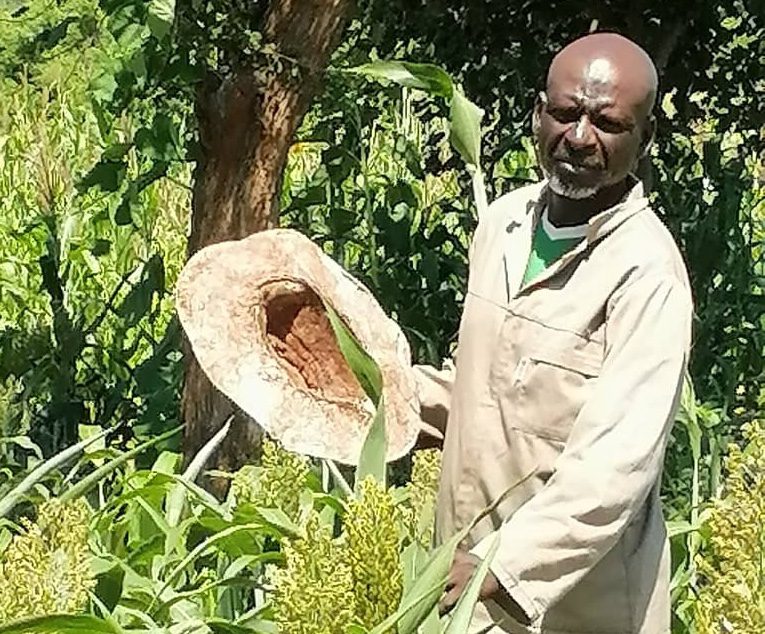
Meli Tshuma (59), a father of four from Tokwana area in Bulilima Ward 4 under Chief Masendu, is among farmers who say the shift has improved household food security and provided income through the sale of surplus produce.
Tshuma, who is now chairperson of the Farmer Field School in the area, said he previously relied on maize but suffered repeated crop failures.
“I attended a look-and-learn field day at Mfazo Tshuma’s farm and realised that small grains were the only option to ensure food security for my family and community,” he said.
“After seeing what Mfazo and other farmers were doing, I shifted from maize to traditional small grains. This year I have put more hectares under small grains as an adaptation measure. Small grains recover very fast from mid-season droughts.”
Tshuma said small grains improve both food security and nutrition, adding that Government, through Agritex, has complemented these efforts by promoting Pfumvudza/Intwasa as a climate-smart innovation.
Another farmer, Sinikiwe Ngwenya of Ward 3 in Matobo district and chairperson of Gohole Farmer Field School, encouraged farmers across Matabeleland to embrace climate-resilient small grains.
“Small grains will never disappoint as long as you tend them well. I urge farmers to grow these crops so they can ensure food security for their families and communities,” she said.
Ngwenya is also a climate-change ambassador who teaches pupils at Gohole Primary School about environmental stewardship.
Sisonke Working Together Trust senior coordinator for Bulilima Ward 4, Tokwana, Sipho Malebegwa said she and Agritex officer Lenny Tshuma recently distributed seed produced through farmer-managed seed banks to promote small grains.
“Sisonke is working hand in glove with Agritex in small grains production. Our major goal is to promote drought-tolerant crops using the farmer-first approach,” Malebegwa said.
She cited lead farmer Mfazo Tshuma, who planted 20kg of PVK 801 sorghum variety using regenerative agriculture practices.
“The crop was planted in early December and performed very well with minimal challenges,” she said.
Malebegwa, who voluntarily monitors farmers’ fields, said her passion is to ensure farmers apply best practices in small grains production.
Sisonke Working Together Trust director Themba Maseko Phiri said households that adopted small grains had doubled yields compared to those growing maize.
“Zimbabwe is on the frontline of climate change, and this is evident in Bulilima and Matobo districts, which fall under agro-ecological regions four and five,” Phiri said.
“For decades, maize, the country’s staple, has suffered repeated failures. Communities are now successfully adapting by embracing small grains.”
Phiri said grassroots organisations such as Sisonke Working Together Trust are playing a crucial role in empowering farmers through training, seed access, awareness campaigns and community engagement.
“This is a sustainable and permanent solution to climate change challenges. It strengthens farmers’ capacity to make informed decisions, improve yields and protect livelihoods,” he said.
Recent developments show that Sisonke, working with Matopos Research Institute, has also educated farmers on the nutritional and health benefits of small grains.
Demand for small grains from millers and stock-feed manufacturers is rising, increasing their economic value.
“As climate change continues to challenge agriculture, resilience is being built from the ground up through respect for indigenous knowledge systems,” Phiri said.
“In a nutshell, small grains may be small, but through collective action and community empowerment, they are playing a big role in securing Zimbabwe’s food future.”
One beneficiary of the seed multiplication programme, Getrude Sibanda, was recently rated the best small-grains farmer after recording exceptional yields.
Sibanda, a pioneer farmer in the programme, has established a seed bank of pearl millet (PMV 5 and PMV 3) and sorghum (PVK 108) under a programme run by Sisonke and Matopos Research Institute.
She said many households suffer food insecurity because they have not embraced small grains.
“Small grains are my way of adapting to climate change. I encourage farmers in drought-prone areas to grow them,” she said.
Sibanda, 45, has five children and grows small grains on 1.5 hectares. Proceeds from half of her harvest are used to pay school fees for three of her children.
Support CITE’s fearless, independent journalism. Your donation helps us amplify community voices, fight misinformation, and hold power to account. Help keep the truth alive. Donate today