

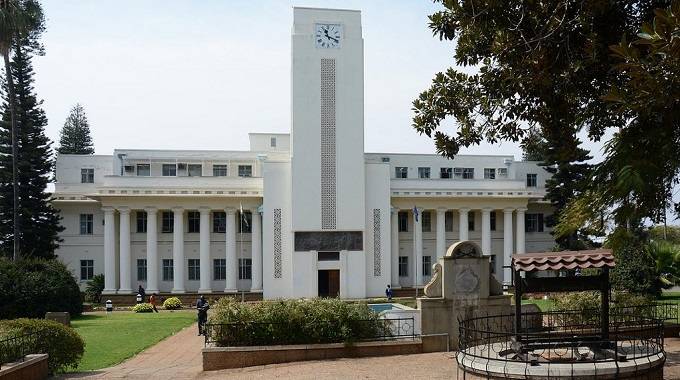
Attendance at this year’s crucial Bulawayo budget consultation meetings was worryingly low, raising questions about public participation in local governance despite efforts by the Bulawayo City Council (BCC) to promote civic involvement in shaping the city’s financial priorities.
Only 1 541 residents attended the 2026 Proposed Budget Consultation Meetings held from September 26 to October 4, 2025, across 47 venues citywide, a small fraction of Bulawayo’s 665 940 residents, according to the 2022 Population Census.
Even when excluding the child population, participation remained strikingly low.
By comparison, 1 777 residents took part in the 2025 budget performance review meetings held from July 4 to 27, 2025, where they helped set priorities for the 2026 budget.
The latest figures mean less than 0.3 percent of Bulawayo’s population contributed to discussions that ultimately shape how public funds are allocated for essential services such as water, health, roads, and housing.
Analysts say the low turnout reflects deeper issues of public disengagement, mistrust, communication breakdown between local authorities and citizens, meeting fatigue or economic pressures preventing residents from attending.
“It shows that people have lost confidence in local and political institutions. They now view them as talk shows that won’t change their livelihoods. In most cases, their input is not taken seriously and there’s no feedback. So people will shun these meetings and life goes on,” said Bernard Magugu, a civic analyst.
Magugu said budget consultations are not just procedural exercises but vital platforms for residents to influence how resources are spent on services that affect their daily lives, from water delivery to waste management.
He warned that low civic participation undermines democratic accountability and risks leaving crucial decisions in the hands of a few.
“It’s now a 20/80 rule, that is, 20 percent make decisions for the 80 percent who are passive. The public doesn’t fully understand this. The decline of civic organisations that once carried out grassroots civic education has left communities resigned to fate,” Magugu added.
However, critical studies scholar, Dr Khanyile Mlotshwa offered a different perspective, arguing that representative democracy may explain the low numbers.
“Isn’t this how democracy works, through representation? Of the 665,940 people, maybe half are outside the country, many others are children or working people. They cannot all attend meetings. Those who turned up represented those who could not,” he said.
Still other observers like a resident from Emthunzini, Emmanuel Sibanda, argue that revitalising civic engagement through more accessible consultations, digital participation platforms and community outreach could help make sure the city’s development priorities better reflect residents’ needs.
“While consensus may exist among the few who attend, low civic participation remains a democratic risk, it does exclude the broader population from decisions that determine the city’s financial future,” he said, urging the city to also do more to encourage participation and “not fold its hands because they have advertised in Whatsapp groups.”
Meanwhile, during the presentation of the 2026 proposed budget on Tuesday, Finance Committee Chairperson Councillor Dumisani Nkomo acknowledged the concerns raised during the consultations.
“The city is facing worsening service delivery infrastructure decay in water, sewerage, roads, and social amenities. The proposed budget seeks to address some of these infrastructure resuscitation needs,” Cllr Nkomo said.
He said residents had prioritised water, health, sewerage, housing, roads, education, public lighting, social services, and emergency response as key areas requiring immediate attention.
During the consultations, residents also cited concerns about irregular water supply, medicine shortages in clinics, pollution at the landfill site, delayed sewer repairs, poor road conditions, and the need for more solar streetlights and youth facilities.
Cllr Nkomo said 98 percent of participants endorsed the proposed US$224.7 million 2026 standstill budget, which maintains 2025 rates while continuing special levies for roads and water infrastructure rehabilitation.“To finance roads and social amenities, the council will maintain rates and property taxes at 2025 levels,” he said. “The water and roads levies of US$1 for domestic properties and US$10 for non-domestic properties will continue and be ring-fenced for rehabilitation projects.”
Support CITE’s fearless, independent journalism. Your donation helps us amplify community voices, fight misinformation, and hold power to account. Help keep the truth alive. Donate today