

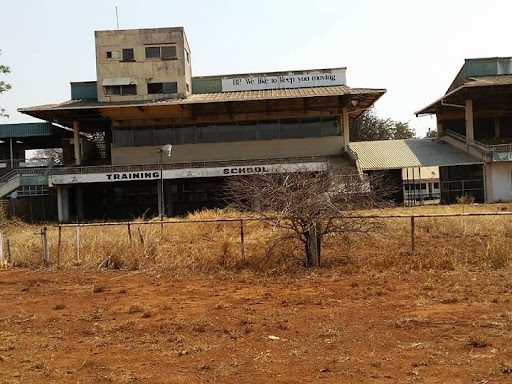
A sweeping redevelopment blueprint for the former Ascot Racecourse has sparked intense debate after the Bulawayo City Council (BCC) unveiled Ascot Precinct Plan Number 20, a proposal to convert 68 hectares of underused land into a dense, mixed-use district of housing, retail, offices, recreation and a flagship hotel.
Presenting the concept recently at the Large City Hall, the City’s Town Planning Department called the site a “once-in-a-generation opportunity” to integrate new development with the existing urban fabric while boosting connectivity.
The former racecourse currently houses deteriorating infrastructure, informal recreation areas, and historical structures needing preservation assessment, surrounded by affluent neighborhoods and commercial corridors.
The plan anchors around a major retail hub, a 400 plus room hotel, a modern office park, stitched together with parks, sports facilities and a re-aligned arterial road network.
The planning department led by Shelton Sithole promoted the “City of Kings and Queens Shopping Mall” as a regional retail and entertainment magnet, creating jobs and enhancing Bulawayo’s profile.
Tourism and hospitality are pitched as priorities, with high-quality accommodations, modern conference spaces and adaptable leisure facilities.
Sports and recreation would be consolidated into a single hub, with a restored grandstand, football pitches, parks, and walking trails.
Urban regeneration measures include adaptive reuse of historic structures, strategic demolition of derelict buildings, new public spaces and infrastructure upgrades.
Planners weighed maintaining the status quo against a “Comprehensive Compact Development” model, ultimately selecting the latter for its alignment with densification and integrated development goals, despite being harder to implement.
Design standards are intentionally premium with Ascot to be divided into five zones, which are:
- Residential – cluster homes, duplexes and flats emphasising vertical growth, underground parking, and solar-powered designs.
- Business (Shops and Offices) – a signature shopping mall blending luxury and cultural aesthetics, with a premium retail mix.
- Business (Office Park) – a professional district with green building standards and underground parking.
- Institutional – medical facilities near United Bulawayo Hospitals, creating a health-focused hub.
- Recreational and Hospitality – amusement park, sports arena, and green infrastructure for climate resilience featuring a hotel with 400plus rooms, rooftop dining, conference halls, co-working spaces, and leisure amenities.
Additionally, transport upgrades would realign Esigodini Road, eliminate accident-prone curves, add pedestrian bridges and improve mall access routes.
While attendees praised the ambition and clarity of the master plan, residents repeatedly pressed planners on affordability, economic realism, investor appetite and transparency.
One T. Musika questioned whether the scheme aligns with Bulawayo’s stagnant job market and long-term needs.
“In planning this precinct, how much consideration has been given to making it financially and economically realistic, given current conditions? While the proposals may look good on paper, at our first meeting, the city acknowledged high unemployment and the need to focus on commercial activity. Yet, 50 years of planning now seems focused on townhouses,” he said.
“Are we prioritising housing over the commercial growth the city needs? Bulawayo was designed around commerce, not luxury housing. Many of these homes are unaffordable for most residents. How realistic is this plan in addressing unemployment and the city’s economic stagnation?”
A female resident warned the model resembled a high-capacity, high-stability template ill-suited to Bulawayo’s current realities:
“The analysis feels like a Singapore-style housing model, which is problematic because it assumes stability and economic growth that we don’t have. It seems the planning has not prioritised economic development or attracting investment to the city. Building cluster homes as rental properties, what return will investors realistically get?” she asked.
She added the city must consider Bulawayo’s original blueprint, which was designed for a smaller population.
“Now, the population has grown, the economy is struggling, and industry is shrinking. How does this housing plan reflect that reality? As a 40-year-old resident, I see buildings becoming malls, and malls turning into vendor markets. How will this sustain the city’s industry, the very people producing goods, when malls largely sell imports from South Africa?” she asked.
“Housing should be assessed in terms of Bulawayo’s overall economy, not just aesthetics. Young people wanting to buy homes need opportunities that make financial sense. Right now, the model focuses on surface-level ideas without addressing the deeper question -what will actually drive Bulawayo’s economic transformation?.”
Investor confidence and the policy environment dominated another intervention.
“The presentation looks brilliant on paper, but when you consider local authorities and government policy, there are questions. If the development is publicly funded, the authority can say no. If it’s a public-private partnership, private investors will look at how active the local economy is and whether the policy environment is conducive,” said Ethan Andreas Mathibela.
“I can imagine a lot of capital out there but for something to be approved locally, it has to be approved by the office of the President and Cabinet. If I were a millionaire, would I wait for that bureaucracy? We need to understand economic development first, before technical structures, so we know what will actually attract investors.”
On housing typologies, Mbuso Siso argued for housing going up, not out.
“Last time we were against this maybe because we had not seen this but of course this would only benefit 80 or 100 homes until buildings are built going up as flats, which would make more sense than cluster homes,” he said.
“If we are to have accommodation let it be accommodation as flats going up, then maybe underneath have commercial shops since we are in a deep crisis of land and accommodation in Bulawayo.”
Another businessperson urged caution, highlighting challenging investment conditions and potential favoritism.
“At present, our economy is not internationally friendly enough to develop this prime land. Our city does not attract investors easily, and banks and building societies lack the proper financing structures. Why rush Ascot? Who proposed it, and who has applied, will it go to friends? I have applied personally, only to be told the land is in buffer zones,” he said.
The businessperson said horse racing is a multi-billion-dollar international business, as seen with Borrowdale Group, Kenilworth in Cape Town and Durban July so Ascot should remain for racing until Zimbabwe can attract investors for it.
“Otherwise, we should wait until the economy is internationally competitive. Harare has advanced with UAE investments, yet we have none here, and no international company is currently willing to invest in a development of this nature. For now, we could focus on above-ground townhouse development instead,” he said.
Responding to the wave of skepticism, Bulawayo Town Planning Director, Wisdom Siziba,urged residents to see the plan as a directional framework that can attract the very investment people say is lacking.
“Ascot should be able to relate to any place in Bulawayo, where there is a proper plan it will attract the money we need to dream to achieve what we want. We need to dream, saying, ‘I can’t do this’ prevents you from getting what we want. The people of tomorrow might think differently and might be able to get solutions,” he said.
“What we see in other countries now, we might go there. It’s very possible, planners have dreamt. Let’s walk together with that dream today. Tomorrow is unknown. Let’s work towards that unknown, generations improve and our children can, coupled with belief, we believe we will be able to achieve that. Investors and stakeholders here look for money. What we see in China is not out of this world because we are also from his world.”
Siziba said the 68-hectare site is public land and that the city seeks transparent processes to allow broad participation:
“That land is public and belongs to everybody, we have big piles of proposals, expressions of interest indicate an individual’s interest but they are many because of the culture we discourage unsolicited bids. We want to be transparent where everyone has an opportunity,” he said.
“You can’t say you have discovered Ascot, all people here should have an equal opportunity to develop Ascot, not an individual. There are a number of people who have written proposals but we are saying as a city we do take ideas and what is coming from you is very critical.”
The City has outlined a fast-tracked consultation and approval schedule for the Ascot Precinct Plan. A formal public exhibition, including hearings and feedback sessions, is planned for August to September 2025 to gather community input. In October, stakeholder feedback will be incorporated and technical refinements made to finalise the plan for adoption.
BCC is expected to formally approve the plan in November 2025, followed by submission for national approval. Gazetting is scheduled between November and December 2025.
Support CITE’s fearless, independent journalism. Your donation helps us amplify community voices, fight misinformation, and hold power to account. Help keep the truth alive. Donate today
Singapore is clean not FILTHY like Bulawayo with illegal vendors on streets and pavements
Clean up the ENTIRE CITY
CityofBulawayo staff members are living on another planet they cannot even maintain BASIC services including maintaining cemetries