

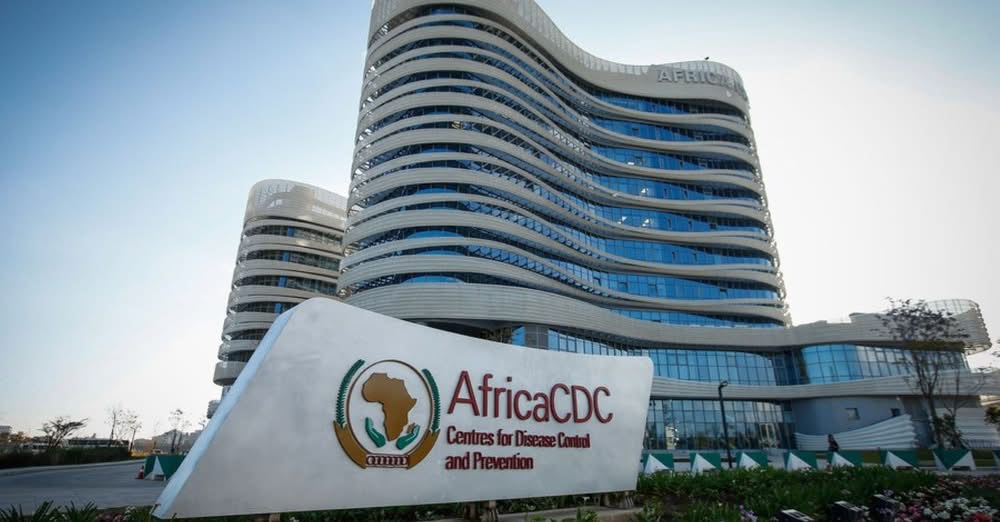
The Africa Centres for Disease Control and Prevention (Africa CDC) has secured a US$2.65 million grant to strengthen surveillance of non-communicable diseases (NCDs) across ten African Union (AU) member states.
The funding, awarded by the Novo Nordisk Foundation, will be managed by the Africa Public Health Foundation (APHF). The two-year project, running from June 2025 to May 2027, will focus on building a scalable training programme to expand public health workforce capacity for NCD monitoring.
Africa CDC said the initiative will ensure that African countries are better equipped to collect reliable data and respond to the growing threat of chronic diseases.
NCDs are long-term illnesses that are not passed from person to person, such as heart disease, cancer, diabetes, and chronic respiratory diseases. They are associated with common risk factors like unhealthy diets, lack of physical activity, tobacco use, and excessive alcohol consumption.
In a statement, Director-General of Africa CDC, Dr. Jean Kaseya, said the partnership comes at a critical time to equip the health workforce with the tools, skills, and systems needed to generate reliable data.
He said these diseases continue to pose a significant health challenge across Africa, hence this initiative addresses the urgent need for enhanced surveillance systems to inform evidence-based public health policies and programming.
“Non-communicable diseases are rising rapidly across our continent, yet surveillance systems remain weak. Strengthening NCD surveillance is essential for evidence-based decision-making, smarter investments, and building resilient health systems that protect all Africans. This initiative is a cornerstone of Africa CDC’s strategy to advance health sovereignty and a new public health order for Africa,” he said.
“Though the focus of public health policymakers in Africa is overwhelmingly on communicable diseases, premature deaths and disability from NCDs and mental health conditions, and their overall share of the disease burden, is increasing rapidly.
“There is limited regular population-based data for NCDs, their risk factors and determinants, which affect the decisions made to address these conditions including their prioritization and integration into primary and secondary health care levels.”
Chief Scientific Officer, Health, Novo Nordisk Foundation, Professor Flemming Konradsen, noted that they are committed to accelerating NCD prevention and care, focusing on the health workforce.
“We are pleased to enter into a partnership with Africa CDC, which is a key actor in strengthening health systems across the African Union. This project will enable better planning and policy making for NCD prevention and care through systematic collection of data on disease burden, risk factors and health service utilization,” he said.
Support CITE’s fearless, independent journalism. Your donation helps us amplify community voices, fight misinformation, and hold power to account. Help keep the truth alive. Donate today