

The African Commission on Human and Peoples’ Rights (ACHPR) has raised a series of concerns over Zimbabwe’s human rights record, warning that despite a strong constitutional framework, significant gaps remain between legal guarantees and actual practice.
The concerns follow a four-day promotion mission by the Commission to Zimbabwe from March 30 to April 2, 2026 during which a high-level delegation engaged government officials, independent commissions, civil society organisations, some journalists and visited correctional facilities.
The mission, conducted under Article 45 of the African Charter on Human and Peoples’ Rights, was led by Commissioner Janet Ramatoulie Sallah-Njie, alongside Commissioners Maria Teresa Manuela and Selma Sassi Safer.
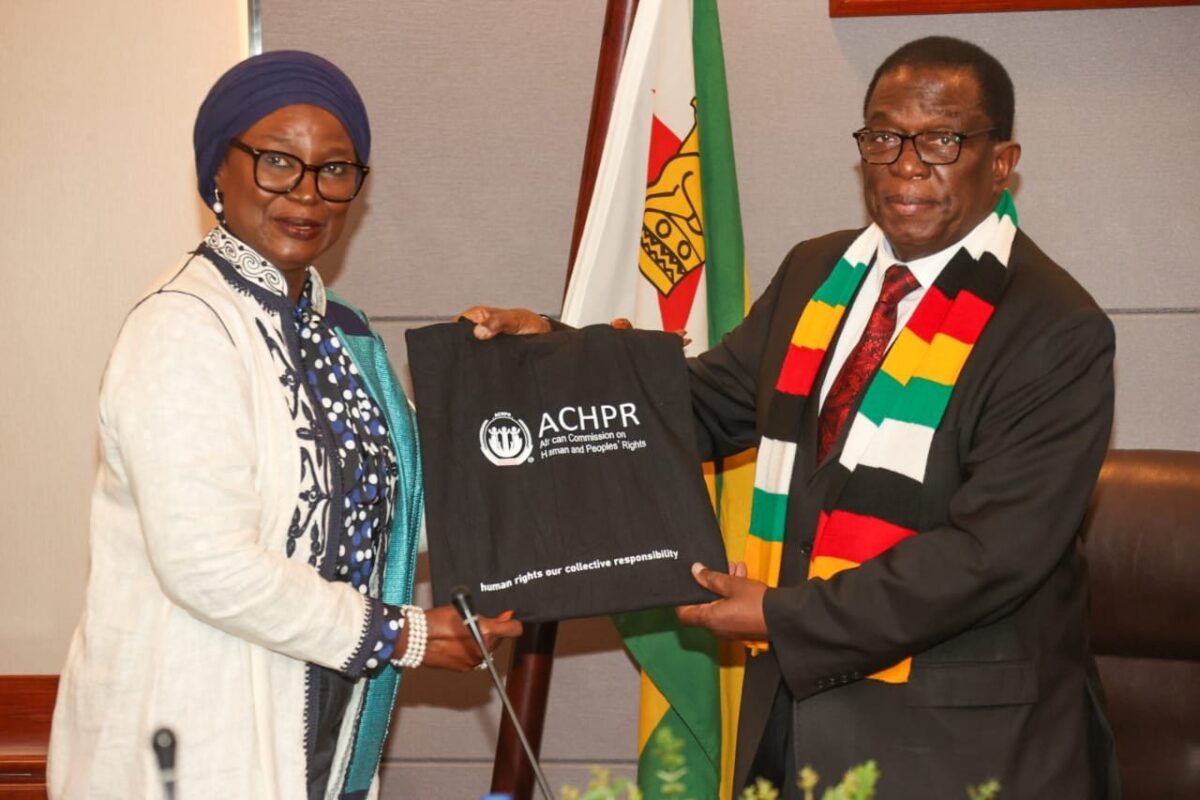
During the visit, the delegation met with President Emmerson Mnangagwa, who reaffirmed the government’s commitment to human rights and pledged to implement recommendations arising from the mission.
In its preliminary findings, the Commission acknowledged several positive developments in Zimbabwe’s human rights landscape, including the progressive 2013 Constitution, expanded gender equality frameworks, and the abolition of the death penalty in 2024.
It also commended reforms within the correctional system, particularly the establishment of the Marondera Female Open Correctional Institution, which emphasises rehabilitation through vocational training and reintegration programmes.
However, despite these gains, the Commission said major structural and policy gaps continue to undermine the full realisation of human rights.
One of the Commission’s key concerns is Zimbabwe’s failure to ratify several critical international and regional human rights instruments.
These include the Convention Against Torture (CAT) and its Optional Protocol (OPCAT), as well as other African Union frameworks aimed at strengthening protections against violence, statelessness, and human rights violations.
Read:https://cite.org.zw/zim-deliberately-evading-convention-against-torture/
The Commission warned that failure to ratify these instruments limits Zimbabwe’s alignment with global human rights standards and weakens accountability mechanisms.
It urged authorities to “expedite the ratification” of these treaties and strengthen institutional mechanisms for implementing human rights obligations.
The ACHPR also highlighted ongoing challenges within Zimbabwe’s correctional system, particularly overcrowding in conventional prisons.
While acknowledging the success of the open prison model, the Commission noted that the broader prison system remains “critically overcrowded,” raising concerns about conditions of detention and the treatment of inmates.
The delegation conducted site visits to Harare Central Prison and the Marondera Female Open Correctional Institution, where it assessed conditions and ongoing reforms.
To address these issues, the Commission recommended expanding the open prison model to reduce congestion and promote rehabilitation-focused approaches.
Despite Zimbabwe’s robust constitutional protections, under Chapter 4, which guarantees a wide range of civil, political, economic and social rights, the ACHPR found a persistent gap between law and practice.
Among the issues highlighted were the continued prevalence of child labour, especially in agriculture and artisanal mining, and the persistence of child marriage in some communities.
The Commission also raised concern over the age of criminal responsibility, currently set at 14, and called for stronger legal safeguards for children in conflict with the law.
“While the Constitution provides robust protections, significant implementation gaps remain,” the Commission noted.
The ongoing Constitutional Amendment Bill No. 3 process also came under scrutiny, with the Commission urging authorities to allow greater inclusivity and transparency.
“The Mission encouraged more inclusivity to further strengthen transparency and public confidence in the ongoing reform process,” the Commission said.
This comes amid growing domestic criticism of the consultation process, with stakeholders raising concerns about whether it adequately reflects the views of all Zimbabweans.
The Commission specifically flagged the proposed dissolution of the Zimbabwe Gender Commission (ZGC) as a matter of concern, warning that such a move could undermine gains made in advancing gender equality.
Read: https://cite.org.zw/will-gender-equality-lose-its-dedicated-watchdog/
In its preliminary recommendations, the ACHPR urged the Zimbabwean government to take concrete steps to strengthen human rights protections.
These include ratifying outstanding human rights treaties, addressing prison overcrowding, and ensuring that constitutional reforms are inclusive and participatory.
The Commission also called for the establishment of a dedicated focal point within the Ministry of Justice to follow up on its decisions, as well as the enactment of legislation such as the Whistleblowers and Witness Protection Bill to enhance accountability.
During the mission, the delegation held extensive consultations with senior government officials, including ministers, parliamentarians and representatives of independent commissions such as the Zimbabwe Human Rights Commission and the Zimbabwe Electoral Commission.
It also engaged with the Law Society of Zimbabwe, civil society organisations, media practitioners and human rights defenders.
The Commission said these engagements were aimed at strengthening collaboration and fostering dialogue on Zimbabwe’s human rights obligations.
The ACHPR is expected to compile a comprehensive report on its findings, which will be presented at one of its upcoming sessions before being formally transmitted to the Government of Zimbabwe.
Read full statement here: https://achpr.au.int/en/news/press-releases/2026-04-02/press-statement-conclusion-promotion-mission-african-commis