
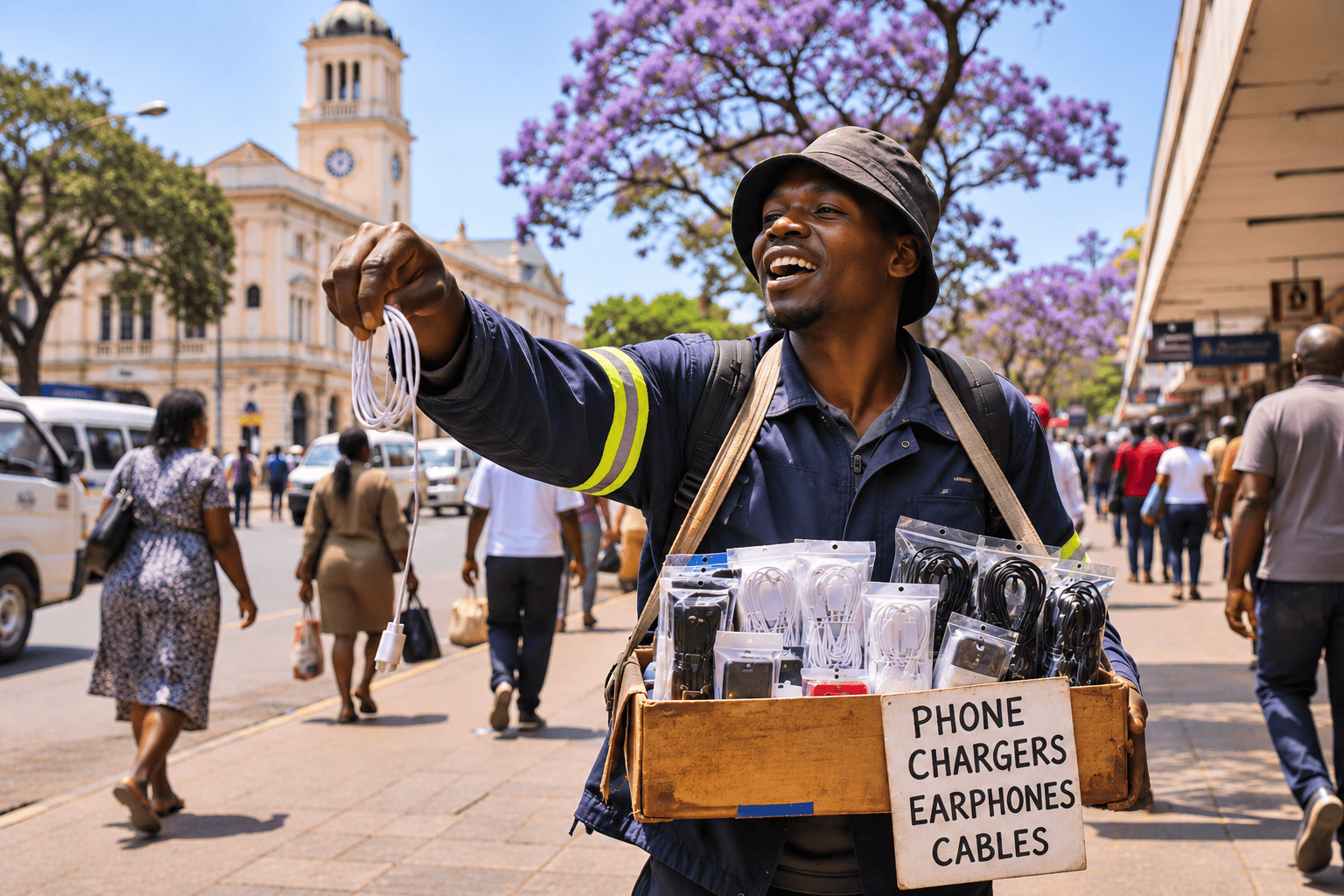
The Vendors Initiative for Social and Economic Transformation (VISET) has criticised the 2027 National Budget for failing to provide a clear fiscal support framework for informal economy workers, despite their significant contribution to employment and household incomes.
In their assessment of the budget presented by Finance Minister Professor Mthuli Ncube, VISET said informal traders and other workers in the sector needed more than policies aimed at regulatory compliance and revenue collection, calling for targeted investment to protect their livelihoods and support business growth.
The organisation acknowledged measures such as the proposed increase in the personal income tax-free threshold from US$100 to US$150 and reductions in Intermediated Money Transfer Tax (IMTT) rates, saying these would provide some relief to individuals and businesses.
However, it argued that the budget had not adequately addressed the needs of workers who depend on informal economic activities for their livelihoods.
On this topic
“As an organisation representing informal economy workers across Zimbabwe, VISET is, however, concerned that despite the significant contribution of the informal economy to employment, household incomes and national economic activity, the 2027 Budget does not clearly articulate a dedicated fiscal support framework for informal economy workers,” the organisation said in a statement.
VISET said inclusive formalisation should be supported by investments in affordable trading infrastructure, serviced markets, water and sanitation facilities, accessible financing and business development services.
It also called for stronger social protection measures, particularly for women, young people, persons with disabilities and other vulnerable groups whose livelihoods are exposed to economic shocks.
The organisation welcomed the government’s recognition of small and medium enterprises (SMEs), local production and financial inclusion, particularly the proposal requiring government, mining companies and large entities to procure at least 15 percent of their input requirements locally, where capacity exists.
However, VISET warned that informal traders, small-scale producers and cooperatives could miss out on these opportunities unless deliberate measures were put in place to facilitate their participation.
It urged government to introduce accessible procurement processes, appropriate financing mechanisms and capacity-building programmes to enable emerging businesses to benefit from the local procurement policy.
“Economic transformation must create opportunities across the entire economic spectrum rather than disproportionately benefiting established businesses,” VISET said.
The organisation also raised concerns about the impact of climate change on informal livelihoods, noting that anticipated El Niño-induced drought conditions could disrupt food supply chains, markets and the operations of small-scale producers and food vendors.
It called for climate adaptation and resilience programmes to incorporate informal economy workers, arguing that climate-related interventions should extend beyond agriculture to protect communities whose incomes depend on informal trading.
VISET said allocations towards social protection, local government, agriculture and climate services should translate into practical interventions that reduce the vulnerability of households dependent on informal economic activities.
The organisation said the success of the 2027 National Budget should be measured by its impact on ordinary citizens, employment creation, poverty reduction and the expansion of economic opportunities.
It called on government, Parliament, local authorities, the private sector and development partners to involve informal economy workers in the implementation, monitoring and evaluation of the budget.
“Informal economy workers are not peripheral to Zimbabwe’s economy; they are an integral part of its productive and social fabric,” VISET said.
“A truly transformative budget must recognise their contribution, protect their livelihoods and create an enabling environment in which they can participate meaningfully in national economic development.”








Leave a Reply