
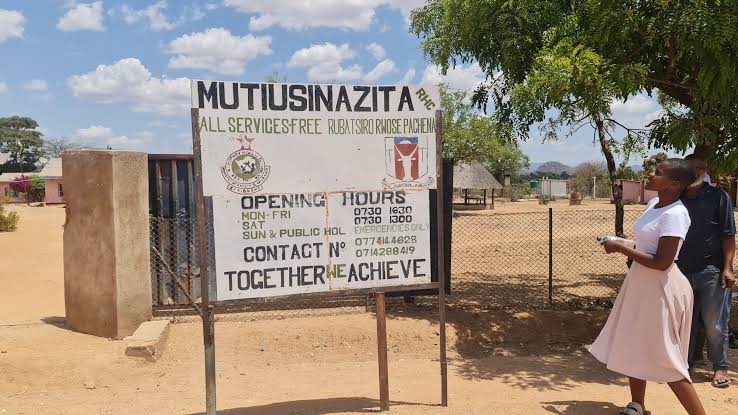
Rural health centres across Zimbabwe are struggling to provide essential healthcare amid critical shortages of ambulances, outdated medical equipment, unreliable water supplies, deteriorating infrastructure and inadequate funding, with a patient at one rural clinic reportedly dying from a snakebite while awaiting transfer to hospital.
The challenges were highlighted in a report by the Parliamentary Portfolio Committee on Health and Child Care, presented by its chairperson, Discent Collins Bajila this week, following an inquiry into the state of rural health facilities across the country.
The committee found that emergency transport shortages, compounded by poor road networks, were putting patients at risk, particularly those requiring urgent referral to higher-level health facilities.
“All visited facilities reported a critical shortage of ambulances, a situation exacerbated by the poor state of local roads. This lack of reliable emergency transport poses significant risks to patient outcomes,” the report states.
On this topic
The inquiry was conducted through oral evidence received from the Ministry of Health and Child Care permanent secretary, Dr Aspect Maunganidze, on May 13, 2025, followed by a fact-finding mission from October 6 to 10, 2025.
The committee visited Inyathi and Avoca district hospitals, Gundura and Mutiusinazita clinics, plus Melfort Clinic.
Zimbabwe has an estimated population of 15.1 million, with approximately 61 percent living in rural areas.
At Gundura Clinic in Masvingo North, the committee reported a patient died from a snakebite while awaiting transfer to hospital.
“Gundura Clinic depends entirely on distance from the Masvingo Hospital for emergency transport. This reliance proved dire, on one occasion a patient died from a snakebite while awaiting transfer. For a snakebite victim, the difference between life and death is often measured in minutes and the delay caused by traversing rough terrain in a conventional vehicle can be fatal,” the committee said.
The situation varied across the facilities visited. Inyathi District Hospital in Bubi had only one functional ambulance out of a fleet of three, while Avoca District Hospital in Filabusi had no ambulance and relied on Filabusi District Hospital, almost 80 kilometres away.
Mutiusinazita Clinic in Buhera depended on Birchenough Bridge Hospital, approximately 45 kilometres away, for emergency transport.
The committee said its own journey to the facility took nearly two hours from the main highway because of the poor road conditions.
Melfort Clinic in Goromonzi, despite serving communities relatively close to Harare, also had no ambulance and relied on neighbouring clinics.
The report noted patients, including pregnant women experiencing complications, were often forced to resort to unreliable alternative transport.
On medical equipment, the committee found most facilities were poorly equipped to provide adequate diagnosis and treatment.
“Most rural health centres were operating with outdated, obsolete, or non-functional medical equipment, much of which requires urgent repair or replacement,” the report states.
It warned that the deficiencies undermined the ability of facilities to provide accurate diagnosis and timely treatment, increasing the risk of delayed diagnosis, inappropriate clinical management and avoidable referrals.
Inyathi District Hospital was the notable exception, largely due to support from surrounding mining companies.
However, its ultrasound machine had been out of service for more than a year, while the hospital lacked a radiographer and sonographer.
The committee also raised concern over the availability of essential medicines, despite reported stock levels ranging between 60 and 64 percent across the facilities.
“Although the reported medicine stock levels across the visited facilities were generally above 60 percent, all institutions indicated they continued to experience periodic stock-outs of essential medicines, largely due to inadequate budgetary allocations and procurement-related challenges,” the report states.
Poor internet connectivity further constrained access to the Electronic Government Procurement System, delaying the ordering and replenishment of medicines.
Mutiusinazita Clinic struggled to source second-line HIV and hypertension medication, while Gundura reported difficulties accessing second-line hypertension drugs and glucose testing strips.
Mortuary services were also severely constrained.
Inyathi was the only facility providing functional mortuary services, although one of its two cooling compressors had broken down and the other was malfunctioning.
Four unclaimed bodies had also remained at the facility for extended periods.
Avoca District Hospital had a two-body mortuary that had been non-functional for years, while the other clinics had no mortuary facilities.
The committee noted the bureaucratic process for disposing of unclaimed bodies was extremely tedious, with some cases taking more than a year to resolve, further straining limited storage capacity.
The report also highlighted the impact of the discontinuation of Results-Based Financing (RBF), a donor-funded mechanism that supported health facilities based on verified performance.
“Following the discontinuation of RBF, officials indicated that facilities are now struggling to procure essential items such as sundries and cleaning materials,” the committee said.
At Avoca Hospital, staff reportedly resorted to purchasing basic supplies such as brooms and soap using their personal funds.
Rural hospitals, including Inyathi and Avoca, reported that they last received funding from the national budget in the first quarter of 2025 and had since relied on the Health Services Fund, generated from patient fees.
Infrastructure and staff welfare were equally concerning.
At Inyathi, health workers were paying approximately US$100 per room for accommodation, while five families at Gundura were reportedly sharing a single housing unit.
Staff cottages at Gundura and Mutiusinazita had visible structural cracks, while buildings across several facilities showed signs of deterioration.
Water supply challenges were reported at all facilities. Avoca relied on a frequently malfunctioning manual borehole, Inyathi experienced inconsistent supplies from the Zimbabwe National Water Authority (ZINWA), Mutiusinazita depended solely on a manual borehole, while Melfort faced unreliable council water supplies.
Although all facilities provided antenatal, delivery, postnatal, family planning and adolescent counselling services, the committee found significant differences in the quality of maternity infrastructure and equipment.
Gundura and Mutiusinazita had inadequately equipped maternity units, while Melfort reported increasing pressure on its services due to population growth in Ruwa and surrounding farming communities.
The committee further observed that deteriorating roads linking rural health centres to district hospitals and major highways delayed emergency responses, increased the risk of accidents and compromised patient care.








Leave a Reply