
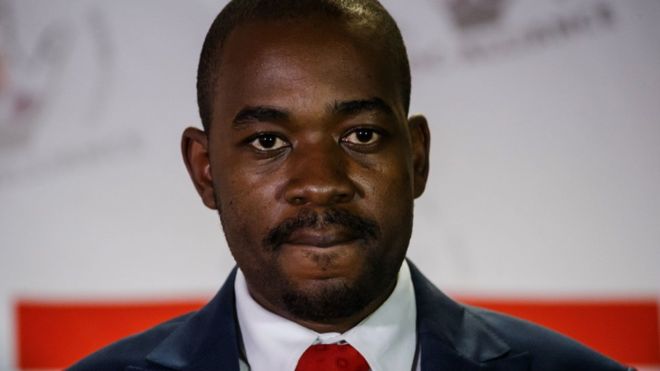
Former finance minister Tendai Biti has stirred controversy by alleging that businessperson and Zanu PF senator Kudakwashe Tagwirei financed the opposition MDC Alliance in 2018 and the Citizens Coalition for Change (CCC) in 2023, reigniting debate over the sources of funding for Zimbabwe’s political parties.
Biti made the claim on X in response to a user who asked who had funded the two opposition formations during the respective election cycles, replying with one word: “Tagwirei”.
The allegation, which Biti has not publicly substantiated in the exchange, prompted sharp reactions from former opposition officials, exposing longstanding questions about the sources of campaign money, the influence of wealthy businesspeople and the transparency of political financing in Zimbabwe.
Tagwirei, a controversial businessperson with extensive interests in sectors that include energy, mining and now Minister of Economic Development and Investment Promotion, has not publicly responded to the allegation in the reports reviewed.
On this topic
The exchange followed a strongly worded post by Biti accusing Tagwirei of accumulating wealth through alleged exploitation of public resources and seeking to acquire political power.
Biti warned against the concentration of economic and political influence in the hands of wealthy individuals, arguing that Zimbabwe’s institutions should not be treated as private property.
However, his subsequent claim that Tagwirei funded the opposition drew a direct rebuttal from Charlton Hwende, a former MDC Alliance secretary-general and treasurer.
“It is not correct that in 2018 and 2023 the opposition was funded by ZANU PF Senator Kudakwashe Tagwirei,” Hwende said in a post on X.
Hwende said ordinary party members accounted for about 70 percent of opposition funding through personal contributions and participation in campaigns, including volunteering as election agents.
He attributed another 20 percent to candidates financing their own campaigns, with the remaining 10 percent coming from Zimbabweans at home and in the diaspora.
Hwende said he had served in the party’s treasury before becoming secretary-general, adding MDC Alliance donations were handled through party bank accounts and an established financial management structure.
Advocate Thabani Mpofu, who represented the MDC Alliance in its 2018 presidential election petition, also dismissed Biti’s allegation.
“Tagwirei is many things; some good, others indescribably bad; but a funder of the opposition is not one of them. We really shouldn’t waste time on this,” Mpofu said.
Meanwhile, former opposition leader Nelson Chamisa was asked to respond to Biti’s claim but offered an enigmatic response rather than directly confirming or denying it.
“Masvanhi kongonya kutarisana kwevakarambana nehema nehema dzinokokwa kkkk Zvinoda kukura!” Chamisa said.
The competing statements have left the central allegation unresolved, highlighting the need for evidence and greater transparency in political party financing.
The controversy has renewed scrutiny of Zimbabwe’s political financing framework, particularly the Political Parties (Finance) Act, which provides for state funding of qualifying political parties.
Under the law, parties whose candidates secure at least five percent of the votes cast in a general election qualify for public funding.
Allocations are calculated according to the parties’ share of the vote, with the amount disbursed determined through the statutory process.
However, the law’s implementation has raised questions about transparency, oversight and the distribution of public money.
In 2025, Elections Resource Centre senior programmes officer Takunda Tsunga said the framework was historically opaque and gave the Justice Minister significant discretion over when and how funds were released.
Accountability Lab of Zimbabwe programmes officer, Beloved Chiweshe, also traced the use of state resources for partisan political purposes to the establishment of the Ministry of Political Affairs in 1987, following the Unity Accord between Zanu and PF ZAPU.
He said the ministry was tasked with making sure Zanu PF was adequately resourced and administered before it was abolished in 1992.
The Political Parties (Finance) Act subsequently formalised state funding for political parties, but experts argue that its accountability provisions remain inadequate.
In 2025, the government allocated ZiG147.68 million to Zanu PF and the CCC under the Act, with Zanu PF receiving approximately 69.3 percent and the CCC 30.7 percent, reflecting their respective shares of the vote in the 2023 elections.
The framework also prohibits foreign donations to political parties, but experts say the absence of adequate disclosure requirements, spending limits and effective independent oversight makes it difficult to scrutinise the sources and use of political funds.
The question of who controls public funding has itself become politically contentious.
In 2024, a faction aligned with Chamisa challenged the proposed disbursement of CCC funds to Sengezo Tshabangu amid an ongoing dispute over the party’s leadership and representation.
The dispute highlighted how leadership conflicts can affect access to public resources allocated in the name of a political party.
Biti’s allegation against Tagwirei has added another dimension to these concerns, which are the potential influence of private wealth on opposition politics.
Reflecting on the matter, political commentator, Iphithule Maphosa said the competing claims about the CCC funding have nonetheless sharpened a broader question about Zimbabwean politics.
“Who finances political parties, what influence do major donors wield and what mechanisms exist to make sure that political funding does not become a route to private influence over public institutions?” he asked.
Maphosa said without transparent disclosure of donations and effective oversight of political expenditure, allegations of secret funding are likely to persist, while voters remain unable to establish who finances the parties seeking their support and their true intentions.







Leave a Reply