
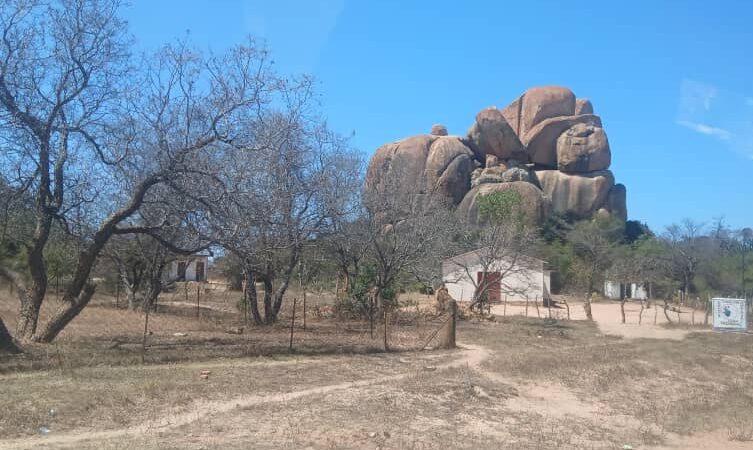
Locals in Gulathi Village in Matobo District, Matabeleland South Province, are struggling to access healthcare, education and markets as poor roads, mountainous terrain and limited public transport leave them increasingly isolated, according to the Gulathi Community Development Trust.
The transport challenges are worsening the cost of accessing basic services, with villagers forced to spend more money travelling to Bulawayo for medication and to sell agricultural produce, while schoolchildren face long walks and difficulties crossing flooded rivers during the rainy season.
Gulathi Community Development Trust chairperson, Rafaelo Ndlovu, told CITE the village only had one regular public transport service, a bus that arrives in the evening and leaves the following morning, leaving residents with few alternatives when they need to travel outside its schedule.
“People here normally depend on the market in Bulawayo. We have only one mode of transport that comes into the community, which is public transport, that is a bus, which comes in the evening and leaves in the morning,” Ndlovu said.
On this topic
Villagers who need to travel at other times must rely on finding a private vehicle, which is not always possible, or hire transport at additional cost.
“Getting another car is by chance or luck. If you want to go and sell your stuff, you have to hire another car. Now you have to calculate the amount of produce you have, so that it can give you at least some profit when you hire a car,” he said.
The cost of transport is particularly burdensome for villagers who depend on selling agricultural produce in Bulawayo.
Money that could otherwise contribute to household needs is spent on transport, making it harder for small-scale producers to earn a meaningful return from their work.
Ndlovu said the poor road network worsened the problem, with the village’s mountainous terrain making journeys considerably longer and more difficult.
“The roads are very bad here in Matobo. Going to the clinic is rough because we are in a mountainous area. Moving from point A to point B can take three hours or more because of the mountains but if they were not there, it might take an hour,” he said.
The consequences extend beyond the movement of people and goods, affecting residents’ ability to reach essential services when they need them most.
Healthcare is among the services most affected by the combination of poor roads, long distances and limited transport.
Ndlovu said residents often travelled to their local clinic for consultations but were then forced to go to Bulawayo to buy medication that was unavailable at the facility.
“Our clinic is for consultation because there is no medication. We then have to go to town and buy medication,” he said.
For families without reliable transport, obtaining treatment can mean arranging a private vehicle, paying additional fares or relying on whatever means of transport is available.
Ndlovu said some locals had to travel about eight kilometres using wheelbarrows or scotch carts to reach healthcare facilities, highlighting the difficulties faced by people who cannot easily access motorised transport.
“The roads are poor and for some people to access healthcare facilities, others have to travel eight kilometres on a wheelbarrow and on a scotch cart just to get to the clinic,” he said.
He said the situation was especially concerning during medical emergencies, citing cases of snakebites and illnesses for which residents struggled to obtain treatment.
“We have seen cases of snakebites and it has been terrible. Some people have passed away without accessing treatment for infectious diseases like tonsillitis. It’s sad that in this area, you are unable to find medication for a lot of things,” Ndlovu said.
His sentiments highlight how inadequate roads and transport deepen healthcare challenges, because reaching a facility and obtaining prescribed medication remains difficult for locals.
Ndlovu proposed that local health facilities work with pharmacies in Bulawayo to make sure essential medicines could be transported to the clinic and sold closer to where people live.
“This will help a lot of people. Imagine the travelling costs into town for medication,” he said.
Poor roads and the area’s rugged terrain are also disrupting children’s access to education.
Ndlovu said pupils sometimes had to walk long distances to school, while valleys and rivers created additional obstacles, particularly during the rainy season when waterways can flood quickly.
“Even with schools, we are having major challenges because there are a lot of valleys here and during the rainy season, the rivers quickly flood. Children have to walk longer distances again. It’s a big challenge,” he said.
Flooded rivers can disrupt movement and make already difficult journeys more hazardous, leaving children with additional barriers to attending school.
Beyond transport and road infrastructure, access to electricity remains limited in Gulathi, with power mainly available at shops and schools rather than in most households.
Ndlovu said the community had become accustomed to living without some basic services, raising concerns that prolonged deprivation was normalising conditions, which should be addressed.
“Electricity is only available in shops. There comes a point where the community adjusts to the way of living and feel comfortable with that adjustment because they no longer even care yet that should not be the case,” he said.





Leave a Reply