
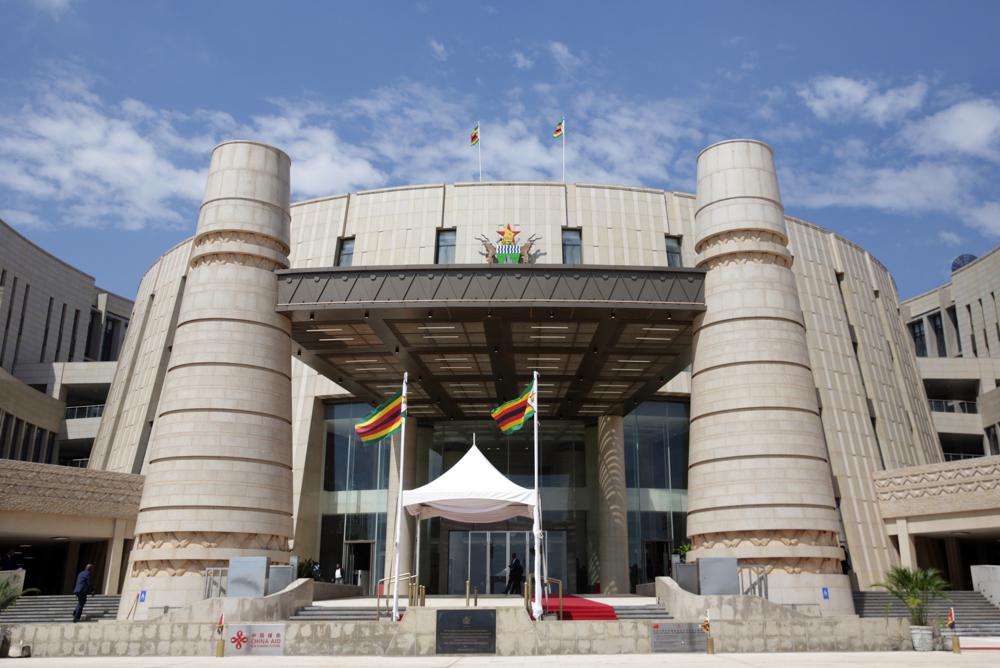
Emakhandeni-Luveve Member of Parliament Descent Bajila says legislators will use the upcoming national budget process to push for increased domestic funding for healthcare as Zimbabwe faces the loss of United States health assistance.
Bajila said Parliament would have to push the government to prioritise healthcare in the national budget while recognising that Zimbabwe currently does not have sufficient domestic resources to meet all its health needs.
“What parliamentarians need to do is to push government to be able to fund our health care from domestic resources first, but also appreciate that we have not yet reached a stage where we have sufficient resources for us to be able to fund everything,” Bajila said.
He was speaking during This Morning on Asakhe under the topic “US Health Funding Is Going: Is Zimbabwe Ready to Pay Its Own Bills?”
On this topic
Bajila said while Zimbabwe should work towards reducing its dependence on external funding, the government should continue engaging development partners to help bridge the gap between available domestic resources and the country’s healthcare needs.
“Government needs to go back to the talking table with the United States, and not only the United States, but also find other partners that can help us to reduce the burden of this funding gap or the burden of the inadequacy of our national budget to cushion or cover our health needs,” he said.
The debate comes after Zimbabwe declined to proceed with a proposed health funding Memorandum of Understanding (MoU) with the United States following disagreements over provisions contained in the proposed agreement.
The United States had offered hundreds of millions of dollars in health assistance under the proposed five-year agreement, with the funding expected to support programmes including HIV, tuberculosis, malaria, maternal and child health, laboratory services and outbreak response.
Zimbabwe raised concerns over some of the proposed conditions, including provisions relating to data and the sharing of biological specimens, and the agreement was not concluded.
The US subsequently announced that it would wind down its health assistance to Zimbabwe, raising concerns over how the country will sustain programmes that have relied heavily on external support.
Bajila said parliamentarians would need to remain vigilant and use the budget process to push for greater government investment in healthcare.
“Parliamentarians may need to stay alert on and push. And we will do that, beginning with the national budget processes, which begin next week, and then moving forward to other periods of the year,” he said.
Meanwhile, health advocate Phakamani Moyo urged people receiving treatment, particularly those living with HIV, not to panic or rely on unverified information circulating online.
Moyo said patients should obtain information directly from the health facilities where they receive treatment before making decisions about their healthcare.
“To our general population, especially those that are on treatment, let’s be alert and, one thing for sure, let’s not rely on internet. If you have questions and you want more information, the best place to get that information in terms of your services is that facility where you are getting those services,” Moyo said.
He urged patients not to move from one health facility to another in search of services without first establishing what services were available at their usual facilities.
“Let’s try by all means not to panic and go around and start doing shopping in different facilities. Let’s go to that facility, get more information and also see how we can also organise and reach out to the government to say what can we do,” he said.
Moyo said organisations such as the Zimbabwe National Network of People Living with HIV (ZNNP+) could also help patients raise concerns with the government.
“We have organisations such as Zimbabwe National Network of People Living with HIV, which is ZNNP+. So that organisation is an organisation that stands in for people living with HIV. All our concerns, they are the ones that are taking them to the government,” he said.
“If you see that something is not going right, that’s the organisation that we have to submit all our challenges to.”
Moyo also called on the government to prioritise healthcare workers and ensure health facilities have adequate medicines and other commodities needed to provide services.
“In terms of the government, all I can say is let’s try by all means to prioritise healthcare systems but mostly healthcare providers themselves because when they are happy, when they are taken care of, they are able to deliver quality healthcare services,” he said.
He said healthcare workers should not be blamed when patients fail to access services because of shortages at health facilities.
“Healthcare providers do not have the capacity to provide what’s not there at the facility, so the government has to make sure that healthcare providers, as they are going to that facility to work, that facility has all the commodities that clients need and they are able to provide,” Moyo said.
“Let’s not overburden them, let’s try to also safeguard our healthcare providers,” he added.







Leave a Reply