

The Zimbabwe Peace Project (ZPP) documented 137 human rights violations in August, affecting 1 151 people, with the organisation warning the cases reflect recurring patterns of abuse, discrimination, coercion and failures by duty-bearers to protect citizens’ rights.
In its August 2026 Monthly Monitoring Report, ZPP said the violations should not be viewed as isolated incidents but as evidence of persistent weaknesses in Zimbabwe’s human rights environment.
Of those affected, 626 were men and 525 women, including 10 persons with disabilities.
The violations included restrictions on freedom of expression and assembly, unjustified arrests and detention, forced displacement, violations of personal security, discrimination and denial of access to social services.
On this topic
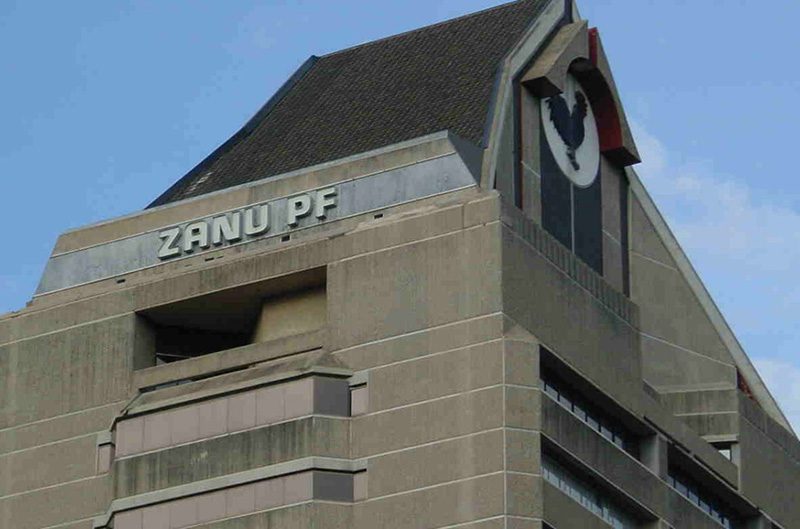
ZPP identified Zanu PF members as the largest category of alleged perpetrators, accounting for 30.85 percent of documented perpetrators.
Local authorities and government officials each accounted for 14.95 percent, followed by traditional leaders at 14.02 percent and members of the Zimbabwe Republic Police (ZRP) at 11.21 percent.
State security agents accounted for 3.74 percent, school authorities 1.87 percent and artisanal miners 0.94 percent while 7.47 percent of perpetrators could not be linked to a specific organisation or institution.
“137 human rights violations (HRVs) documented during the month should not be viewed as isolated incidents,” ZPP said.
“Rather, they point to recurring patterns of abuse, discrimination, coercion and failures by duty-bearers and other actors to uphold and protect fundamental rights and human dignity.”
Manicaland recorded the highest number of violations at 25, followed by Harare with 20, Mashonaland Central with 19 and Mashonaland West with 16.
Masvingo and Midlands each recorded 14 violations, while Mashonaland East recorded 11, Matabeleland South eight, Bulawayo six and Matabeleland North four.
In Matabeleland South, ZPP documented cases involving access to justice, administrative fairness, traditional authority and land tenure.
In Umzingwane Ward 3, a person was allegedly detained despite evidence indicating they were not the actual perpetrator, while the alleged offender was released.
In Mtshede, Umzingwane Ward 10, about 40 residents were reportedly denied documentation confirming their occupation of residential stands despite having made payments to a traditional leader over several years.
ZPP said the payments had not been remitted to council because the allocations were not formally recognised, leaving residents at risk of losing their homes or paying again to regularise their tenure.
In Matabeleland North, more than 10 households in Hwange Central’s Cinderella area reportedly faced evictions linked to unpaid rent or electricity. ZPP said excavators were used to remove roofs and doors while property remained inside the homes.
In Umguza Ward 4, about 17 artisanal miners allegedly occupied an uninhabited homestead in Mafanisa village, with residents reporting disruption, insults and excessive noise and saying they feared confronting the miners.
Bulawayo recorded six violations, including cases involving arrests and restrictions on freedom of assembly, association and expression.
ZPP reported that police raided a private home in Emakhandeni during a prayer meeting and arrested 17 women after receiving intelligence the gathering could have been political.
At the National University of Science and Technology (NUST), the organisation also raised concerns about differential treatment of student organisations during orientation, while Mpilo Central Hospital was cited for overcrowding and shortages of essential medicines, with patients reportedly sleeping on floors because of inadequate bed capacity.
ZPP documented 10 violations relating to personal security, including alleged assaults, excessive use of force, arbitrary detention and politically motivated violence.
Among the cases were alleged assaults by police officers in Harare and Murambinda, where victims reportedly suffered injuries.
In St Mary’s, Chitungwiza, five residents were allegedly assaulted by men wearing ruling-party regalia over the construction of houses on land reserved for Zanu PF supporters.
ZPP said no arrests had been made despite reports to police.
The organisation also documented politically linked violence in Guruve South and Bikita West, where individuals were allegedly assaulted over their perceived political affiliations.
Seven violations relating to arbitrary evictions and forced displacement were recorded.
Besides the Hwange evictions, ZPP cited a case in Bikita involving alleged displacement linked to mining activities by a Chinese-owned company.
The report also recorded five cases involving unjustified arrests and deprivation of liberty and nine involving harassment and intimidation.
Among the intimidation cases were alleged threats against political activists opposing Constitutional Amendment No. 3 Act (CAA3), pressure on traditional leaders to enforce rural development levies, threats against villagers who petitioned over mining operations, and alleged exclusion from government agricultural input schemes based on political affiliation.
ZPP said the August findings demonstrated how authority, when exercised without adequate constitutional safeguards, could affect citizens’ dignity, freedoms, livelihoods and access to justice.
In its “Ten Steps Backwards” section, the organisation focused particularly on the politicisation of customary authority and the treatment of vendors removed from undesignated trading spaces.
“The August findings underscore the urgent need to strengthen accountability, ensure that all duty-bearers operate within constitutional limits, and place the rights, dignity and protection of citizens at the centre of governance and public action,” ZPP said.





Leave a Reply