

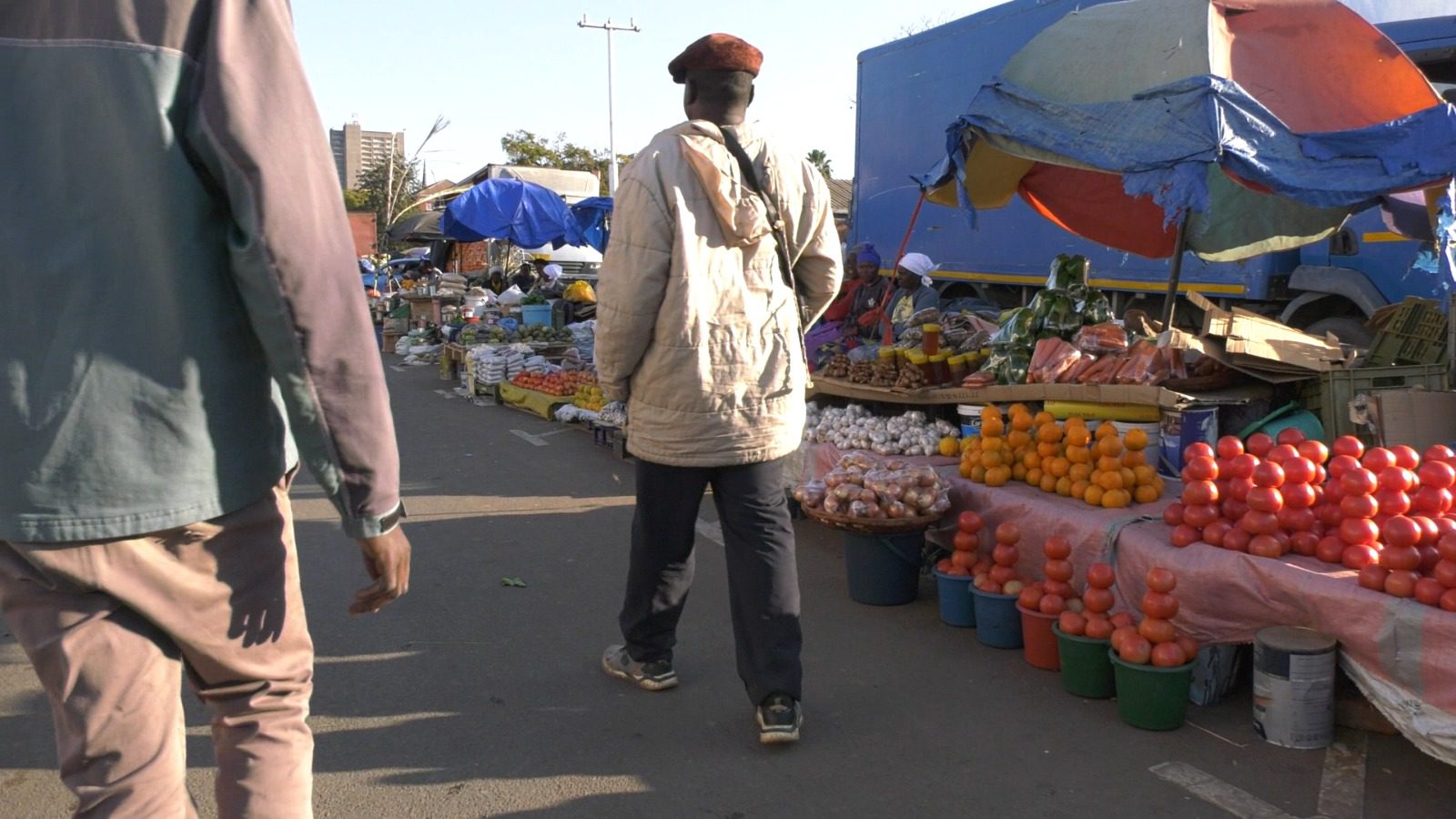
The opposition has accused Zanu PF of turning against the same impoverished traders it allegedly mobilised for political support, as its latest crackdown on street vending creates political tension amid an economic crisis that has pushed thousands of workers into the informal economy.
The crackdown has seen municipal police and bulldozers demolish vendor stalls and assault traders in Harare and Chitungwiza, while the government extends its National Cleanup Campaign nationwide.
Under new restrictions effective immediately, vending in central business districts is limited to between 6am and 6pm, while traders in residential areas, including high-density suburbs, may operate until 8pm.
The new operating hours apply across all 92 local authorities as they intensify the nationwide cleanup campaign targeting illegal vending and other activities in urban centres.
On this topic
The enforcement has, however, drawn criticism from opposition parties, which argue that the government is addressing the symptoms of an economic crisis without tackling the conditions that have driven millions of Zimbabweans into the informal economy.
MDC Secretary for Information and Publicity and Presidential Spokesperson, Lloyd Damba, described the recent operations in Harare and Chitungwiza as an assault on poor Zimbabweans whose livelihoods depend on vending.
“The last week has been a week of tears in Harare and Chitungwiza. We have watched, with broken hearts, bulldozers, and municipal police descend on the poor,” he said.
Damba alleged stalls had been destroyed and traders’ stock confiscated, while subjecting the vendors to violence and humiliation.
“These are not criminals. These are honest citizens and they are a sector called vendors,” he said.
Damba argued many vendors were former formal-sector workers who lost their jobs following the closure or downsizing of industries.
“These are the same men and women who were once employed in our factories in Willowvale, in Graniteside, in Msasa and Chitungwiza Industrial sites. They were engineers, clerks, machine operators,” he said.
The MDC spokesperson also argued vending should be understood within the wider history of Zimbabwe’s economic decline rather than simply as an urban-management problem.
“Vending in Zimbabwe is not a choice. It is a survival strategy thrust on our people by the ruling Zanu PF party’s excellent and unparalleled misgovernance,” Damba said.
He specifically linked the growth of informal trading to the closure of industries and policies that, he argued, discouraged investment and contributed to job losses.
However, the political claim that current vendors are predominantly former formal-sector workers requires broader evidence and cannot be attributed to all traders.
Zimbabwe Communist Party (ZCP) General Secretary, Ngqabutho Nicholas Mabhena, similarly traced the growth of vending to the country’s economic restructuring and industrial decline.
“Firstly, vendors are a creation of a failed economic policy,” Mabhena said, arguing the growth of street trading accelerated after the adoption of the Economic Structural Adjustment Programme (ESAP) in the 1990s and continued as workers were retrenched.
Mabhena also questioned the government’s changing description of informal traders, saying authorities had previously pointed to vendors as part of the large number of economically active Zimbabweans, when making arguments about unemployment levels yet were now treating the same group as a problem requiring removal from urban spaces.
The government has said it is not banning vending, but regulating where and when it can take place as vending would remain permitted in designated areas, while reviewing 113 local authority bylaws.
The MDC, however, said the crackdown represents more than an urban-management policy.
Damba accused Zanu PF of abandoning vendors after previously cultivating their political support through what he called “Vendors for ED”, referring to groups of informal traders publicly associated with President Emmerson Mnangagwa.
He noted Zanu PF politicians had presented the opposition-controlled councils as the threat to vendors’ livelihoods while portraying the ruling party as their protector.
“Zanu PF, as cunning as it is, saw in this desperation a pool of votes ready for harvesting,” he said.
“They told them: ‘Vote for us, wear our scarf, and no one will touch you.’”
Damba described the current crackdown as a betrayal, warning other groups politically aligned with the ruling party that they too could eventually face the same treatment.
“This is what the MDC has been warning about for years. Zanu PF uses the poor and then discards them,” he said, claiming a MDC government would instead seek to formalise informal trading by providing properly serviced vending spaces, registration, low-interest loans and designated trading zones.
“We do not see vendors as dirt. We see them as entrepreneurs abandoned by the State.”
The political context, however, has changed significantly since the previous election cycle.
On July 7, 2026 President Emmerson Mnangagwa signed constitutional amendments extending presidential terms from five to seven years and replacing direct presidential elections with a parliamentary system for choosing the president.
The amendments also moved the next election beyond 2028, which commentators said undermined democracy.
The ZCP leader argued these changes in Zimbabwe’s political timetable had also altered the government’s relationship with vendors.
“Now that elections are over, and the constitution has been amended to delay elections beyond 2028, they are no longer useful in the eyes of Zanu PF. This is why they are dealing with the vendors in the manner in which they are now doing,” Mabhena said.
“Our message as the Zimbabwe Communist Party is vendors must understand that they are part of the working class.”
Mabhena said in 2015, the International Labour Organisation (ILO) resolved vendors must belong to trade unions so that they can join forces with the rest of the working class in creating better conditions to survive.
“In the case of Zimbabwe, where all of us, the working class and peasants, complete our liberation and place the economy in the hands of the majority of the people of Zimbabwe, and not a few political elites,” he said.







Leave a Reply