


Zimbabwe’s public health system is facing a potentially self-inflicted medicine supply crisis, with public hospitals and health institutions in Matabeleland owing the government-owned National Pharmaceutical Company (NatPharm) almost US$2.7 million, money the pharmaceutical distributor says could have been used to replenish stocks of essential medicines.
The debt, which dates back to 2024, has accumulated even as indebted hospitals continue ordering medicines from NatPharm under the Zimbabwe Assisted Pool System (ZAPS).
This has raised questions about the sustainability of a financing model in which the government allocates money to health institutions and leaves them to decide how much of that money should ultimately be paid to another government institution.
At the same time, NatPharm faces a significant funding gap for essential medicines, as officials told legislators that about US$47 million was required in 2026 to procure essential medicines for non-communicable diseases (NCDs), maternal and child healthcare, sexually transmitted infections, as well as medicines and supplies for surgical procedures.
On this topic
Of that amount, only US$6 million had been committed by donors and partners, according to NatPharm.
The funding pressures are now reflected on the shelves of the Bulawayo warehouse, where medicines as basic as paracetamol tablets and injections are unavailable, while supplies of critical antibiotics, intravenous fluids, NCDs medicines and psychiatric drugs are also running low or have been exhausted.
Among the medicines currently unavailable or in critically short supply are metronidazole IV, insulin and carbamazepine, while stocks of ceftriaxone are estimated at only about one month.
These shortages emerged during a verification visit to NatPharm Bulawayo by the Parliamentary Portfolio Committee on Health and Child Care on Saturday, as part of Parliament’s ongoing assessment of government strategies to recapitalise the pharmaceutical company.


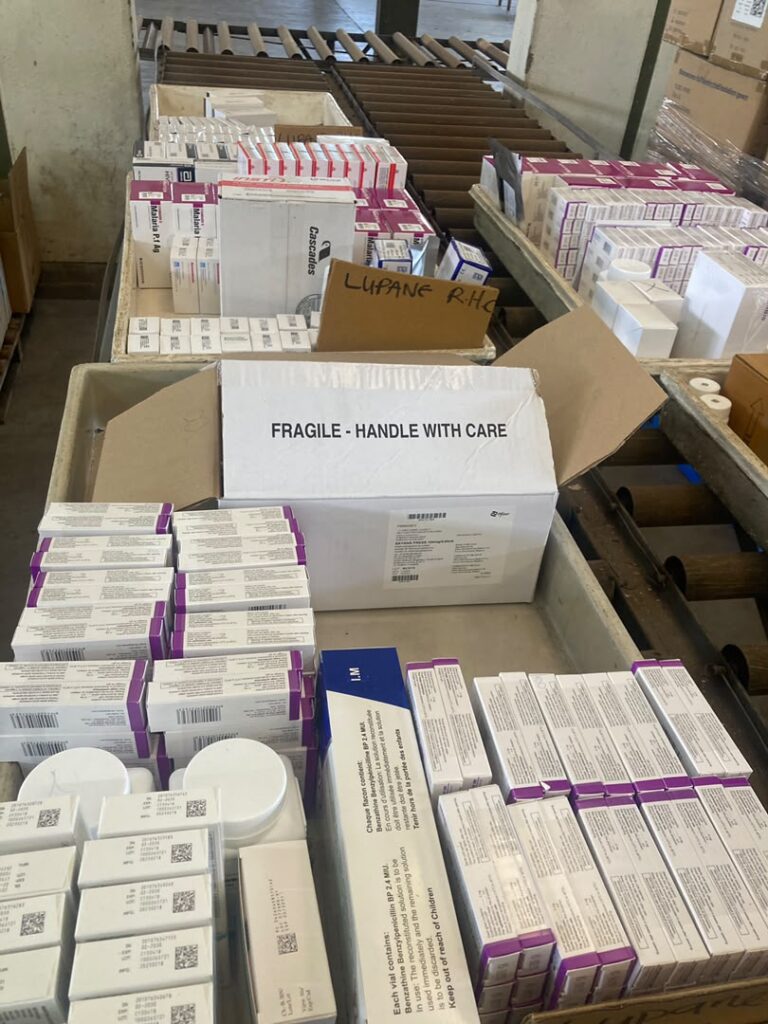

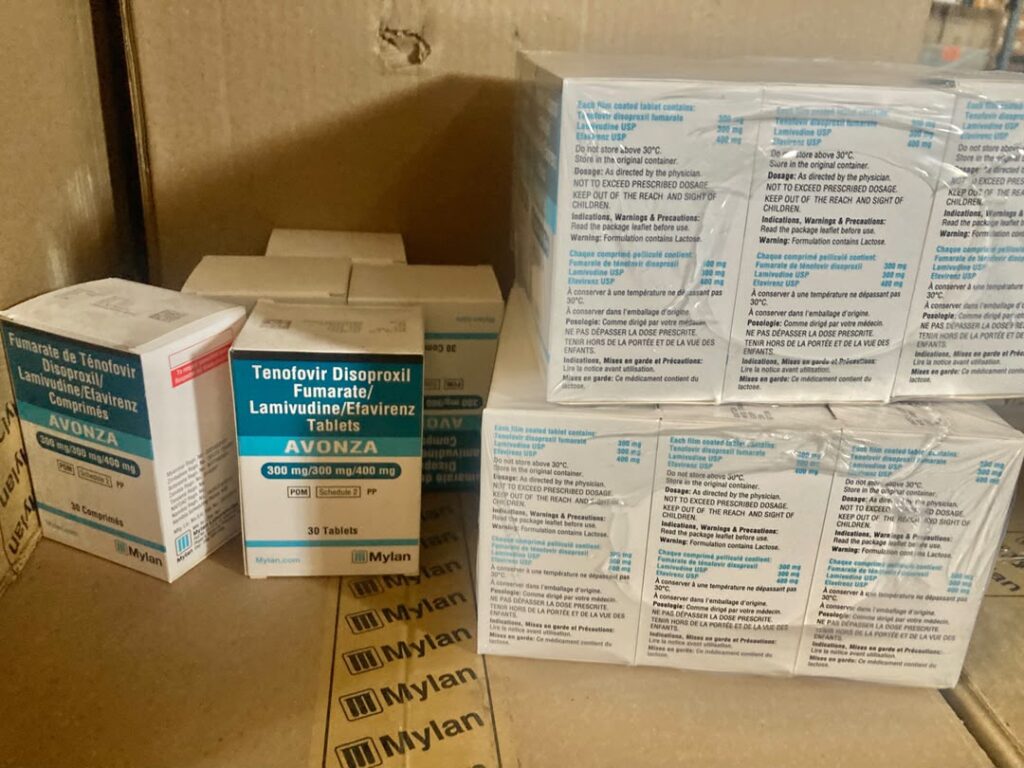
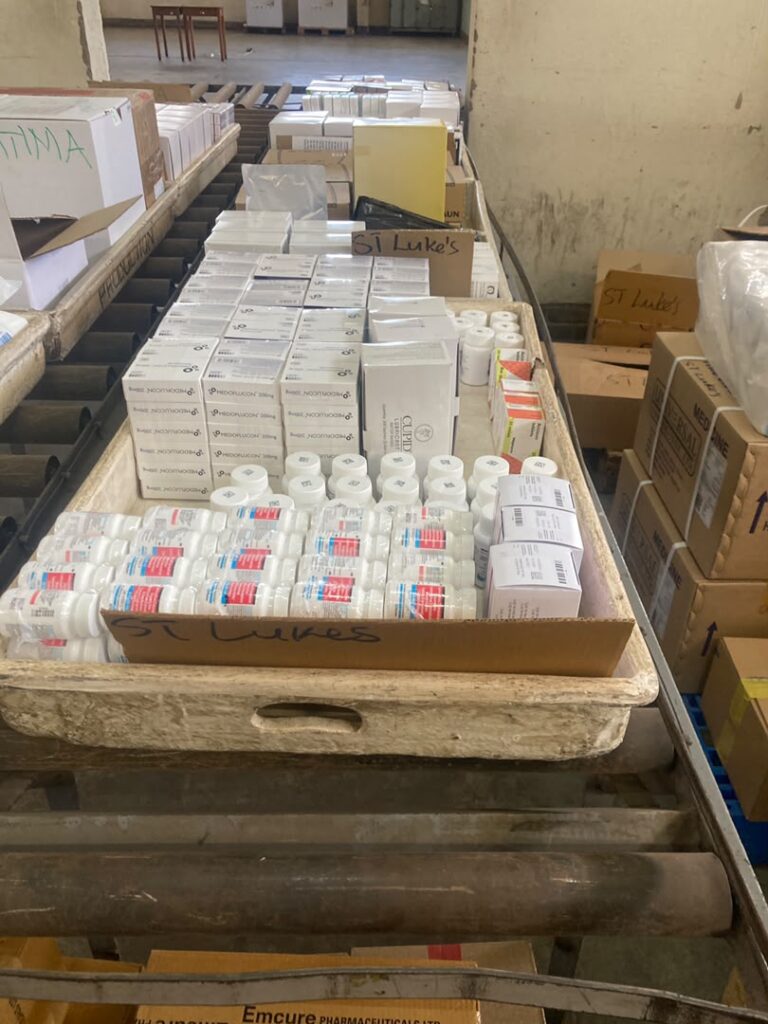

The tour exposed how NatPharm is struggling to buy and replenish medicines while millions of dollars owed by the very public institutions it is expected to supply remain tied up in unpaid debts.
NatPharm Regional Stores Manager, Tanyaradzwa Satande, told legislators that institutional debt owed to the Bulawayo branch had reached US$2,607,530.53 as at September 9, 2026.
The debts are concentrated in the three provinces supplied by the Bulawayo warehouse: Bulawayo Metropolitan, Matabeleland South and Matabeleland North.
In these three provinces, NatPharm serves 377 facilities, including central, provincial, district and mission hospitals and clinics.
The US$2.7 million debt is divided as follows:
In Bulawayo alone, four major debtors owe NatPharm more than US$1.3 million .
United Bulawayo Hospitals owes US$676,189.73, with the debt outstanding for more than two years, while Mpilo Central Hospital owes US$571,517.43.
Bulawayo City Health Department owes US$33,804.53, while Cowdray Park Health Centre owes US$19,832.24.
In Matabeleland South, Gwanda Provincial Hospital is the largest debtor at US$334,913.21, followed by Filabusi District Hospital at US$103,085.66, Beitbridge District Hospital at US$91,796.32 and Plumtree District Hospital at US$65,019.71.
The Matabeleland North debt is similarly substantial, led by Binga District Hospital at US$166,876.89, Tsholotsho District Hospital at US$90,200.57, Mbuma Mission Hospital at US$83,734.34 and Victoria Falls District Hospital at US$64,499.02.
Satande said the money was effectively trapped in unpaid invoices instead of circulating back into the pharmaceutical supply chain.
“This is money tied up in debt, which could have been released, used to restock and replenish our medicines to improve the stock availability across the nation,” she told MPs.
She warned the accumulation of debt was “really crippling” NatPharm’s operations.
“It’s a total of 2.7 million in debt. That’s a huge figure and it really does have a negative impact on how we deliver services,” Satande said.
The policy question that emanated is why make hospitals pay NatPharm when NatPharm is owned by the government.
The other question was why does the government not pay its pharmaceutical company directly for medicines supplied to public hospitals.
Under the current arrangement, government funds are disbursed to health facilities, which then determine how those funds are spent, including how much is paid to NatPharm.
Satande acknowledged this creates room for competing priorities.
“Government funds are dispersed to the facilities. Then the facilities will then determine how they make their payments,” she said.
“If the policy can be changed so that the government directly pays us, that would be best.”
The problem, Satande said, was once money reaches a hospital’s account, NatPharm could lose out to other priorities which was why funds intended for medicines should instead be channelled directly to NatPharm.
Satande said hospitals do make payments but the amounts are insufficient to clear existing debts while new orders continue to be placed.
“They service this bit, but still, next week they come and order. So it keeps accumulating,” she said.
That means the US$2.7 million debt could increase further by the end of the year, unless the government changes the way medicine funding is channelled.
The problem is compounded by the fact that some hospitals are buying medicines from private wholesalers when NatPharm does not have sufficient stock.
Satande said this effectively creates a vicious cycle as facilities spend available money elsewhere because NatPharm cannot supply certain products, while NatPharm remains undercapitalised because it was not paid.
“If that money was all channelled to NatPharm to capacitate us, we would be able to provide all those commodities which are currently procured by other facilities elsewhere,” she said.
Satande also raised an economic argument, noting with greater liquidity, NatPharm could undertake bulk procurement, potentially obtaining medicines at lower prices than individual institutions buying from private wholesalers.
The consequences of underfunding were visible on NatPharm’s shelves, as Satande said the Bulawayo warehouse was currently out of basic paracetamol tablets, a medicine that is readily available in supermarkets.
“We do not have those currently. These are currently stocked out,” she said.
The warehouse is also out of paracetamol injection, while supplies of key antibiotics are dangerously low.
Ceftriaxone, an important antibiotic used in treating serious bacterial infections and also in the management of gonococcal infections, has only about a month’s stock remaining.
More alarming is the shortage of metronidazole IV, which Satande said has been unavailable for more than six months.
“These are also crucial even in maternity cases,” she told MPs.
The implications extend beyond ordinary outpatient treatment. A prolonged shortage of essential antibiotics and injectable medicines leaves clinicians with fewer options when treating patients who require immediate or hospital-based care.
The warehouse is also out of normal saline, an intravenous fluid routinely used in hospitals, as well as basic consumables including examination gloves and latex supplies.
NatPharm is also reporting stock-outs of medicines used to manage chronic and NCDs, including insulin needed by patients living with diabetes.
The shortage also extends to psychiatric medicines, including carbamazepine.
The significance is particularly striking given the proximity of NatPharm’s Bulawayo warehouse to Ingutsheni Hospital, the country’s major psychiatric institution.
“Next door is Ingutsheni Hospital. And we have relatives there. We have patients there who need these medicines,” Satande said.
“It is unfortunate that some of these are currently stocked out.”
However, Satande said medicines such as amlodipine were adequately stocked, with Zimbabwe transitioning from nifedipine to amlodipine under the new essential medicines list.
Nevertheless the uneven availability highlights the fragility of the system, as some medicines are available while others that are equally fundamental to routine healthcare are missing for months.
NatPharm’s financial problems cannot, however, be attributed solely to hospitals failing to pay.
Satande pointed to global supply-chain disruptions, wars, trade disputes, rising demand and declining donor financing as factors placing additional pressure on the pharmaceutical system.
She said a government funding gap had emerged after donor financing declined, leaving Zimbabwe responsible for a greater share of medicine procurement.
“The funding gap arose because, for 2026, we needed about US$47 million to procure essential medicines, including medicines for non-communicable diseases, maternal and child healthcare, STI treatment, as well as medicines and supplies for surgical procedures,” Satanda said.
“Of that US$47 million, only US$6 million was committed for funding by donors and our partners. This left the government with about US$40 million to close the funding gap.”
Parliamentary health committee chairperson, Discent Collins Bajila, said the problem begins with inadequate funding of NatPharm in the 2026 national budget.
“If you look at the 2026 national budget, NatPharm presented the amount of money that it needs to stock medicines for a week for every Zimbabwean,” Bajila said.
Yet the allocation was sufficient for only about six weeks of medicine supply, he said.
“Out of 52 weeks of a year, only six weeks were funded,” Bajila said, describing it as “quite a miracle” that NatPharm had managed to maintain some stocks.
Bajila said Parliament was considering a more fundamental solution, to have a NatPharm debt assumption bill, under which the government would assume debts owed to the pharmaceutical company by public institutions.
“If NatPharm is properly stocked and NatPharm is properly supported by the government, the private sector will end up procuring from NatPharm,” he said.
His argument is that NatPharm should function as Zimbabwe’s national pharmaceutical “silo” rather than competing with individual hospitals for scarce funds.
Meanwhile, NatPharm is also seeking permission to impose another consequence for delayed payments.
Operations Manager, Herbet Mashanga, said management had approached the company’s board over charging interest on overdue institutional debts, based on the time value of money.
The board approved the proposal, but implementation is awaiting approval from the parent ministry.
Satande said NatPharm’s immediate solution was continued engagement with health facilities to prioritise payments and clear overdue balances.
She also urged Parliament to assist with recovering the outstanding money, noting failure to pay the debt would result in a circular financing problem: the government gives money to hospitals, hospitals decide how much to pay NatPharm, NatPharm struggles to replenish stocks, hospitals then buy unavailable medicines elsewhere and the debt to NatPharm continues accumulating.





Leave a Reply