

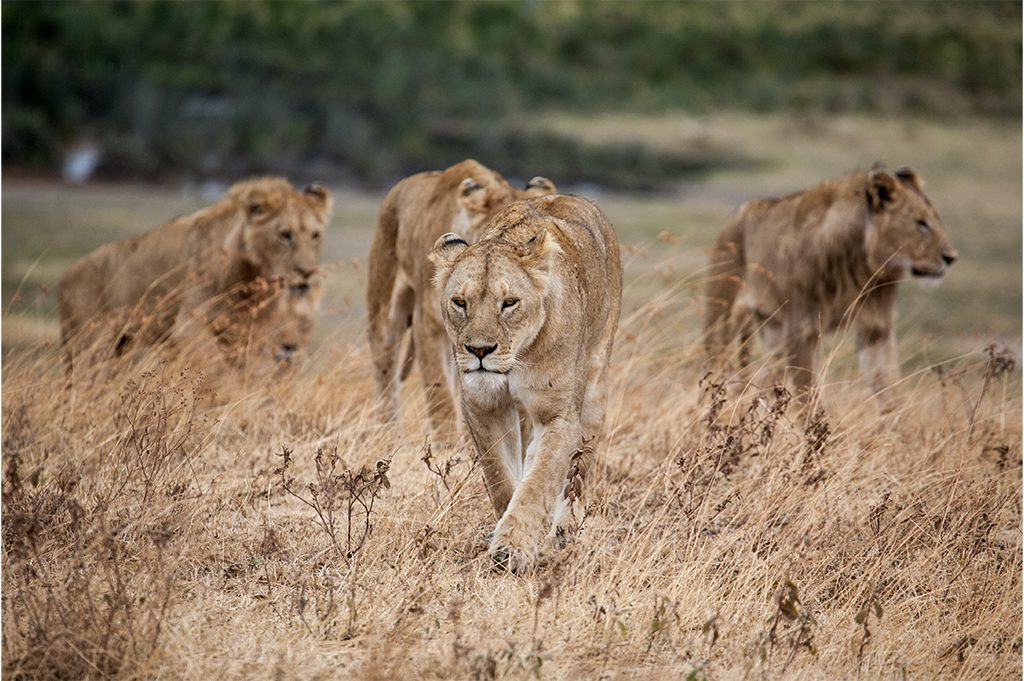
Villagers in Tsholotsho’s Ward 3 are demanding urgent action over escalating human-wildlife conflict, saying lions, hyenas, elephants and buffaloes are entering areas occupied by people and threatening livestock and livelihoods.
Residents of Thokozani and Vukuzenzele villages say they have sought the intervention of their councillor, Mpini Nyoni, but remain unclear about when they will be able to meet him to discuss the problem.
The villagers want Tsholotsho Rural District Council to explain what measures are being taken to protect communities and livestock, as well as how agreements with safari operators and other businesses operating in wildlife areas benefit communities living alongside wildlife.
“We would like to understand how Tsholotsho Rural District Council can help us with the challenge we are experiencing with the human-wildlife conflict,” the villagers said.
On this topic
They said the animals entering human-occupied areas included lions, hyenas, elephants and buffaloes.
“We want the animals to leave the human areas and return to where they were,” they said.
The residents said they had written to Nyoni requesting a meeting, but had not received clarity on when the engagement would take place.
“We had requested a meeting and we would like to know when the councillor is going to have a meeting with Vukuzenzele and Thokozani so that he explains to us clearly concerning the issue of human-wildlife conflict,” they said.
The villagers also called for Government intervention, improved fencing and stronger wildlife management, saying the problem had reached a level requiring national attention.
“We want assistance so that this matter can be even pushed to Parliament,” they said.
The residents’ concerns come against a wider pattern of human-wildlife conflict in Tsholotsho, where communities have previously reported livestock being killed by wildlife.
Tsholotsho villagers cry out over rising wildlife attacks on livestock — CITEZW
Nyoni, however, said he had not received a formal complaint from the affected communities through the local structures he said were responsible for reporting such cases.
“I haven’t received a complaint on human-wildlife conflict because I am supposed to receive it through the village heads who are the custodians of the land. So, who wrote me the letter?” he said.
He said complaints were expected to move through village heads before being escalated to the councillor and relevant authorities.
“At times people just write, but we work with what we receive from village heads because he is the one on the land. They also take it further to umlisa, then it comes to the councillor,” Nyoni said.
The councillor nevertheless acknowledged that communities in Ward 3 were experiencing problems with wildlife and said he was personally affected because he lives in the buffer zone.
“I know the complaints of wild animals and I live in the buffer zone. We have wild animals and they are terrorising us, but I don’t understand which ones they are referring to. There are some people who stay directly in the buffer zone and you can’t control animals,” he said.
Nyoni said part of Ward 3 had been fenced by a conservation organisation, but wildlife could still move between areas and enter the ward from neighbouring communities.
“I am in Ward 3 and my area has been fenced by the Conservancy. Wild animals can travel and they can even come from Ward 1, which is close to Botswana, and attack our livestock in Ward 3 and go back,” he said.
He identified hyenas and lions as the animals causing the greatest concern in the area.
“What harasses us the most is the hyenas and lions,” Nyoni said.
He said the council had mechanisms for dealing with problem animals through Problem Animal Control (PAC), but maintained that residents needed to use established reporting channels.
“As council we have Problem Animal Control (PAC), that is how we work. Hence, I have never received a letter via the village heads,” he said.
Nyoni said the only written complaint he had received had come from people living in South Africa.
“The only complaint I got was from South Africa and I explained to them that we should have the conversation when they come home because I don’t conduct meetings with people outside the country,” he said.
He said the complainants had been advised to resubmit their concerns through local community structures.
“I explained to the community how we should work,” he said.
The disagreement points to a gap between residents seeking urgent intervention and the councillor insisting that complaints must first pass through established traditional and community structures.
For villagers, however, the immediate concern is protecting livestock and livelihoods while keeping wildlife out of human settlements.
They are also seeking greater transparency over conservation and safari operations in the area and want Government and local authorities to clarify how communities living alongside wildlife can benefit from the economic value generated by the region’s natural resources.




Leave a Reply