

By Clifford Ngulube
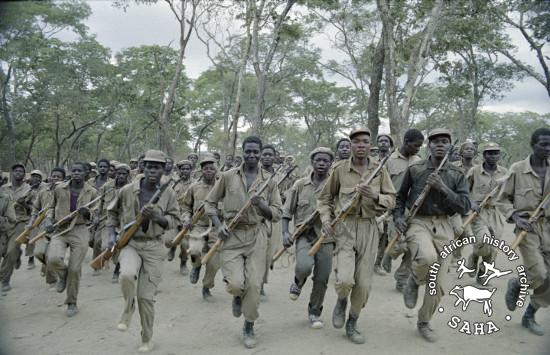
The Battle of Ngwana, fought in Ngwana Village in Bulilima-Mangwe District (now Bulilima District) on 7 June 1977, remains etched in the memories of those who witnessed it, particularly Zimbabwe People’s Revolutionary Army (ZPRA) commander Thomas Nyathi, whose account forms the basis of this narrative.
Commander Thomas said it was at this battle that he first took the life of an enemy soldier. He vividly remembers the soldier falling over a fence in a field during that intense battle. Thomas, who later became the Regional Commander of Southern Region 1, was part of a unit of six which originally came into Botswana from Zambia with Commander Lookout ‘Mafela’ Masuku. The unit was part of the first group of the Mwembeshi-trained guerrillas.
Commander Masuku left the group in Botswana, whereupon they joined Elliot Mahlole, who had come from the front to meet newly deployed cadres.
On this topic
Mahlole had left another comrade named Davis back in the front.
The group entered Rhodesia using a lorry belonging to the Vapostori of Johane Masove who were selling tins. Mahlole led the unit to where Davis had been waiting, after which they went to collect their arms from a hidden cache and started operating.
The small group of guerrillas had their first meal at Tokwana Village. They then proceeded to Ngwana Village. At Ngwana, they were told that some Rhodesian soldiers were camped near the community borehole.
Like most guerillas from the rear, the 6-man unit was eager to engage the Rhodesian soldiers at once, but the battle-hardened Mahlole and Davis prevailed and asked for a more cautious approach. It was therefore agreed to lie low for a considerable period and carefully study the enemy’s movements.
For four painstakingly long days, the group observed the movement of the enemy from the shadows, taking note of everything to the minutest routines. A boost came when they managed coax a local girl they became acquainted with to act as a Delilah and ‘fall in love’ with one of the enemy soldiers so that she could extract vital information and pass onto the unit, to which the young woman agreed.
The girl supplied the guerillas with the required information. On the fifth morning, Mahlole realized that the restless fighters, who were agitated like a pack of dogs in a hunt, could not be held back any longer. It was time to strike the enemy.
The Rhodesian soldiers were attacked in the morning as they fetched water in the community borehole. Nine Rhodesian soldiers were killed. On the guerillas’ side, the gallant Cde Davis paid the ultimate sacrifice.
The guerrillas withdrew after the battle, and the Rhodesian soldiers came and collected the bodies of their colleagues. They also took Davis’ body, which was desecrated as part of psychological warfare tactics that the Rhodesians routinely subjected the civilian population to.
This defeat humiliated the Rhodesians, who turned their fury against the villagers. A notorious Rhodesian African Rifle called Kenosi burnt down people’s homes and forced villagers to feed the dead body of Davis ‘until he rises from death to fight’. For three days, Kenosi’s Rhodesian African Rifles desecrated Cde Davis’ decomposing body in this way.
A villager whose homestead was close to the battle site also paid a huge price when the marauding Rhodesian soldiers senselessly shot his treasured chickens and pigs.
The young woman whose spying had been vital to the guerrillas’ success, together with other villagers who were also terrified of the Rhodesians’ revenge, fled the area and joined the war. The young heroine later died in the infamous Mkushi bombardment and sadly did not live to see independent Zimbabwe.




Leave a Reply