
By Vivian V. Siziba
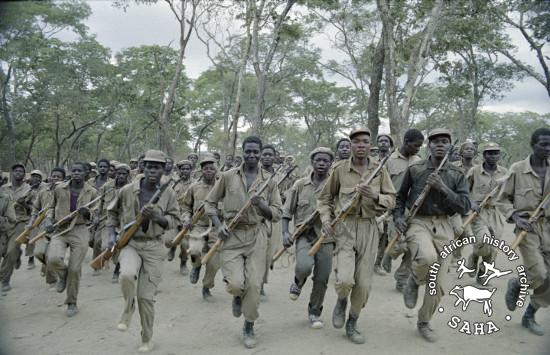
When the history of Zimbabwe’s liberation struggle is told, attention often falls on the battles fought against the Rhodesian regime. Less examined are the internal crises, factional intrigues and failed unity projects that threatened to destroy nationalist movements from within. This article argues that at some of ZAPU’s most perilous moments, from proscription and underground resistance to the FROLIZI split and the ZIPA debacle, it was the resilience, discipline and military effectiveness of ZPRA that helped keep the movement alive. Far from being merely ZAPU’s armed wing, ZPRA emerged as a critical pillar in defending the party against forces that sought to consign it to political oblivion.
From Constitutional Protest to Armed Struggle
The quest for independence and freedom by nationalist movements in Rhodesia enraged the colonialists, who escalated the defence of their privileges with boundless, violent fury, despite the nationalists’ peaceful approach. Lobbying for racial equality and universal adult suffrage, which should have guaranteed one person, one vote, was contemptuously snubbed with absolute racial arrogance and considered subversive.
On this topic
This obscene political arrogance compelled the African people to organise themselves to form nationalist movements to wage a well-coordinated struggle against the colonial authorities. First formed was the Southern Rhodesia African National Congress (SRANC) on 12 September 1957. Ironically, this was the date the Pioneer Column raised the Union Jack in Fort Salisbury (Harare), with no resistance from local inhabitants.
The SRANC was banned on 29 February 1959. The ban motivated the leadership to found a more militant movement, the National Democratic Party (NDP), on 1 January 1960. Like its predecessor, the NDP was duly proscribed on 9 December, 1961. Shortly thereafter, the Zimbabwe African People’s Union (ZAPU) was formed on 17 December 1961. ZAPU suffered the same fate and was proscribed in 1962.
Unrestrained, brutal and repressive measures, imprisonment, detention without trial, and restrictions under the notorious Law and Order Maintenance and Unlawful Organisations Act (LOMA) of 1960 dominated the political theatre of Rhodesia during this period. As nationalist movements stepped up pressure, the colonial authorities grew more aggressive and repressive, with immeasurable fury.
This repressive behaviour convinced nationalists that chances for a peaceful political resolution were elusive. The proscription of successive nationalist movements was illustrative of this fact. In anticipation of proscription, the ZAPU leadership resolved never to form another movement but to go underground to wage the struggle by whatever means necessary. As anticipated, ZAPU was banned barely a year after its launch.
However, a political outfit, the People’s Caretaker Council (PCC), was formed, as its name suggests, to take care of ZAPU’s political affairs while it went underground. In another radical shift in the nationalist movement, the armed struggle also became a preferred option. Vice President James D Chikerema, Jason Ziyaphapha Moyo, Jane Ngwenya, Edward Mbahwa, George Silundika, George Nyandoro and others were assigned to manage ZAPU’s political affairs and direct the armed struggle from abroad.
The Birth of the Special Affairs Department
The decision to take arms against the regime constituted high treason. Therefore, an organ called the Special Affairs Department was created as the harbinger to the Zimbabwe People’s Revolutionary Army, ZPRA. The name was meant to conceal its military character from the prying hawkish eyes of Special Branch operatives. A few dedicated individual members from across the party organs volunteered for military training, mainly in guerrilla and insurgent or anti-insurgent tactics.
Among the first of these gallant individuals were: Ackim Ndlovu, Dumiso Dabengwa, Walter Mbambo, Fred Vincent Dube, Taison Makhetho, Caluza Jiyane, Lucas Msimanga, Solomon Mujuru, Robson Manyika, Ambros Mtinhire, Tineyi Chigudu, Lazurus Dlakama, Moffat Ndlovu, James Chatagwe, Benson Maphosa, Ethan Dube, Stanley Nleya (Gagisa), and J. Dube. They were trained in Algeria, Egypt, Ghana, the Soviet Union, China and other countries that formed the core of states that supported liberation movements across the continent.
After training, these cadres carried out sporadic sabotage operations, reconnaissance assignments, and recruitment missions, among many activities that set the tone for Zimbabwe’s armed struggle.
Wankie and Sipolilo: Baptism of Fire
The most memorable of this core group’s operations was the deployment of large units of ZAPU’s Special Affairs Department alongside the ANC’s Mkhonto Wesizwe into the Wankie District in 1967, commanded by Masotsha Ngwenya (a.k.a J. Dube). One of the units included the highly acclaimed South African war hero Chris Hani, who was touted as a potential successor to Nelson Mandela until his tragic assassination by the right-wing white supremacist Janusz Waluś in April 1993.
These cadres fought ferocious battles and inflicted heavy casualties, wrecking the morale of the Rhodesian Forces. Later, also in 1967, the Umkhonto Wesizwe and Special Affairs Department units, commanded by Moffat Hadebe, infiltrated the Sipolilo District in what is now Mashonaland Central, where they engaged the enemy in March 1968. Their incursions there similarly rattled the morale of the Rhodesian forces.
These battles reaffirmed ZAPU’s resolute political determination to prosecute the armed struggle to its logical conclusion. Also confirmed was the existence of ZAPU’s underground structures as reliable bases for logistical provisions and a source of workforce. The battles compelled the international community to acknowledge that ZAPU had successfully defied its proscription and continued to wage the struggle unabated.
The FROLIZI Crisis and the Struggle for Survival
After those military campaigns, one would have expected the movement’s political and military leadership to review the conduct of war and interrogate the shortcomings of the initial strategic approach to each battle with a view to rectifying those operational blunders. Unfortunately, internecine factional squabbles, led by no less than Vice-President James Chikerema and Secretary-General George Nyandoro, ripped the party apart. In October 1971, the two joined forces with some leaders of ZANU, such as Nathan Shamuyarira, to form the ill-fated Front for the Liberation of Zimbabwe (FROLIZI). Although it did not go anywhere, FROLIZI rocked the liberation movement to the core.
Confusion reigned supreme among fighters who dispersed to unknown locations. Having successfully enticed nationalists from ZANU to join his project, Chikerema launched a diplomatic offensive to persuade the OAU to dump both ZAPU and ZANU and to lend support to the controversial FROLIZI.
However, Jason Ziyaphapha Moyo, together with Hebert Wilshire Chitepo from ZANU, neutralised Chikerema’s offensive. The two nationalists tabled a proposed Joint Political Commission and Military Command structure before the OAU. This counteroffensive shattered Chikerema’s dream of securing continental support and threw his project into disarray. Undeterred, Chikerema and his discredited comrades tried to resurrect their project during the Détente Exercise.
A diplomatic initiative by South African Prime Minister John Vorster (who wanted to ease mounting pressure on apartheid South Africa by speeding the resolution of the crisis in Rhodesia) and Zambian President Kenneth Kaunda (who was also keen to see majority rule in his southern neighbour to free his country from the pressure of hosting liberation movements) the 1974–1975 Détente Exercise in Rhodesia sought to unify Rhodesia’s nationalist movements at a time when guerrilla warfare was intensifying and the liberation movements were fragmented.
Although Kaunda’s intentions were noble, and it made sense to take advantage of John Vorster’s desperation, the Détente Exercise temporarily fractured the rhythm of the struggle. Even the release of nationalist leaders (as part of the spirit of the Détente Exercise), which aroused enthusiasm among the youth back in Rhodesia, leading to a positive surge of young people joining the ranks of fighters, could not put a positive spin on Détente. More dampening was the imposition of a union by Front Line States (also controversially embraced by the ANC) between Joshua Nkomo of ZAPU and Rev Ndabaningi of ZANU, James Chikerema of FROLIZI and Bishop Mzorewa of ANC as leaders of a new union whose leadership was never quite determined.
Rebuilding as ZPRA and Taking the War to the Enemy
When the dust settled, the Special Affairs Department was reconstituted and rebranded Zimbabwe Peoples ‘Revolutionary Army (ZPRA) with a highly focused command structure with Alfred Nikita Mangena as its head.
By the end of the Chikerema-FROLIZI crisis, ZAPU’s military wing was shaken, but it still had about 100 highly motivated, trained cadres around whom a new organisation was formed. Some of the more common names among this group were: Thomas Ngwenya, Abel Mazinyani, J Dube, Jack Mpofu, Matshimini, Mbhenjelwa, and Stanley ‘Gagisa’ Nleya. The post-crisis deployment was along the Zambezi Valley and gave Rhodesian forces operational nightmares. The operational modus operandi gave the impression that the guerrillas were all over, which spread fear across the ranks of the Rhodesian army and within the frightened white civilian population.
ZPRA’s daring operations underlined ZAPU’s survival amid the destabilizing efforts of the Chikerema gang and further underscored the movement’s continued relevance on the diplomatic front.
It should be recalled that at the height of the liberation struggle, a political movement without a strong military backing was irrelevant. This was confirmed when the founder of ZANU/ZANLA and veteran nationalist, Rev. Ndabaningi Sithole, lost control of both. Out of desperation and smarting from the bitterness of being betrayed by his lieutenants in ZANU, Sithole, alongside Chikerema, the controversial Bishop Abel Muzorewa, Chief Charau, and others, joined Ian Smith to negotiate an internal settlement, the short-lived Rhodesia-Zimbabwe, which lacked diplomatic recognition.
ZIPA, Mgagao and the Defence of ZAPU
Parallel efforts were initiated to create a single army, the Zimbabwe People’s Army (ZIPA). This project collapsed under the weight of sharp differences with calamitous consequences. ZPRA recruits were massacred mercilessly at Mgagao, as ZANLA and its leadership all but rejected unity.
As if the Mgagao massacres were not enough, ZPRA cadres deployed alongside ZANLA in Mozambique for future infiltration into enemy territory were subjected to torrid experiences whose history is yet to be fully written. Their ZANLA comrades killed many for the cardinal sin of refusing to renounce ZAPU and its leadership, which was a strange demand given that ZIPA was intended to unite the two armies, not to have one movement swallow the other. Some survivors of the ZIPA nightmare, such as Colonel (Rtd) Watson Tshipa and Irvin Sibhona, have narrated the harrowing and traumatic ordeals they went through.
Despite these experiences, ZPRA commanders remained steadfast and affirmed their resolve to fight Rhodesia’s forces. They unequivocally declared that the election of political leadership was the sovereign responsibility of the masses.
From the above narrative, it is apparent that the crisis was aimed at condemning ZAPU into political oblivion. However, in each of those crises, ZPRA rose to the occasion, fulfilling its role in defending the party against malicious political manoeuvres designed to derail the armed struggle. In other words, it complemented the efforts of the political leadership spectacularly by also strengthening ZAPU’s position during constitutional negotiations, such as in the Geneva and Lancaster House Constitutional Conferences.
Yithi Laba!



Leave a Reply