
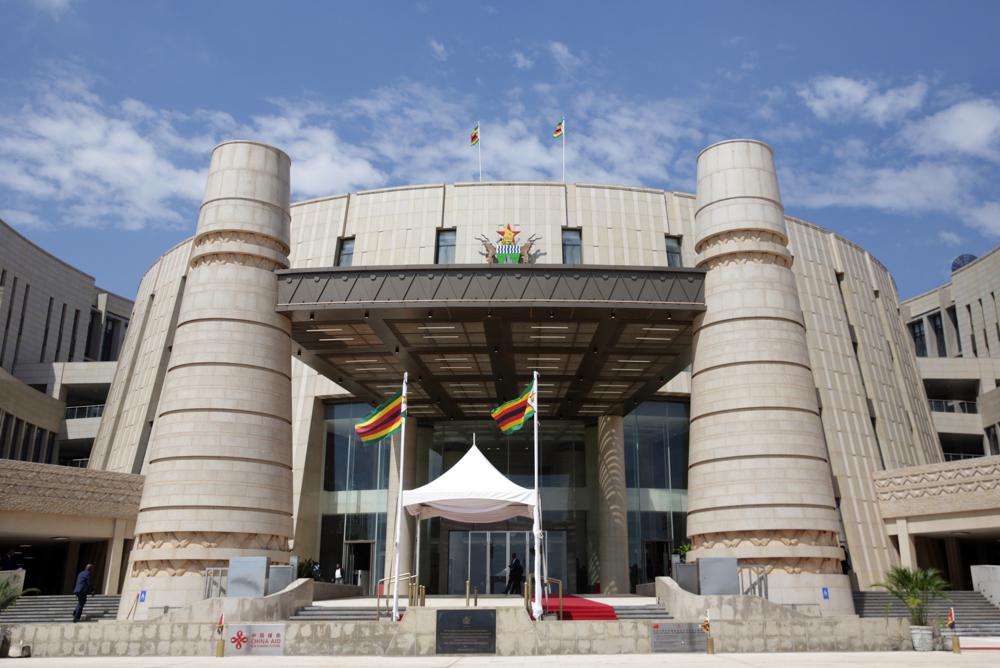
The Constitutional Amendment Bill No. 3 (CAB3) has moved to the Senate after passing through the National Assembly, with Justice Minister Ziyambi Ziyambi strongly defending the proposed changes and dismissing criticism that the reforms are designed to extend President Emmerson Mnangagwa’s stay in office.
Presenting the Bill’s Second Reading in the Senate, Ziyambi described the proposed amendments as a major constitutional reform shaped by what he called the most extensive public consultation process in Zimbabwe’s history.
“This is a milestone,” he told senators. “The supreme law of the land has been carried this far not by seal and not by haste but by the longest and most open road our constitutional history has ever travelled.”
The Bill, gazetted on 16 February, has triggered fierce debate, with critics arguing it could weaken democratic accountability and alter Zimbabwe’s political succession.
On this topic
One of the central criticisms has been that the amendments would allow Mnangagwa to remain in office beyond the constitutional two-term limit.
Ziyambi rejected that claim, insisting the Bill leaves Section 91(2) of the Constitution untouched.
“It is said that this Bill earns the President an additional term, a third term or an extension of his tenure,” he said. “It does not.”
He said opponents were confusing the duration of a presidential term with the constitutional limit on the number of terms.
“This Bill lengthens the term of office, namely the electoral cycle. It does not amend the rule that caps every occupant at two terms.”
Using a sporting analogy, he added: “We have lengthened the season and have not touched the cap on seasons.”
The minister also dismissed accusations that the reforms would strip Zimbabweans of their right to vote.
“Not one citizen loses a ballot,” Ziyambi said. “Every adult Zimbabwean will register, queue and vote in every ward, every constituency and every province at every general election exactly as before.”
He further denied suggestions that the Bill was intended to influence succession battles within ZANU–PF.
“There is no clause in this Bill that concerns the internal affairs of any political party,” he said.
At the centre of the proposed reforms is a major change to how Zimbabwe elects its president.
Under the Bill, the president would no longer be elected directly by popular vote, but through Parliament.
Ziyambi argued that direct presidential elections had contributed to political instability, economic disruption and deep social divisions.
“For too long, the direct contest for the presidency has been framed as a winner-takes-all event,” he said. “That framing breeds the toxic division and paralysis we deplore.”
The Bill also proposes extending the term of both the president and Parliament from five years to seven years.
According to Ziyambi, the longer electoral cycle would improve policy continuity and long-term planning.
“This gives the people’s government time to plan, build, develop and to be judged on what it has delivered,” he said.
He said the current five-year cycle had created what he described as five major “afflictions” — disputed presidential elections, governance paralysis caused by continuous campaigning, corruption, politicisation of the public service and increased societal polarisation.
“The cumulative cost to this nation has been estimated conservatively at between US$150bn and US$200bn in lost output, productivity and human capital,” he said.
Ziyambi said the Bill had already been revised following public consultations and parliamentary debate.
He noted that provisions affecting the Zimbabwe Gender Commission and traditional leaders had been removed.
“The clause that would have folded away the institution charged with gender oversight was set aside so that the institution remains in place,” he said.
Responding to calls for a national referendum, Ziyambi said the Constitution only requires one for amendments involving the Declaration of Rights, agricultural land provisions or Section 328, which governs constitutional amendment procedures.
“A referendum is a matter of law and not political appetite,” he said.
“For every other amendment, the Constitution prescribes a different but equally demanding road.”
Describing CAB3 as the most scrutinised constitutional reform since the adoption of the 2013 Constitution, Ziyambi urged senators to back the Bill.
“The debate has been long; the scrutiny has been real and the Bill before the Senate is better for both,” he said.
The Senate is expected to debate the Bill before deciding whether the constitutional amendments should proceed.







Leave a Reply