


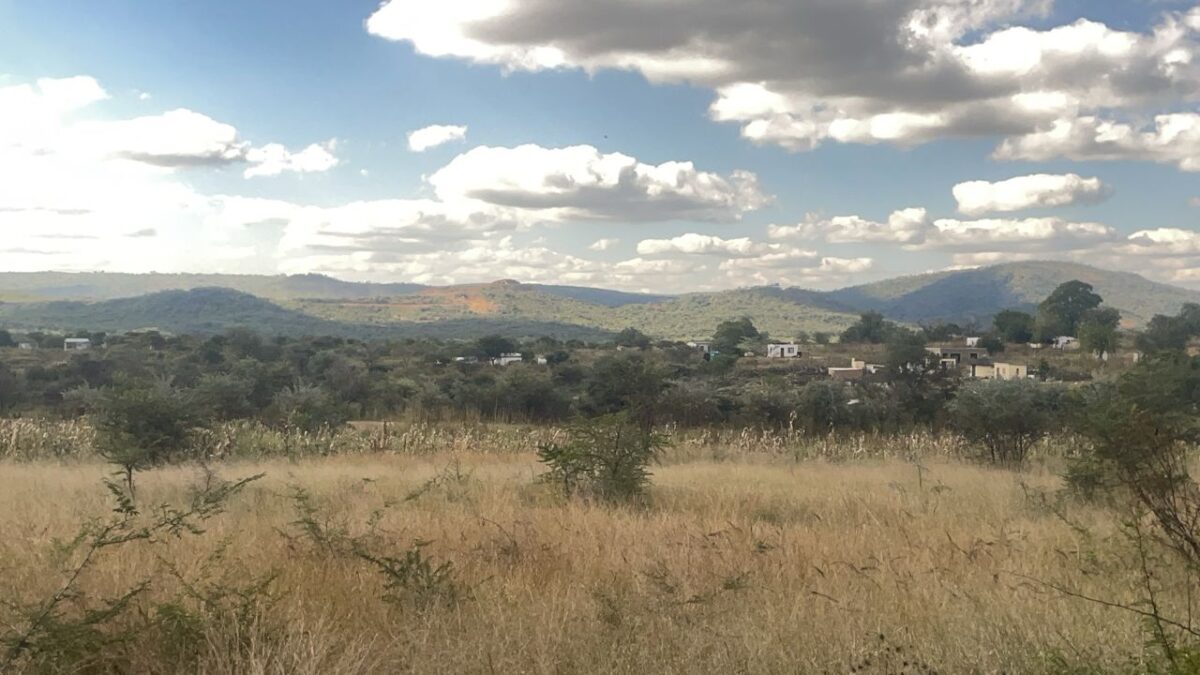
Villagers in Doyana, under Chief Gwebu in Ward 4 of Umzingwane District, have accused How Mine and its alleged Chinese joint-venture partner of destroying sacred ancestral graves along the Umzingwane River, claims the mining company has rejected.
The graves are said to belong to the Khumalo, Nyathi and Nxumalo families and predate the arrival of white settlers, located in mountains the community regards as culturally significant.
“Back then, during the colonial era, the elders had settled here, so the graves are there,” said one villager, who spoke on condition of anonymity for fear of victimisation.
“In our culture, when rituals and certain traditions were done, the elders used to go there to talk to others who were buried there. But I am hearing that some graves have been exhumed. That is where the argument is, the community of Doyana is angry at what How Mine did.”
A second source told CITE that at least 19 graves had been destroyed in Bonjeni village, near Doyana, despite earlier objections from residents.
“How Mine is mining together with the Chinese along Umzingwane River, and the company was told by the villagers that there are sacred mountains with the Khumalo, Nyathi and Nxumalo graves [dating from] before the white settlers,” the source said. “As we speak, in eBonjeni, 19 graves have been destroyed, and the chief is in denial.”
Villagers say their concerns first emerged in 2022, when mining activities reportedly uncovered burial sites and operations were temporarily halted. They say the company has now returned with a Chinese partner.
Company says graves are preserved
Namib Minerals, the company that owns and operates How Mine, rejected the allegations, saying all identified graves remained intact.
“We note the concerns raised regarding allegations that graves in the Doyana community were disturbed during contractor activities linked to our operations. We take such matters seriously,” Namib Minerals Public Relations Officer Ranga Mberi said.
Mberi said an Environmental and Social Impact Assessment (ESIA) for the project was conducted in 2022 in consultation with the community, including members of the family once settled on the site, community leadership and the National Museums and Monuments of Zimbabwe.
“During this process, graves and areas of potential historical importance were identified and demarcated for preservation in line with agreed procedures documented in the ESIA,” he said.
Mberi said that, following the recent reports, the How Mine team conducted an on-the-ground assessment which “confirmed that the identified graves remained preserved.” The company is now fencing off the sites as an additional preservation measure.
Chief Gwebu said no report on the matter had reached him.
“I don’t know such [an] issue. They didn’t bring the report to me,” he said. “What I know is there were consultations. How Mine has been mining for over 80 years. I never had a concern about the graves. Maybe it is the new joint venture with the Chinese. They never came to me; I never got the report.”
Matabeleland South Environmental Management Agency (EMA) provincial manager Decent Ndlovu also said his office had not been informed.
“I am just hearing about this now. They haven’t reported to us,” Ndlovu said. “What concerns me is that, in the EIA, they highlighted that there are graves, unless they have overstepped their boundary.”
He said EMA would investigate.
Villagers say a private consultant for How Mine, identified as a Mr Nyoni, met them on Saturday but no agreement was reached. They gave the company until Wednesday, 20 May, to respond before considering further action.
Beyond the graves, residents allege the joint venture is threatening community water sources, with plans reportedly under consideration to close Ngwabalozi Dam, which sits near the gravesites. They also claim local artisanal miners have had compressors and hammers seized and taken to Hillside Police Station.
Mberi said How Mine had conducted training programmes for small-scale miners in the area, with further sessions planned, and that the company held its contractors to the same standards.
“We remain committed to maintaining open engagement with local stakeholders and to ensuring that our operations are conducted responsibly, transparently and with respect for the communities we serve,” he said.
Support CITE’s fearless, independent journalism. Your donation helps us amplify community voices, fight misinformation, and hold power to account. Help keep the truth alive. Donate today