

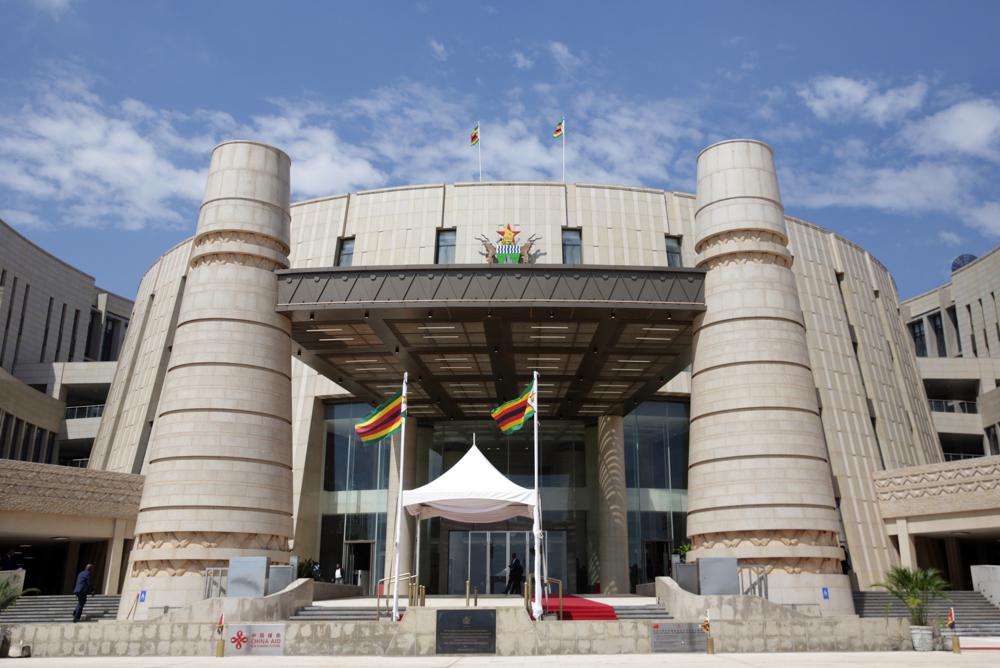
The Election Resource Centre (ERC) has called for reforms to Zimbabwe’s parliamentary recall framework, arguing that Constitutional Amendment Bill No. 3 (CAB3) creates a need to shift accountability from political parties to voters.
The debate over recalls intensified after the 2023 general elections, when self-styled interim secretary-general of the Citizens Coalition for Change, Sengezo Tshabangu, recalled several MPs and councillors from Parliament and local authorities. The move triggered widespread controversy and legal disputes over the interpretation and use of constitutional recall provisions.
In its analysis of the proposed constitutional amendments, ERC said the current system gives excessive power to political parties while excluding citizens from directly holding elected representatives accountable during their term of office.
“The recall framework must be realigned to reflect voter authority rather than supremacy of party control,” ERC said. “This includes introducing constituency-driven recall mechanisms. A reformed system would ensure MPs remain responsive to the electorate, particularly in matters relating to presidential elections.”
On this topic
ERC noted that recalls are already embedded in Zimbabwe’s electoral system and are commonly used by political parties to discipline or remove Members of Parliament.
It described a recall as the process through which a political party notifies Parliament that an MP has ceased to be a member of the party under which they were elected.
“‘Recall’ is an informal term used to describe the process whereby a political party submits written notice to Parliament that an elected Member of Parliament has ceased to be a member of the political party that originally nominated them,” the organisation said.
The group cited Section 129(k) of the Constitution, which provides that a parliamentary seat becomes vacant if a member ceases to belong to the political party under which they were elected.
However, ERC warned that the proposed shift to an indirect presidential election system under CAB3 increases the democratic stakes of recall provisions, as MPs would play a direct role in choosing the President.
“Under CAB3’s proposed shift to an indirect presidential election, the recall clause takes on heightened democratic significance,” it said.
ERC further argued that under both the current framework and the proposed amendments, only political parties, not voters, have the power to initiate recalls.
“Citizens do not have a right to recall their elected representatives,” ERC said. “This creates a gap between elections, with no mechanism for constituents to hold MPs directly accountable during their term, particularly where an MP may vote contrary to the preferences of their electorate.”
The organisation said extending recall powers to constituencies would strengthen democratic accountability and reduce political misrepresentation.
“The extension of the recall clause to include constituency-led recalls becomes paramount,” ERC said. “It is the only direct mechanism through which constituents can hold MPs to account and indirectly influence or contest presidential outcomes between elections.”
ERC warned that without such reforms, the principle of universal suffrage risks being weakened.
“Without a functional and fair recall mechanism for constituents, the principle of ‘one person, one vote’ risks being diluted through limited accountability to the electorate,” the organisation said.
Support CITE’s fearless, independent journalism. Your donation helps us amplify community voices, fight misinformation, and hold power to account. Help keep the truth alive. Donate today







Leave a Reply