
Strong opposition to extending special permits for Zimbabweans and Basotho living in South Africa emerged during public consultations hosted by the Department of Home Affairs (DHA), with several South Africans arguing that the country can no longer prioritise foreign nationals while millions of citizens remain unemployed and struggling with poverty.
The sentiments surfaced during a Zimbabwe Exemption Permit (ZEP) and Lesotho Exemption Permit (LEP) public consultations webinar for the Eastern Cape province, part of an ongoing national process that could influence whether the South African government reverses its earlier decision to terminate the permits or grants permanent residency pathways for affected migrants.
While Zimbabwean permit holders appealed for humanitarian consideration, citing years spent contributing to South Africa’s economy and raising families in the country, some South Africans participating in the consultations said the continued extension of the permits had come at the expense of citizens who were still battling unemployment, inequality and economic exclusion decades after the end of apartheid.
South African participants repeatedly argued that the permits, originally introduced as temporary humanitarian interventions, had evolved into a long-term immigration arrangement that South Africa could no longer sustain.
On this topic
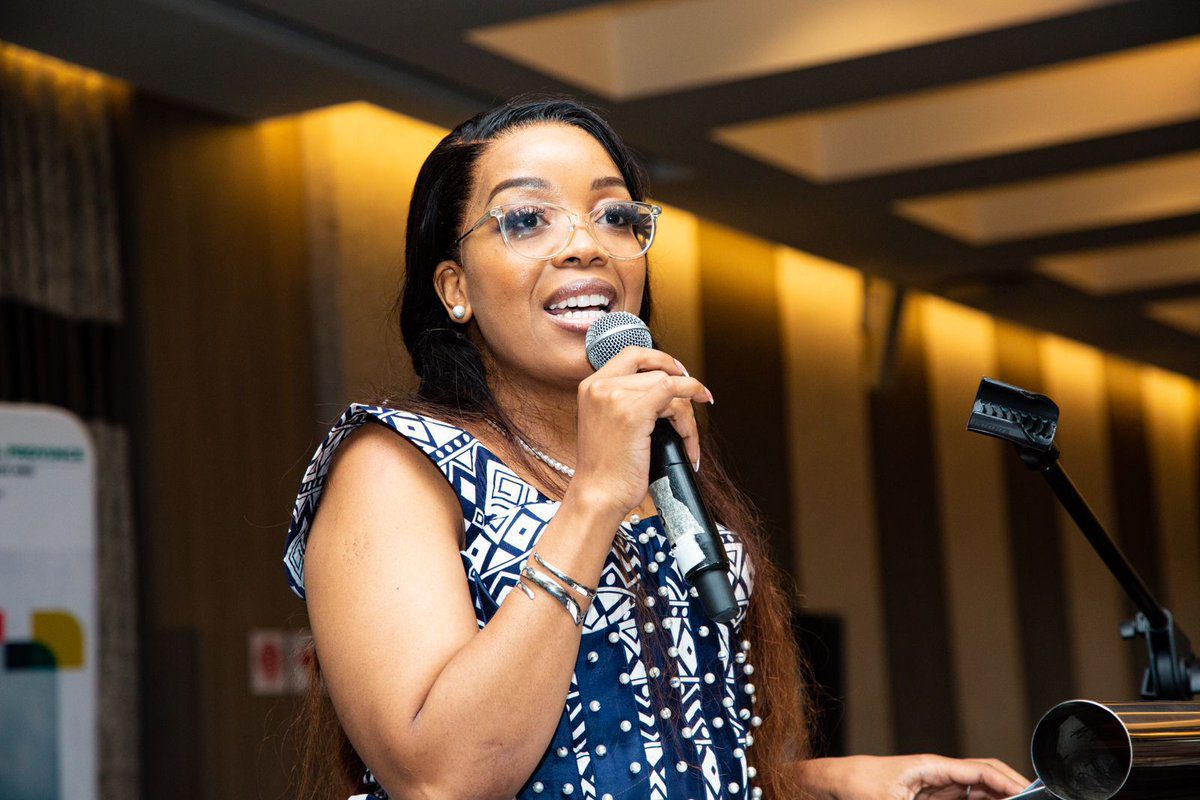
One of the strongest interventions came from March and March Founder and National Leader, Jacinta Ngobese-Zuma, who argued that the entire ZEP process had been flawed from the beginning and had undermined South Africa’s immigration system.
“We need to appreciate the fact that ZEP was a good idea and it was meant to foster good relationships between neighbouring countries,” Ngobese said.
“However, firstly, the granting of the ZEP in itself was unlawful, unconstitutional because of the manner in which it was done.”
March and March, which became active in early 2026, has been staging protests aimed at influencing government action on immigration policy and addressing concerns about employment and services for South African citizens.
Ngobese-Zuma argued that South Africans were still fighting for economic inclusion and opportunities in their own country.
“For a country like South Africa that has a new democracy and has gone through so much as a country, South Africans have not even enjoyed the freedom that we have fought so hard for,” she said.
“Now that we are finding ourselves here, we now have a new fight that we have to fight.”
Ngobese said many South Africans believed concerns about immigration were often dismissed or labelled xenophobic.
“The saddest thing about all of this is that it makes it seem as though when South Africans raise genuine concerns about these issues, they are at fault for raising these issues,” she said.
She claimed Zimbabweans had become increasingly entitled and accused civil society organisations of defending migrants while ignoring the concerns of locals.
“This ZEP process is something that has caused a lot of entitlement to Zimbabweans and people who are protecting them like Lawyers for Human Rights and other NPOs,” she said.
Ngobese also linked immigration to unemployment in the education sector, claiming foreign nationals occupied teaching posts while South Africans remained jobless.
“Currently sitting in teachers’ positions, there are about 3,000-plus foreign nationals, most of whom are Zimbabweans, whereas South Africans are at home unemployed,” she said.
“Now, for anyone who is remotely considerate of another country, this is an alarming situation.”
She further claimed many Zimbabweans had failed to integrate into South African society.
“The sense that we’re getting is that Zimbabweans are not here to build alongside South Africans. They are here because they are wanting to improve their own lives,” she said.
Ngobese urged Zimbabweans to focus their energy on changing conditions in Zimbabwe instead of seeking continued accommodation in South Africa.
“My plea for today and my submission really is that Zimbabweans have a constitutional conundrum right now where their government is about to enforce a lot of laws that allow for a lot of things that they had agreed would not happen. As Zimbabweans, I think it’s the perfect time now to go and stand up to their government the same way we are with our government, without spending so much time focusing on South Africa, because things are falling apart in Zimbabwe,” she said.
“Because no matter how many years they stay in South Africa, they are still Zimbabweans.”
Thandile Jojozi also from March and March in the Eastern Cape said although the permits may have initially served a purpose, South Africa’s worsening economic crisis meant the government needed to place South Africans first.
“We have understood the purpose of the ZEP and the government made a perfect decision to provide our neighbours with the permits,” Jojozi said.
“But now Stats SA has issued an unemployment rate in the country and 8.1 million people are unemployed.”
She said the Eastern Cape remained one of the country’s hardest-hit provinces in terms of unemployment.
“As here in the Eastern Cape, we are rated number one with an unemployment rate with no improvement,” she said.
“I would like the department to reconsider the decision of extending or finding a permanent solution to ZEP because we can no longer prioritise employment of other countries while we have a big crisis in our country.”
Jojozi also questioned the continued humanitarian justification for the permits.
“There is no war currently in Zimbabwe. They have a perfectly functioning economy. There is no war in Lesotho,” she said.
Her sentiments were echoed by Mecha Ramorula from Put South Africans First, who criticised the Department of Home Affairs for introducing the permits without adequately consulting South Africans.
“Firstly, let me reprimand our Department of Home Affairs for granting these LEPs and ZEPs without properly consulting us as South Africans,” Ramorula said.
“That’s why we find ourselves where we are today. We hope that recklessness never happens again.”
Ramorula said Zimbabweans and Basotho who accepted the permits were aware from the beginning that the arrangement was temporary and did not provide a path to permanent residency.
“Zimbabweans and Basotho knew that one condition of the ZEP and LEP was that they cannot apply for permanent residency,” he said.
“So they cannot come and hold us at ransom by saying they have children, they have spouses, bonds and so forth.”
He argued South African families were equally facing hardship and uncertainty.
“As much as they are worried about their children, we are also worried about our children who are sitting at home unemployed,” he said.
“Hence we say those ZEPs and LEPs must actually be cancelled and let them apply for mainstream visas.”
According to Ramorula, only migrants with scarce and critical skills should qualify to remain in South Africa.
“So that only those who really offer scarce critical skills can be considered,” he said.
“But those who don’t, our graduates are sitting at home. They also need jobs.”
He further called on the government to conduct an audit to establish how many permit holders were still in the country.
Ramorula also accused some foreign nationals of displaying entitlement and hostility towards South Africans.
“The day foreigners started disrespecting us and our laws, Ubuntu has left us because of all these insults that we’ve been getting and entitlement from all these people,” he said.
“What I say is, these ZEPs and LEPs, let them come to an end, let them apply to other mainstream vices and be considered accordingly.”
Another participant, identified as Elisha, painted a bleak picture of South Africa’s economic conditions, arguing that prolonged migration had deepened inequality and created resentment among unemployed citizens.
“We have companies that are constantly shutting down,” he said.
“We have a lot of people who are waiting to contribute to the same economy as well.”
Elisha said many South African graduates had spent years without stable employment while migrants were able to work and establish businesses.
“You have a graduate who graduated 10, 15 years ago,” he said.
“At 35 years old, some people are forced to make babies because you can’t wait forever to get employment.”
He argued that this was creating “successive generations of poor South Africans” and also accused some migrants of facilitating undocumented migration and contributing to criminality, although he acknowledged that South Africans also committed crimes.
“The very same ZEP holders are also enabling illegal immigration in South Africa because they support their illegal brothers,” he alleged.
He also criticised what he described as unequal expectations placed on South Africa compared to other African countries.
“South Africa has become Father Christmas where everyone is supposed to be coming into South Africa,” he said.
“If someone comes from Europe, you know that they have a surplus of doctors or engineers. But if you take medical doctors from Zimbabwe or Malawi, you are depriving that country of capacity.”
Elisha said migration should not be treated as an entitlement.
“You have a right to migrate, to move but being accepted by the whole country is not your right,” he said.
He added that South Africa’s humanitarian approach had placed strain on infrastructure, schools and healthcare services.
“When you give birth to three, four, five kids here, you don’t bring your schools from Zimbabwe or healthcare and therefore, you must give us a break,” he said.
According to Elisha, South Africa had become overburdened by migration while infrastructure and public services struggled to cope.
“At this stage, it’s not sustainable, unfortunately, and many of you will have to be flushed out. I hope we’ll exercise the humanity that you speak about, that we don’t hear online from many of you who are telling us that South Africans are lazy and whatever…,” he said.
His remarks drew a response from Department of Home Affairs Deputy Director-General for Operations and spokesperson Thulani Mavuso, who cautioned participants against using inflammatory language.
“I don’t think the word ‘flush out’ is the correct word you can use in this platform referring to people,” Mavuso said.
“I do believe that humans are mobile by their very nature, whether they are South Africans, whether they are Zimbabweans, whether they are British or any others.”
Mavuso said migration itself was not the issue, but rather making sure movement remained legal and regulated.
“The only thing that we are saying is that in that movement, let it be legal,”said the home affairs official.
“That is why we have programmes of inspectorate operations aimed at arresting people who are illegal in the country for the purposes of deportation.”
Mavuso pointed out that South Africans also migrate and work in foreign countries.
“South Africans are moving all over the world. Yesterday I was in Abidjan in Ivory Coast. I met South Africans who were coming back home, working in the mines. It was quite an interesting one to hear their story. So South Africans are all over the world, but the issue is that they remain legal,” he said.
“So South Africans are all over the world, but the issue is that they remain legal.”
Mavuso said even South Africans who violated immigration laws abroad faced deportation.
“We do have illegal South Africans that we are deporting together with the British government. We have about 3 000 South Africans who are illegal in the UK,”he said.
“The number is insignificant when compared to others, but we are bringing them back home.”
He urged participants to maintain respectful language during the consultations.
“Whatever the points that you are raising, let’s be sure that the language we choose is not inflammatory and derogatory,” he said.
Ngobese later returned to the discussion, insisting South Africa needed to fundamentally rethink its immigration policy.
“For our conversation to be progressive, we need to look at this whole immigration crisis holistically,” she said.
She claimed South African documents had been abused through fraud and corruption.
“Some people have been found to be using fraudulent documents under the disguise of them being ZEP documents,” she alleged.
Ngobese argued immigration should not become a substitute for governance failures in neighbouring states.
“Immigration was not created as an escape for people running away from their government,” she said.
“It is impossible for any country to save another country.”
She warned against what she described as South Africa being used to absorb the socio-economic problems of the region.
“You cannot try and save the whole world and use South Africa for it,” she said.
“South Africa has got its own people who have their own needs and have their own children that need South Africa to survive for South Africans.”
Ngobese also criticised what she described as a culture of sympathy-driven policymaking.
“This country is not a country of mercy. It’s not a country that must be run on feelings,” she said.
She insisted that Zimbabweans who qualified to remain in South Africa should apply through ordinary immigration channels rather than continuing with special dispensations.
“There are other means of people being documented in South Africa,” she said.
“Why must the ZEPs continue?”






Leave a Reply