
With calls mounting for the South African government to confront rising anti-immigration tensions at home, regional migrant leaders have described the situation as the result of political and economic failures within southern Africa that are driving migration into the country.
This comes amid intensifying protests against undocumented migration in parts of South Africa, with concerns growing over vigilantism, xenophobia, human rights violations and the role of law enforcement in managing migration.
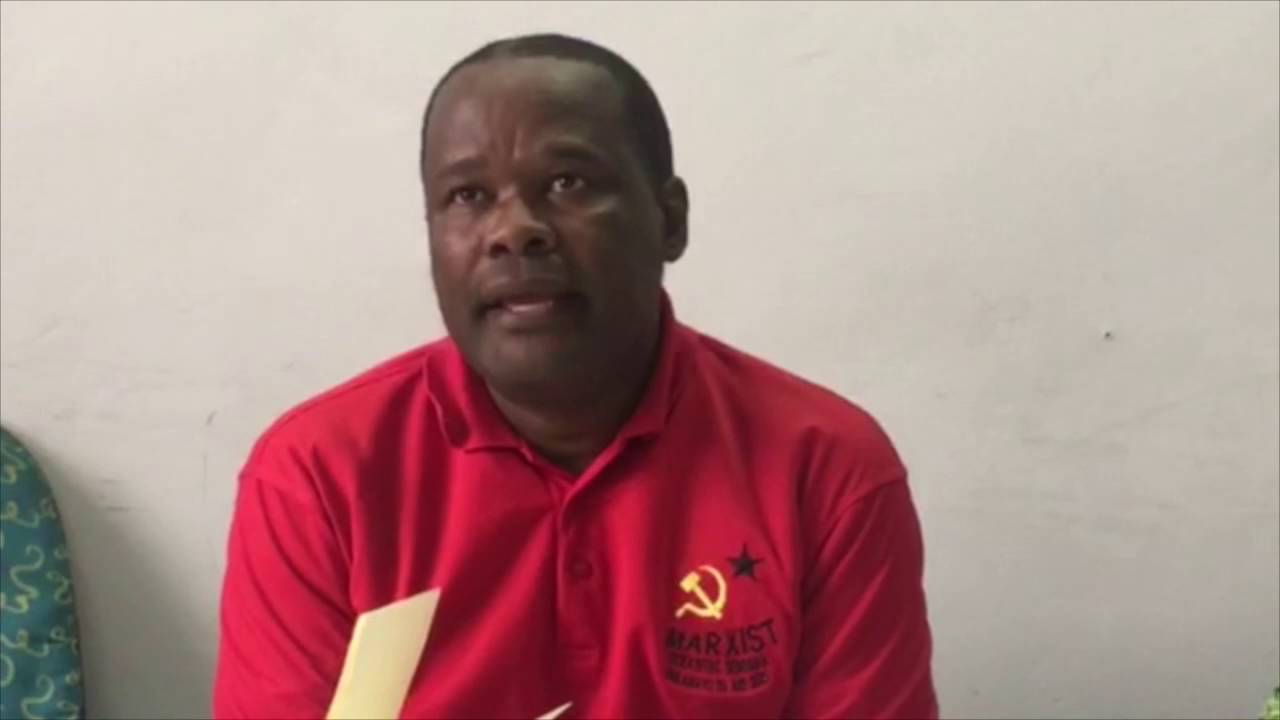
Speaking on the issue, Ngqabutho Nicholas Mabhena, Secretary of the Africa Diaspora Forum and Chairperson of the Zimbabwe Community in South Africa, said while South Africans had legitimate concerns around undocumented migration, private citizens could not be allowed to take law enforcement into their own hands.
“Firstly, we want to underline that the majority of South Africans are not xenophobic,” said Mabhena.
On this topic
“Secondly, they are raising genuine issues around undocumented migrants in South Africa. That is an issue that every country will raise but where we differ of course is that private citizens will not have a right, in our view, to inspect people’s documents because they are not trained.”
Mabhena said migration management was the responsibility of the State through established legal frameworks and institutions, not civilians.
He pointed to South Africa’s White Paper on International Migration, first gazetted in 2017, as one of the policy frameworks aimed at strengthening border management and improving migration systems through institutions such as the Border Management Authority (BMA).
“The South African government has done enough through the White Paper on international migration which established the BMA, now trying to improve the border entry points where people will walk into South Africa,” he said.
However, Mabhena argued the visa system proposed under the policy framework still failed to reflect Pan-African realities and regional migration dynamics.
“The visas out there are not really Pan-African,” he said.
“The majority of Africans, given our colonial legacy and apartheid legacy, will not qualify. You will only see people from North America and Asia qualifying to apply for these visas.”
He said many migrants entering South Africa from the Southern African Development Community (SADC) region were low-skilled workers seeking economic survival and warned restrictive visa regimes ignored the economic realities within the region.
“The reality of the matter is you have people of low skill within the SADC region that work in South Africa and are attracted to work in South Africa,” Mabhena said.
“The proposal to grant various visas to cater for people of low skill as was in the White Paper in 2017 was a step in the right direction. But of course that was then reviewed and they removed it.”
Mabhena’s remarks come as anti-illegal immigration protests continue to surface in parts of South Africa, with some activists framing the demonstrations as law enforcement activism while critics say they increasingly carry xenophobic undertones.
Mabhena acknowledged citizens had a constitutional right to protest peacefully but warned that migrant communities were increasingly living in fear.
“Our view has always been that in terms of the South African constitution people have a right to express themselves provided the protests are peaceful,” he said.
“But there’s also fear amongst the migrant communities when people are targeted.”
He referenced videos circulating online allegedly showing foreign nationals assaulted during anti-immigration operations, saying authorities must intervene if such incidents were genuine.
“We have seen videos where people are beaten up for being in the country in South Africa and if that indeed is true, the authorities must take action,” he said.
“But like we have said, there are genuine concerns but these concerns must be channelled in the right platform. The authorities are there to deal with these issues.”
Mabhena said migration into South Africa could not be separated from governance failures and political instability in neighbouring countries, particularly Zimbabwe.
“Why are people coming to South Africa?” he asked.
“For instance, we’ve been complaining as Zimbabweans that over the years the (South AFrican governing party) African National Congress (ANC) government has been protecting Zanu PF rigging elections.”
He accused the ANC of shielding Zanu PF despite ongoing governance and human rights concerns in Zimbabwe.
“If the ANC, which never had any relationship with Zanu PF during the liberation struggle will then protect Zanu PF, what you have is that the majority of Zimbabweans will simply pour in,” Mabhena stated.
As an example, he cited Zimbabwe’s ongoing constitutional reform efforts that propose extension of presidential and electoral timelines as undemocratic.
“That is a constitutional coup in our view. The (Zimbabwean) president wants to extend or to push forward the elections from 2028 to 2030,” he said.
“Those opposed to the constitutional amendment are brutalised. You saw the parliamentary process, those public meetings where those that hold a different view were not even allowed to speak.”
Mabhena said regional liberation movements and governments had a responsibility to make sure democratic processes were respected across southern Africa.
“The South African government in particular and the liberation movements must allow the people of Zimbabwe to elect leaders of their choice without protecting Zanu PF,” he added.
With debates intensifying around undocumented migration and economic pressures on public services in South Africa, Mabhena warned against allowing anti-immigration mobilisation to descend into violence.
“The challenge we seem to be having, particularly with some of the protests we are seeing, is they seem to be taking that old dimension of black-on-black violence,” he said.
“One will then argue those structures have been reactivated and it might not end with attacks on migrants.”
While noting there was no evidence, Mabhena said there were concerns about the possibility of a “third force” influencing tensions.
He maintained the South African government carried the responsibility of protecting everyone living within its borders regardless of nationality, while also addressing citizens’ concerns over jobs, housing and public services.
However, Mabhena insisted long-term solutions lay beyond border enforcement and required economic transformation across SADC.
“SADC is a boys club that protects dictators,” he claimed.
“The South African government must be firm and speak to the SADC leadership to ‘industrialise our economy’ so you will not have migration down south.”
He said southern Africa should aspire towards a region where migration was driven by lifestyle choices rather than economic desperation.
“You should have a South African going to live in Lilongwe, not for opportunities but because they think the weather in Lilongwe is far much better than in Johannesburg,” Mabhena said.






Leave a Reply