
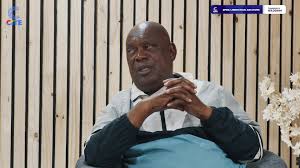
ZAPU has called for the late Retired Colonel Dallas Patron Khutshwekhaya Nketa Ndlovu Mlevu to be declared a national hero, describing him as a gallant liberation fighter whose contributions before and after independence are beyond question.
Nketa, 74, died last Friday following a sudden illness.
He is remembered not only for his role in the armed struggle but also for his continued political activism and outspoken stance on national issues long after independence.
However, Nketa’s death has also exposed underlying tensions, with ZAPU officials accusing Zanu PF of attempting to “hijack” his funeral proceedings, despite them describing his well-known critical stance toward the ruling party.
On this topic
Speaking at Nketa’s home at Pelandaba on Monday, ZAPU leader Sibangilizwe Nkomo said the late liberation war hero’s record speaks for itself and should earn him national recognition regardless of political considerations.
“We are here to pass our condolences to the family of Retired Colonel Dallas Patron Khutshwekhaya Mlevu,” Nkomo said.
“More importantly, I am here to speak about Nketa’s heroic acts when he was alive.”
Nkomo said Nketa was among the early nationalists who took a stand against colonial rule in the 1960s, participating in protests and direct confrontations with white settlers before later joining the armed liberation struggle under ZAPU’s military wing, ZPRA.
“He was one of the first men to stand up and say we must liberate ourselves from white oppression,” he said.
“He went on to train and fight using arms as part of the liberation struggle until the country was free.”
After independence in 1980, Nketa integrated into the Zimbabwe National Army and continued serving in various missions, including deployments in Mozambique, the Democratic Republic of Congo and Somalia.
Despite his extensive service, Nkomo lamented that Nketa, like many liberation war fighters, did not materially benefit from his sacrifices.
“It’s unfortunate people like Nketa, who fought for Zimbabwe’s independence, gained nothing in terms of material benefits such as houses, vehicles, or money,” he said.
“Yet, because of his heroic nature, he continued working for Zimbabweans to gain total freedom from current forms of oppression.”
Nkomo added that whether or not the government confers official hero status, Nketa remains a hero in the eyes of many Zimbabweans.
“His heroism does not need anyone to declare it. A hero is a hero because of their deeds,” he said.
The ZAPU leader also highlighted Nketa’s role within the ‘mother’ party, where he served on the National Executive Council and as spokesperson for the presidency, describing him as principled and unafraid to speak his mind.
“He was an honest man who stood for the truth and was quick to criticise what he did not agree with,” Nkomo said.
“Even recently, we were working together opposing the Constitutional Amendment Bill No. 3. He was fully committed to that cause.”
Tensions surrounding Nketa’s burial have been heightened by reports that Zanu PF officials are seeking to take control of funeral proceedings and allegedly threatening his family.
The ZAPU leader said they would reject such moves.
“Step aside from what?” Nkomo said.
“Nketa was ZAPU, a former ZPRA cadre and a government soldier. We will not step aside. We will continue to speak about his work whether they hijack the funeral or not.”
Nkomo criticised the ruling party’s sudden interest in honouring Nketa only after his death.
“Where were they when he was suffering? Now that he is dead and cannot speak for himself, they are rushing to align themselves with him. That is painful,”said the ZAPU leader.
Nkomo noted this situation reflects a broader pattern in which many liberation fighters have been neglected by the state despite their contributions.
“There are many in this situation, people who left their homes, their youth and their lives to fight for independence, yet they are not recognised,” he said.
The ZAPU leader insisted Nketa’s legacy cannot be rewritten or appropriated.
“We hope the government will be reasonable and recognise him according to his efforts,” Nkomo said.
“But whether they do or not, it does not change who he was, a true national hero.”
A fellow liberation war veteran, Casper Sibanda, who worked closely with Nketa during the struggle, also described him as a disciplined and forward-thinking commander.
“My nom de guerre was Kayson Mlotshwa, and his name was DKays,” Sibanda said.
“I met him in early 1979 when I was attached to his armament department after he returned from training in the Soviet Union.”
Sibanda said Nketa was responsible for maintaining weapons and making sure they were operational, often leading small teams in dangerous conditions.
“He was intelligent, progressive and had foresight, though he did not show it openly,” he said. “We would move from base to base, testing weapons even when we knew enemy forces were nearby. He commanded us with confidence.”
Sibanda added that Nketa had always advocated for unity among ZPRA cadres during the war.
Civil society leader, Mbuso Fuzwayo described Nketa as a committed activist who remained engaged in national issues, particularly those relating to historical justice and memory.
“We used to call him ‘Colonel.’ He supported us fully in our work at Ibhetshu LikaZulu,” Fuzwayo said.
“He did it out of commitment and love, not for any personal gain.”
Fuzwayo said Nketa was deeply affected by historical events such as the Mgagao incident and the Gukurahundi atrocities, often becoming emotional when discussing them.
“I remember one time during a lecture, he cried. That was rare for him because he was always brave and composed,” he said.
He added that Nketa remained politically active until his death, including engaging in discussions around the Constitutional Amendment Bill No. 3 and mobilising citizens to take action.
“He was clear that people must be mobilised, even to demonstrate if necessary,” Fuzwayo said.
Fuzwayo also warned against attempts to politicise Nketa’s funeral, arguing that doing so would betray his legacy.
“If people allow this to happen, we will have betrayed uBaba uNketa,” he said.
“Zanu PF must be remorseful because he was one of the people seriously affected and violated by them.”
He said Nketa had openly expressed his disapproval of how former comrades were treated during and after the liberation struggle.
“He was a patriot who served Zimbabwe, but he had little respect for Zanu PF and ZANLA because of how they treated fellow comrades,” Fuzwayo said.






Leave a Reply