
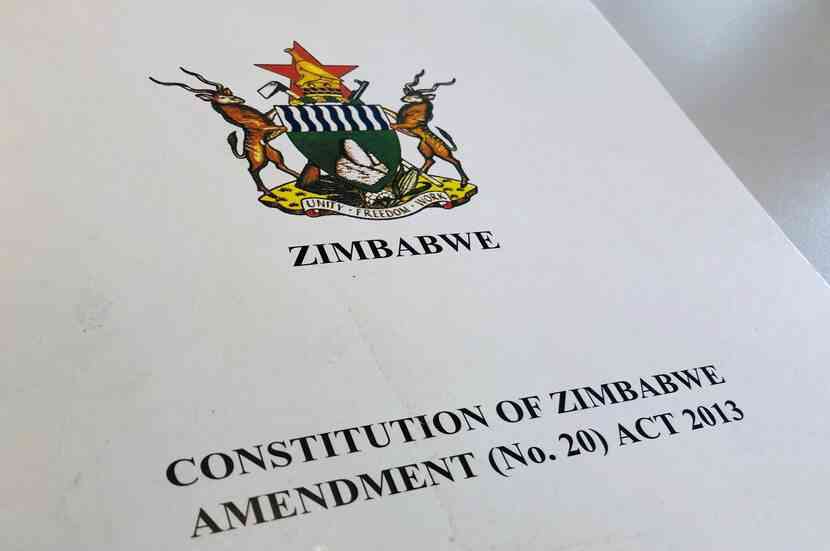
The proposed Constitutional Amendment Bill No. 3 (CA3) signals a shift in the ownership of Zimbabwe’s supreme law following the collapse of meaningful opposition, political scientist Richard Mahomva has said.
Speaking during an X Space hosted by CITE on Monday, Mahomva noted that the 2013 Constitution was born out of a negotiated settlement under the Government of National Unity (GNU), making it a product of competing political interests at the time.
He argued that the absence of a strong opposition has enabled the ruling Zanu-PF to leverage its dominant political position to reshape the Constitution.
“The Constitution in place is the 2013 Constitution, which was a product of the GNU. It emerged from a negotiated political context in which dominant political parties were defining the terms of acquiring and consolidating power,” Mahomva said.
On this topic
“The political actors who shaped that framework, particularly opposition forces, have since weakened significantly, leaving Zanu-PF as the major shareholder in the current political landscape.
“That very same opposition that co-authored the law is no longer there. In a political sense, the proprietorship of the Constitution now lies with Zanu-PF.”
Mahomva said constitutional processes are fundamentally political and driven by those who wield power at any given time.
“All law is generated by those who hold power. Zimbabwe’s constitutional history, from the colonial-era Lancaster House Constitution to the present, has always reflected prevailing political interests,” he said.
His remarks come as the government pushes for sweeping constitutional changes, including extending presidential terms, altering the method of electing the president and restructuring key state institutions, proposals critics argue could centralise power.
He added that while the ruling party is seeking to entrench itself, it is doing so in line with broader political realities.
“We cannot avoid the reality of a political party that wants to entrench itself in power. This push stems from resolutions adopted at the 2024 conference, later formalised through Cabinet processes, both dominated by the ruling party,” Mahomva said.
“The opposition is now weaker, collapsed, if not dead. Its diminished capacity has created space for unilateral constitutional changes. The Constitution is not immune to political realities. Those in power will always shape it to reflect their interests.”
Support CITE’s fearless, independent journalism. Your donation helps us amplify community voices, fight misinformation, and hold power to account. Help keep the truth alive. Donate today







Leave a Reply