
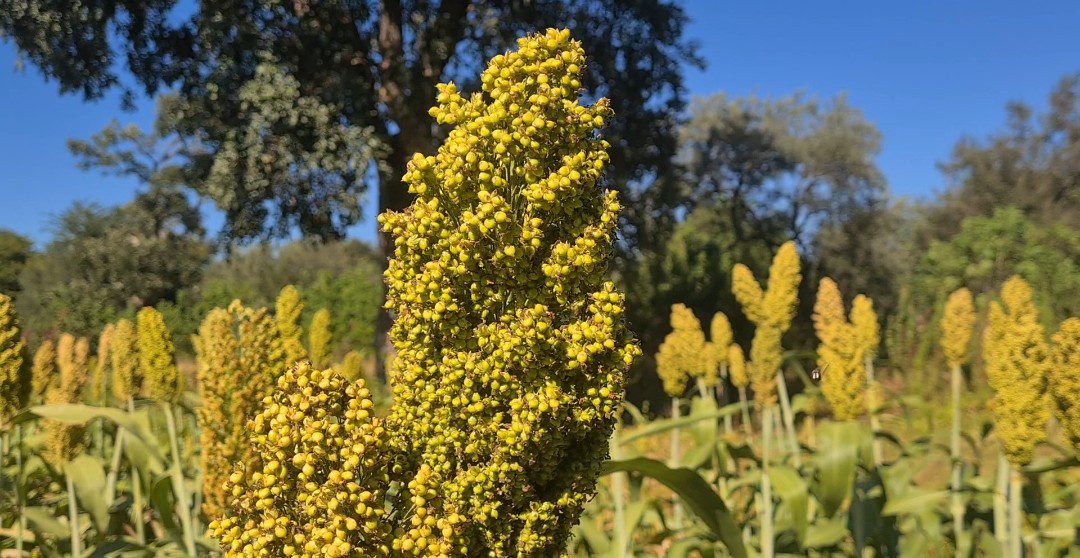
Residents of Lubimbi village in Lupane West are celebrating what they describe as a strong recovery in the 2025/26 farming season, after improved rains boosted yields of small grain crops.
Farmers say medium to favourable rainfall in recent months helped revive fields that had earlier shown signs of stress following an inconsistent start to the season.
Cow peas, millet and sorghum are among the crops that performed better than expected, providing both food and the prospect of income from surplus sales.
“We were worried at first because the rains were not consistent,” said Witness Munenge, a local farmer. “But as the season progressed, the weather improved and our small grains did well. We now have something to be thankful for.”
On this topic
Communal celebrations were held in the village this week, with residents gathering to give thanks and discuss how to manage the harvest responsibly.
Farmers stressed the importance of proper drying and storage to prevent losses from mould, insects and rodents, problems that have affected previous seasons.
“If we do not store grain properly, the harvest will not help us for long,” Mr Munenge added.
For many households, small grains serve as a buffer against food shortages. Diligent Muleyo said the harvest would help families plan ahead.
“With millet and sorghum, we can prepare meals for the coming months and still have grain left for school needs,” he said. “This is our safety net.”
Farmers also said they had learned lessons from previous seasons, including the importance of timely weeding, correct crop spacing and early harvesting.
Local leaders used the occasion to encourage careful management of the harvest.
Mxolisi Charles Sibanda, the Member of Parliament for Lupane West, urged residents to safeguard their grain and consider selling part of their produce to meet expenses such as school fees and medical costs.
“Your harvest is an achievement you should defend and preserve,” he said. “Use it strategically, some for home consumption and some for income.”
He also encouraged communities to explore shared storage facilities and to continue adopting climate-smart farming practices suited to changing weather patterns.
The improved yields are expected to strengthen food availability in the area in the coming months and provide opportunities for local trade.






Leave a Reply