
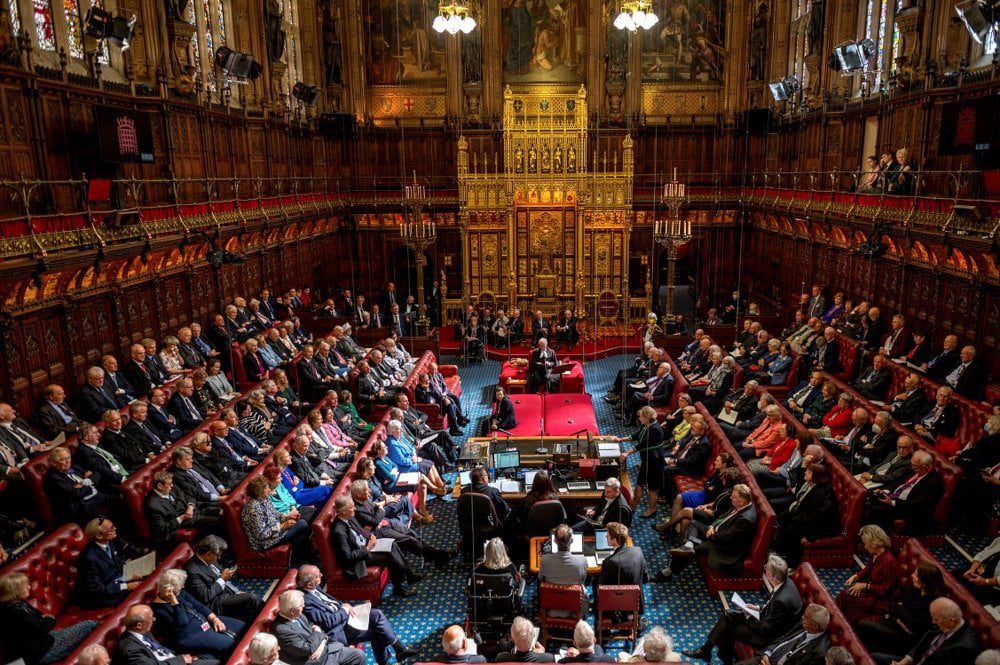
Members of the United Kingdom’s House of Lords sharply challenged their government’s position on Zimbabwe’s proposed constitutional amendments, with calls for stronger condemnation as they described as attempts by Zanu PF to entrench power.
The debate, held on Wednesday, April 15, was triggered by a question from Kate Hoey, who asked what discussions the UK government had held with Harare over Zimbabwe’s proposed Constitutional Amendment Bill 3 (CAB3), whose changes will allow President Emmerson Mnangagwa to extend his rule beyond the current two-term limit.
Responding on behalf of the government, Lord-in-Waiting, Gerard Lemos, said British officials remained in contact with Zimbabwean authorities, civil society and other stakeholders as part of their ongoing engagement on this matter.
“However, constitutional amendments are a sovereign legislative matter for Zimbabwe,” Lord Lemos said.
On this topic
He added that while the UK continues to monitor reports of harassment, it is now prioritising engagement over confrontation.
“On speaking out more strongly, frankly, the Government’s view is that 20 years of megaphone diplomacy did not get us anywhere, and we are now in the business of engaging,” Lord Lemos said.
However, his response drew strong criticism across the chamber, with several Lords arguing that the UK’s approach was too cautious in the face of ‘clear democratic backsliding.’
Baroness Hoey warned the proposed amendments could fundamentally alter Zimbabwe’s democratic framework.
“Does he realise that the constitutional changes proposed will mean that the people of Zimbabwe will no longer elect their president, the electoral commission will be abolished, judicial appointments will become very unsafe and there will be many more changes, all of which are anti-democratic?” she asked.
Baroness Hoey further accused the ruling party of maintaining power through repression.
“This is coupled with continued brutality, beatings, torture and imprisonment against opposition figures and those in civil society,” she said.
“Can we have an assurance that the UK will speak out more strongly against the tyranny of the Zanu PF regime, which rules by terror and threat of terror?”
Her remarks set the tone for a debate in which multiple peers questioned whether the UK’s engagement strategy was adequate.
Watch Baroness Hoey speak here:
Malcolm Bruce said Zanu PF’s justification that extending presidential terms was necessary because President Mnangagwa was “doing a good job” exposed deeper issues.
“Does it not show that Zanu PF has utter contempt for democracy?” Lord Bruce asked, challenging the government to explain how it would pressure Harare to reverse course.
Other Lords raised concerns about the broader implications of the proposed reforms, including the possibility of replacing direct presidential elections with parliamentary selection, an argument Zimbabwean authorities have reportedly framed as a cost-saving and violence-reduction measure.
Despite acknowledging concerns raised by Zimbabwe’s own human rights watchdog, Lord Lemos maintained engagement remained the preferred route.
“We share the concerns highlighted in the Zimbabwe Human Rights Commission’s report, that the constitutional amendment public consultations were highly managed, with limited space for dissenting voices, civil society, and the media,” he said.
However, Lord Lemos stopped short of outright condemnation, insisting the UK would continue to advocate for “inclusive, transparent and lawful processes.”
That position drew further pushback from Martin Callanan, who criticised the lack of stronger language.
“These changes are profoundly undemocratic, extending the current presidential mandate and abolishing the elections, with violence and intimidation at the public meetings when it was discussed,” Lord Callanan said.
“What I have heard from the Minister is lots of ‘consultation’ and ‘listening carefully,’ but I have not heard any condemnation in what he had to say.”
Lord Lemos rejected the criticism, saying it misrepresented the government’s stance.
“I have said that we will engage with the Zimbabwe Government on these issues, and the ambassador raised our concerns as recently as yesterday (Tuesday),” he responded.
The debate also extended to Zimbabwe’s international ambitions, particularly its desire to rejoin the Commonwealth.
David Howell suggested that Harare’s prospects would be improved if President Mnangagwa adhered to the two-term limit.
“Could it be explained to President Mnangagwa that the chances of joining the Commonwealth will be much improved if he stands down after two terms?” Lord Howell asked, noting that the bloc generally favours term limits.
Lord Lemos said a decision on Zimbabwe’s re-entry would ultimately rest with Commonwealth members, following recommendations by the Secretary-General.
Beyond governance issues, some members highlighted concerns about corruption and economic management in Zimbabwe.
Peter Hain said “Zimbabwe’s president is intrinsically involved in the criminality at the heart of the state,” linking the state to alleged smuggling networks and weak oversight institutions.
“My Lords, does my noble friend the Minister agree that Zimbabwe’s president is intrinsically involved in the criminality at the heart of the state, the machine of that criminal enterprise being the Reserve Bank of Zimbabwe, oiled by a business elite,” Lord Hain said.
“Many of whom are the sons and daughters of the white and Asian elite who supported sanctions-busting under the racist regime of Ian Smith and unchecked today by the independent judiciary, accountability and professional scrutiny that continue to exist in South Africa, enabling the state of Zimbabwe to either sponsor or turn a blind eye to massive gold and tobacco smuggling?
In response, Lemos acknowledged that tackling corruption remained central to Zimbabwe’s reform agenda, even as he pointed to steps taken by authorities, including engagement with the International Monetary Fund.
The discussion also touched on regional and international pressure, with Robert Hayward urging coordinated action with other countries.
“Surely it is better that we work not alone but with many other countries,” Lord Hayward said.
Lemos agreed, noting that the UK was working through international platforms, including debt resolution processes, to support economic reforms in Zimbabwe.
However, for several Lords, the central issue remained the perceived erosion of democratic principles.
David Pollock invoked Zimbabwe’s history of resistance, recalling protests against former president Robert Mugabe’s attempts to extend his rule.
“The Zimbabweans have a sophisticated understanding of democracy,” Viscount Hanworth said. “It behoves us to support this spirit and to prevail upon others to exert pressure on this regime.”
Meanwhile, Christopher Chessun, The Lord Bishop of Southwark, cited calls by Zimbabwe’s Christian community for the withdrawal of the Bill, questioning how neighbouring states were responding.
“Aas I have said on previous occasions, my diocese of Southwark is linked with four of the five Anglican dioceses in Zimbabwe and I have visited our link dioceses on many occasions. I note that the Zimbabwe Council of Churches has called this week for the withdrawal or amendment of the Bill currently before the Zimbabwean parliament,” he said.
“Would the Minister advise the House what the reaction has been of neighbouring states to this latest development in the governance of Zimbabwe and its wonderful people, so poorly served by those currently in power?
Lord Lemos declined to speak on behalf of regional governments but reiterated that the UK would continue to raise concerns.








Leave a Reply