
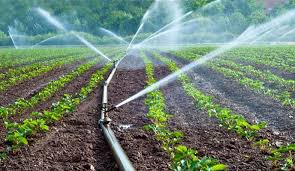
The government has unveiled a new programme aimed at incentivising farmers to construct dams and water reservoirs as part of broader efforts to strengthen irrigation and mitigate the impact of erratic rainfall patterns.
The initiative emerged in Parliament recently following a question by legislator, Tendai Nyabani, who sought clarity on government policy to support farmers struggling with crop losses due to prolonged dry spells, particularly between January and March.
“What is the government policy in assisting farmers to get dams for irrigation? Most of the time we have sunny conditions in January and February up to March and most crops wilt because there is no irrigation. What is the government’s policy to ensure there are boreholes and dams on these farms so that people can irrigate their crops?” Nyabani asked.
Responding to the concerns, Minister of Energy and Power Development, July Moyo, confirmed the government has introduced incentives to assist farmers in building dams, describing water harvesting as critical to sustaining agricultural productivity.
On this topic
“In the event that we did not receive enough rainfall for people to continue farming throughout the year, there is a need for water and a need for the construction of dams. (On 17 March 2026), the government launched a programme where those who have farms can be assisted with equipment so that they can construct dams with the assistance of the Government,” Moyo said.
He added that farmers will receive incentives from the Government to construct dams.
“Even those who have rivers that pass through their farms must also construct reservoirs and small dams so that they can use the water during the dry season. This country is very good because there are many flowing rivers and we have most of the dams in the country,” said the minister.
Under the new framework, the government is also working with private players and individuals capable of constructing dams, while providing financial support mechanisms to those lacking adequate resources.
“These people will be getting incentives from the government, together with those who have ways to construct reservoirs within the rivers. We are encouraging everyone to do this because in the event that we do not receive enough rainfall, there will be a way to make sure we can engage in farming,” Moyo said.
Moyo said farmers who already have dams but lack the means to fully utilise them will also be assisted, while those without existing infrastructure will benefit from levies and incentives designed to support dam construction.
“There are some people who already have dams but do not have the resources for surety, so they can get money to construct dams for irrigation. The government has a policy to make sure that those who have dams are assisted with irrigation, and those without dams are assisted with levies to construct dams,” he said.
Moyo noted that the project was launched by the Minister of Finance, Economic Development and Investment Promotion, Professor Mthuli Ncube.
“The government has seen that many people are struggling in this area, and it is calling upon all people to come for assistance. The document is going to be clearly explained to everyone, but it was launched yesterday, and everyone will get an opportunity for an explanation,” said Moyo.
Meanwhile, another MP, Supa Mandiwanzira raised concerns over water charges by the Zimbabwe National Water Authority (ZINWA), particularly in areas where farmers utilise natural water sources such as springs.
“In some areas like Chimanimani and Nyanga, there are springs. People use taps to irrigate their farms, but they are given invoices by ZINWA to pay. If people do not use these springs, the water just flows into the Pungwe River and into Mozambique. What is the government policy for those who are going to construct their own dams? Are they not going to pay levies to ZINWA since it is their initiative and their resources?” Mandiwanzira asked.
In response, Minister Moyo indicated that ongoing reforms, including amendments to water management laws are being made to address these challenges and improve access to water for agricultural use.
“I am sure Mandiwanzira will see when the gazetting takes place that these are things being addressed, so that we can allow our farmers to access water. The reform of the ZINWA Act and other Acts will allow this to happen,” Moyo said.
Another MP, Shakespear Hamauswa inquired whether investigations had been conducted on the amount of rainfall received in the country and the overall water status.
“In Nyanga, we might not need dams and canals. In other areas like Gutu, there is a need for boreholes because the area does not have many rivers. Did they research so that they can have a comprehensive water harvesting system, even in towns?” Hamauswa said.
“There is a shortage of water in towns. Does the document include a water harvesting strategy? Does it cover the whole country? I want to know if they have produced this document after comprehensive research into the status and ways to harvest water in the country.”
Minister Moyo said consultations were held with all stakeholders in areas related to water, livestock and fisheries to provide a well-informed approach.






Leave a Reply