
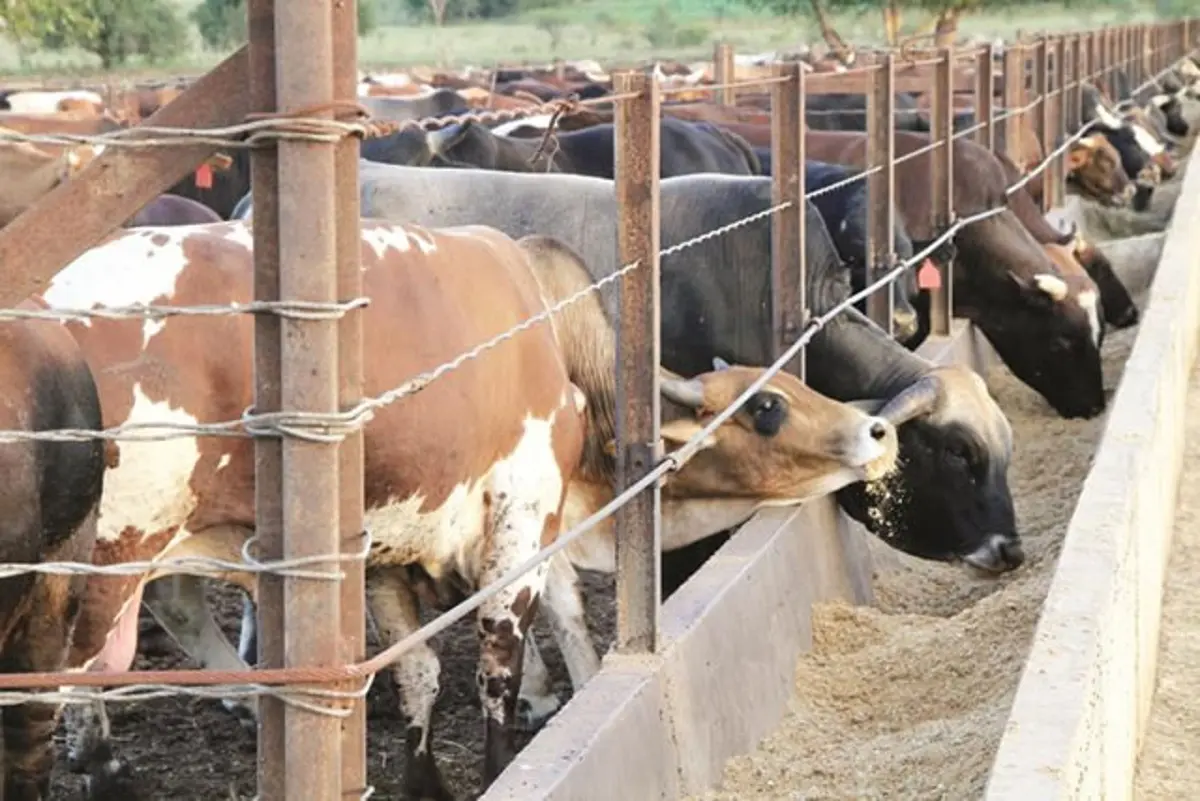
Farmers in Zimbabwe have been urged to take a more active role in addressing the growing threat of livestock diseases and climate change, as officials warn that current approaches are no longer sufficient.
The call was made during a livestock conference held at the Zimbabwe International Exhibition Centre on Thursday, where stakeholders gathered under the theme Advancing Livestock Value Chains for Economic Development.
Speaking at the event, Deputy Minister of Lands, Agriculture, Fisheries, Water and Rural Development Davis Marapira said recurring droughts and disease outbreaks were increasingly affecting productivity.
“Climate change, with increasingly frequent droughts, directly impacts pasture and water availability,” he said. “These challenges demand that we build a resilient, productive and commercially oriented livestock sector.”
On this topic
His remarks come as countries across Southern Africa grapple with an outbreak of Foot-and-mouth disease, which has disrupted livestock markets in the region.
Marapira said farmers and stakeholders needed to move beyond identifying problems and instead focus on practical solutions.
“Let us not talk about drought without solutions. How are we going to manage drought in connection with livestock?” he said, urging greater collaboration between farmers, government and researchers.
He pointed to missed opportunities in water management, particularly in dry regions such as Chivi District. Despite seasonal rivers flowing during the rainy season, he said little was being done to store water for use during dry months.
“Come September and October, cows will be dying because of drought, yet rivers would have flowed without being harnessed,” he said.
The deputy minister also called for improved responses to livestock diseases such as January disease, urging scientists and academics to play a more active role in developing solutions.
Meanwhile, Bulawayo Agricultural Society Council Member Promise Ncube said the current outbreak of foot-and-mouth disease highlighted the urgency for coordinated action.
“We have undeniable urgency. Our sub-region is battling a widespread outbreak that ignores borders,” he said, adding that livestock auctions in Zimbabwe had already been cancelled due to the disease.
He warned that such outbreaks have far-reaching consequences beyond animal health.
“This is not just a veterinary crisis. It is an economic and livelihood crisis,” he said, noting that livestock is a key source of income for many households.
Ncube said outbreaks can lead to loss of income, reduced food security and the closure of export markets, affecting foreign currency earnings and disrupting value chains.
He added that the sector must shift from subsistence farming towards more sustainable and commercially viable livestock enterprises.
“Agriculture is increasingly shaped by science, technology and global market forces,” he said. “Adopting innovation is no longer a luxury, it is essential.”
Stakeholders at the conference agreed that tackling disease outbreaks and climate pressures will require stronger collaboration, investment in innovation and practical, locally driven solutions.
Support CITE’s fearless, independent journalism. Your donation helps us amplify community voices, fight misinformation, and hold power to account. Help keep the truth alive. Donate today







Leave a Reply