
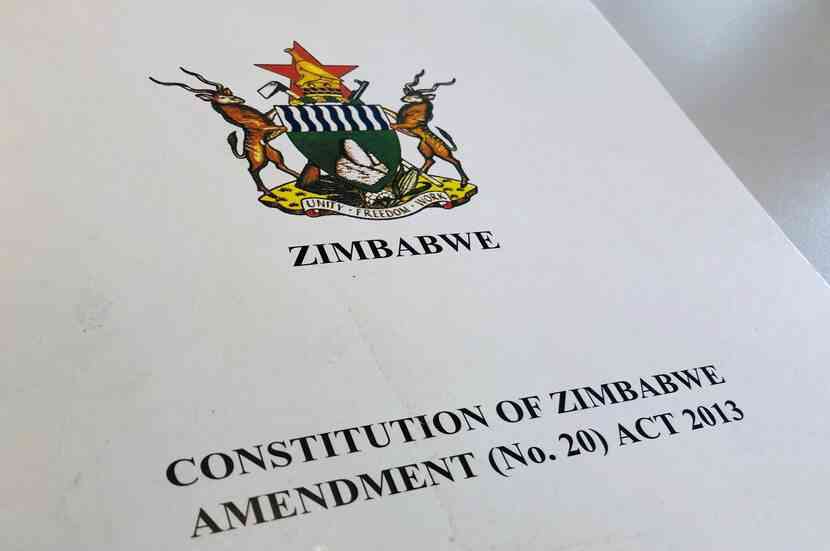
Debate over Zimbabwe’s proposed Constitutional Amendment Bill No. 3 has intensified, with analysts warning that the country’s media landscape is becoming a key arena of political contestation as the reform process unfolds.
The Constitutional Amendment (No. 3) Bill, 2026, gazetted on 16 February, proposes sweeping changes to how key state institutions operate, including how the president is elected, how judges are appointed and how electoral processes are managed.
Parliament of Zimbabwe has announced that public hearings on the bill will take place across the country from 30 March to 2 April.
Speaking on the sidelines of a roundtable discussion on the proposed changes with civil society organisations, political analyst Bekezela Gumbo said the media plays a crucial role in shaping public understanding of the reforms, but warned that its influence is constrained in ways that affect national debate.
On this topic
He said Zimbabwe fits the characteristics of what scholars describe as a “competitive authoritarian” system, where democratic institutions formally exist but are strategically controlled to influence political outcomes.
“Competitive authoritarian regimes like Zimbabwe capture arenas of contestation, the judiciary, the legislature, the electoral arena and the media,” he said.
According to Dr Gumbo, control over these institutions can significantly shape political competition and electoral outcomes.
“The media has been captured so that it controls the kind of discourses that emerge out there,” he said.
“As you would agree with me, most media practitioners are now confined to these safe zones in the urban areas and we know that the vast majority of citizens are not there.”
He added that governments operating within such systems often influence the media both directly and indirectly.
“Competitive authoritarian regimes capture the media whether directly or indirectly by sponsoring people into positions of influence or promoting self-censorship,” he said.
Dr Gumbo also argued that while some outlets have reported on the proposed constitutional changes, coverage has largely focused on listing the amendments rather than examining their wider implications.
“They have done fairly well in spotlighting the amendments that are there, but they have not gone further to analyse the positive aspects or ask what citizens can do,” he said.
Among the key proposals in the bill are changes to the electoral system, including a plan for the president to be elected by Members of Parliament and senators instead of by direct popular vote.
The bill also proposes transferring voter registration and the management of the voters’ roll from the Zimbabwe Electoral Commission to the Registrar-General’s Office.
Other provisions would extend the terms of office for the president and Members of Parliament from five to seven years.
Additional clauses would allow the president to appoint all judges and increase the number of appointed senators by 10, raising the size of the Senate from 80 to 90 members.
The proposed amendments would also create a Zimbabwe Electoral Delimitation Commission responsible for drawing constituency boundaries.
Other changes include expanding the jurisdiction of the Constitutional Court of Zimbabwe to hear broader matters of public importance and altering the role of the Zimbabwe Defence Forces from “upholding the Constitution” to “acting in accordance with the Constitution”.
The bill also proposes abolishing the Zimbabwe Gender Commission and the National Peace and Reconciliation Commission, with some of their functions to be transferred to the Zimbabwe Human Rights Commission.
Another clause would remove the requirement for the president to consult the Judicial Service Commission before appointing the Prosecutor-General.
The bill also proposes repealing a constitutional provision that currently bars traditional leaders from participating in partisan politics.
Analysts say the upcoming public hearings could prove pivotal in shaping public opinion on the proposed reforms, which would significantly alter Zimbabwe’s political and institutional landscape if adopted.
Support CITE’s fearless, independent journalism. Your donation helps us amplify community voices, fight misinformation, and hold power to account. Help keep the truth alive. Donate today






Leave a Reply