
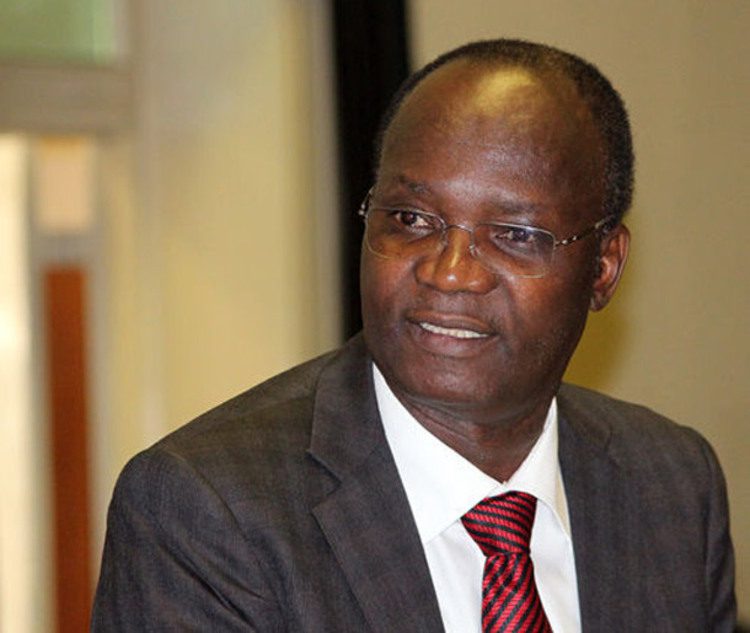
Professor Jonathan Moyo, a political scientist and former Cabinet minister, has broken ranks with the dominant tide of criticism surrounding the Constitution of Zimbabwe Amendment Bill (No. 3), 2026, arguing that the proposed changes are not an opportunistic power grab but a structural response to longstanding political distortions embedded in Zimbabwe’s constitutional history.
Speaking during CITE’s X Space discussion on the new amendment bill on Thursday, Prof Moyo, who was involved in constitutional reform processes in the past 25 years, framed the debate as one that must move beyond slogans and confront what he termed the “mischief” the Bill, approved by Cabinet last week and gazetted by Parliament this week, “seeks to cure.”
Prof Moyo said he participated in both the people-driven constitutional exercise that produced the 2000 draft constitution under the Constitutional Commission and the later political compromise between Zanu PF and the two MDC formations that culminated in the 2013 Constitution.
“It is my considered view that the Constitution of Zimbabwe Amendment No. 3 Bill represents a profound recalibration of our country’s democratic or political architecture,” he said.
On this topic
“The foundational question of my intervention this morning is based on this question that I pose: What is the motivation or mischief that the bill is addressing? It’s not just dropping into our midst or body politic like manna from heaven. It is a response to a particular situation or mischief which motivates it. And to have a meaningful debate, I think it is important to unpack or understand that mischief. In my view, the mischief being addressed by this bill is twofold.”
The first “mischief,” he argued, lies in the origins of Zimbabwe’s executive presidency.
According to Prof Moyo, the current system of directly electing a powerful executive president traces back to the 1987 constitutional amendment, enacted during a period when the ruling establishment anticipated the consolidation of a one-party state.
“When this system was introduced at that time, it was in anticipation of the establishment of a one-party state,” he said.
“The 1987 amendment was enacted with, explicitly the intentions, of establishing a one-party state in our country.”
However, the anticipated one-party dispensation did not materialise.
By 2000, the government initiated a constitutional review process to address what Prof Moyo described as “structural consequences flowing from the 1987 changes.”
The 2000 draft constitution proposed a hybrid arrangement that would have restored a prime minister drawn from the parliamentary majority as head of government, while retaining a president as head of state with reduced powers.
Unlike that draft, the 2013 Constitution retained the executive presidency largely intact.
“The 2013 constitution did not even attempt to address the issues related or rooted in the 1987 amendment,” Prof Moyo said.
“Instead, it retained the presidency created in 1987 in anticipation of a one-party state, but this time under a constitutional framework for a multi-party democracy.”
The result, Prof Moyo argued, has been an enduring structural contradiction.
“The constitution enacted in 2013 presupposes the existence of a multi-party democracy. But the executive presidency inherited without even a single amendment was enacted anticipating that by 1990 there would be a one-party state,” he said.
“The fact that this was retained in 2013 by a constitution whose framework anticipates a multi-party democracy naturally led to a self-evident structural breakdown, exemplified by the scourge of disputed presidential elections and the toxicity associated with it.”
The proposed Bill seeks, among other changes, to transform the system of electing the president by moving from a direct popular vote to an indirect election through Parliament, while also extending the national electoral cycle.
Prof Moyo maintains that this would reduce the “perpetual conflict mode” that has characterised Zimbabwean politics for decades.
The second “mischief”, he argued, concerns the short electoral cycles inherited from colonial constitutional models.
“Over the years, countries such as Zimbabwe adopted four or five-year terms of office for the executive and legislature,” he said.
“The period is too short and tends to perpetuate permanent election modes, with the next election starting immediately after the last, breeding populism, exacerbating societal divisions, ethnic divisions and leading to bureaucratic inefficiency.”
He cited comparative data from several African Commonwealth countries, arguing that shorter terms have often incentivised divisive rhetoric and undermined long-term planning in fragile institutional contexts.
“Traditional enemies or grievances of the people that fueled the nationalist struggle, hunger, poverty, disease, ignorance, are difficult, if not impossible, to address within shorter election cycles,” he said.
Prof Moyo contended that by amending sections 92, 95(2B), 143(1) and 158(1) of Zimbabwe’s Constitution, the Bill addresses these two structural problems without dismantling the fundamental architecture of government.
“It does so not by altering the structure of government or its fundamental institutions, but principally by transforming the system of electing the president and the duration of the national election cycle, which affects only two branches of government,” he said.
He dismissed arguments that executive authority must always be exercised through direct election.
“Those who say executive power is derived from the people and therefore you must have direct elections must confront the reality that judicial power is also derived from the people, but the people do not directly elect the judges,” he said.
However, Prof Moyo’s defence of the Bill stands in sharp contrast to mounting criticism from constitutional law experts and legal scholars who argue that the proposals collide with entrenched constitutional safeguards.
Section 328(7) of the Constitution provides that changes to presidential term limits require approval through a referendum.
Moreover, even where term limits are extended, the Constitution stipulates that such amendments should not benefit an incumbent unless subjected to an additional, person-specific referendum.
Critics argue that altering the system of presidential election and extending terms of office risks violating both the spirit and letter of these protections.
They contend any changes affecting presidential tenure must not only pass through Parliament with a two-thirds majority but also secure approval in a national referendum.
Prof Moyo, claims the debate must shift from suspicion to structural analysis.
“This constitutional reform package directly tackles the two situations I have outlined,” he insisted.
“The question is whether we are prepared to confront the structural contradictions we inherited, or whether we continue to manage symptoms.”
Support CITE’s fearless, independent journalism. Your donation helps us amplify community voices, fight misinformation, and hold power to account. Help keep the truth alive. Donate today







Leave a Reply