
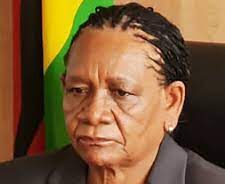
A routine question on government policy to curb plastic littering turned into drama in Parliament last week after the Minister of Environment, Climate and Wildlife urged legislators to “educate our people, especially in Bulawayo”, a remark that led to the ejection of an opposition MP from the House.
The exchange unfolded during question time when Tendeukai Matara, a Proportional Representation MP for Masvingo, asked the minister to outline government policy on controlling plastic waste, citing its economic and environmental impact.
In her response, Environment Minister, Dr Evelyn Ndlovu, acknowledged plastic littering had become widespread across the country and warned of its harmful effects on ecosystems and livestock.
“Plastic littering is prevalent in the country and the last time I spoke here, I also raised concerns about littering by all of us,” she said.
On this topic
“The majority of our people are littering, yet they are actually aware that plastic littering is damaging our environment. It also damages our livestock because if they eat that plastic, most of them die.”
Dr Ndlovu had brought a reusable flask into the chamber as a prop, arguing that behaviour change was central to tackling the crisis.
“I am carrying this flask to this Honourable House to demonstrate to all of us that, if only Parliament could put up a container outside, we can only stop littering if we do not use these plastic bottles and we use containers,” she said.
She added Zimbabwe currently lacks sufficient production of thin, biodegradable plastics that dissolve easily and is still reliant on hard plastics.
“Unfortunately, we do not have enough thinner plastics that are disposable, that can easily dissolve. We still have hard plastics as a country and we are working towards banning them to make sure that littering is stopped,” she said.
However it was her call for targeted civic education that sparked uproar.
“We must educate our people on the dangers of plastics. We must, as Hon. Members of Parliament, educate our people, especially in Bulawayo,” Dr Ndlovu said.
Bulawayo is Zimbabwe’s second-largest city, and often features prominently in national political discourse, as references to it can carry symbolic weight.
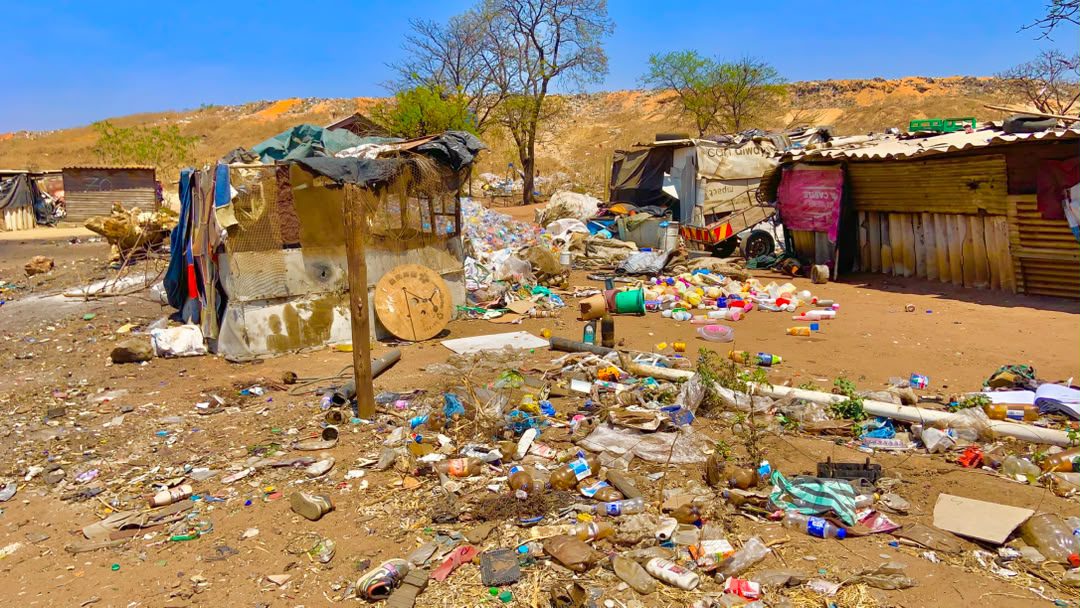
Of late, Bulawayo is bearing the costs of rampant littering, which has also blocked waterways, causing flooding during heavy rains.
However, the reference to Bulawayo immediately drew a point of order from Marondera Central MP Caston Matewu, who argued the minister had unfairly singled out one city when the question related to national policy.
“My point of order is the Hon. Minister must withdraw where she said Bulawayo because when we ask questions, we are asking Government policy and not asking her to accuse one city of littering,” Matewu said.
Matewu insisted the minister should focus on outlining policy rather than directing MPs to address residents of a specific urban centre.
“She must simply state what Government policy is towards littering and not tell us Hon. Members to go to Bulawayo and tell residents to stop littering,” Matewu said, before adding that Dr Ndlovu’s response was “not in tandem with someone who is at the level of a Cabinet Minister.”
This prompted immediate intervention from the Temporary Speaker, who ruled Matewu out of order and instructed him to withdraw his statement.
“You cannot say she is not ministerial material,” the Temporary Speaker said.
Matewu refused to withdraw his comment unless the minister retracted her reference to Bulawayo.
“I will only withdraw if she withdraws what she said about Bulawayo,” he responded, to which he was ordered to leave the chamber.
Matewu was subsequently escorted out by the Sergeant-at-Arms.
“I needed your protection. Thank you very much for protecting me,” Dr Ndlovu said to the Temporary Speaker after order was restored, before continuing her response.
The minister reiterated government policy aims to phase out environmentally harmful plastics and promote biodegradable alternatives.
She said the Environmental Management Agency (EMA) is spearheading public education campaigns and recycling initiatives nationwide.
“We are planning to phase out plastics and introduce lighter plastics, which are biodegradable,” she said.
“We are working on that programme to bring new types of equipment that will produce plastic that is user-friendly to our environment.”
In response to a supplementary question on how the government intends to hold large plastic producers and retailers accountable, Dr Ndlovu said her ministry has engaged companies in discussions on adopting cleaner technologies.
“We have asked companies like retail stores and plastic generators to come and meet with us to discuss their plans to phase out non-degradable plastics and bring in new equipment,” she said.
She added bottle manufacturers have shown cooperation in meetings aimed at transitioning towards biodegradable production methods.
During her previous tenure as Resident Minister in Matabeleland South, Dr Ndlovu said several engagements were held to push for technological upgrades.
Another MP sought clarity on how the public education programme was rolled out and whether it had already commenced.
“The programme has already been rolled out. We have started teaching people on the dangers of plastics to our wildlife and we have also been engaging companies which are producing plastics so that they change the technology that they are using and embrace bio-degradable technology,” said Dr Ndlovu.
She said plastics made from non-degradable materials are difficult to destroy and continue to pollute both urban and rural environments.
As part of the behavioural shift she advocates, the minister proposed practical steps within Parliament itself.
“As a Ministry, we are also teaching people to use flasks in order to eliminate use of plastics,” she said.
“We are going to engage Parliament to put water canisters and people can use their flasks to get water and eliminate plastics in this House.”
Zimbabwe is wrestling with mounting plastic waste, from discarded beverage bottles to single-use packaging clogging drainage systems and grazing lands.
Environmental advocates have warned that without stronger enforcement, public education and corporate accountability, the country risks long-term ecological damage.
Support CITE’s fearless, independent journalism. Your donation helps us amplify community voices, fight misinformation, and hold power to account. Help keep the truth alive. Donate today







Leave a Reply