
By Mandlenkosi Mpofu and Zenzele Ndebele
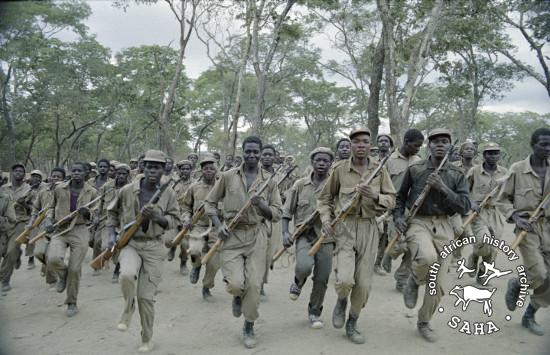
In this feature, the editors revisit the Zimbabwe People’s Army (ZIPA) through the voices of ZPRA-aligned memory, drawing from contemporary archival discussions in the WhatsApp group ZPRA Liberation Archives. The group’s chats on the ZIPA experiment, which remains one of the most contested topics among former combatants of the Zimbabwe African People’s Union (ZAPU), bring out some painful recollections. These chats were important because Yithi Laba has featured several articles from Rtd Major Sibhona, which reveal why ZPRA veterans generally remember ZIPA with regret.
Many ex-ZPRA fighters still vividly recall comrades who were senselessly killed, mostly at the hands of ZANLA in Mozambique, where ZIPA operated from. In a series of articles for Yithi Laba, the former ZPRA commander, Rtd Major Sibhona (nom de guerre Barbetone Muzwambira), summarised what he termed ‘the ZIPA experiment’ as a disaster in which ZPRA guerrillas went through horrendous experiences.
The mention of ZIPA, therefore, triggers painful memories for these former combatants. Some veterans view it as a great betrayal by their leaders, who should have known better than agree to collaborate with ZANLA.
On this topic
Yet, in Zimbabwe’s official narratives, ZIPA is a demonstration of the unity between the liberation movements – ZPRA and ZANLA – as the war drew to a close. It aligns perfectly with the post-independence narrative of unity, which is used to overlook many of the shortcomings of the ZANU leadership that rocked Zimbabwe in the early 1980s.
Unity is one of the most sacred words in Zimbabwe’s liberation vocabulary. It is spoken with reverence, invoked to silence dissent, and retrospectively used to smooth over histories of rupture and coercion.
But for many former ZPRA cadres, ZIPA stood for anything but unity. It was not a demonstration of solidarity, but an imposed political project whose costs were borne by the fighters.
While the episode was deeply painful, accounts from former ZPRA combatants and commanders indicate that ZIPA, despite its ostensibly good intentions, was never a voluntary option for the Zimbabwe African People’s Union (ZAPU) or its counterpart, the Zimbabwe African National Union (ZANU).
The Frontline States were convinced that the Rhodesians could accept a negotiated settlement and end the war if the two largest liberation movements collaborated and intensified the pressure.
The pressure to unify
By the mid-1970s, the Zimbabwean liberation struggle was no longer fought only on the battlefield. It was being reshaped by regional diplomacy, shifting Cold War alignments, and the growing impatience of Frontline States, which were hosting, funding, and increasingly managing liberation movements, at considerable cost.
Zambia and Mozambique, for instance, which respectively hosted ZPRA and ZANLA, suffered severely from bombing by the Rhodesian Air Force and the South African Air Force.
Within ZPRA memory, ZIPA is inseparable from this external pressure. Participants in the ZPRA Liberation Archives WhatsApp discussions repeatedly emphasised that ZAPU’s political leadership found itself hemmed in by regional expectations and host-country authority.
However, once ZAPU agreed to unify the liberation armies under the ZIPA umbrella, it effectively relinquished control over the operations, deployment, and conditions governing its cadres.
As one contributor reflected, ZAPU’s “hands were tight (sic)”: the party had signed onto a Frontline States project whose failure it would nevertheless be forced to own and explain, a project which also made it impossible for the party to protect its fighters. The result became evident in the lack of organic unity, which would have been necessary for the successful prosecution of the war.
ZIPA on the ground: disorder, suspicion, and detention
In official narratives, ZIPA is often used as an illustration that generally, ZPRA and ZANLA essentially prosecuted the war in collaboration and were not hostile entities. However, ZPRA testimonies tell a harsher story. On the ground, ZIPA translated into confusion of command, erosion of trust, and the rapid criminalisation of ZPRA cadres who also found themselves in hostile, unsafe environments dominated by ZANLA.
Former cadres recalled how ZIPA coincided with growing hostility in Mozambique, which became the primary operational zone. ZPRA fighters were increasingly treated as suspects, their movements restricted, and many cadres exposed to detention, disarmament, and surveillance. When Mozambique became untenable, ZPRA was forced into a dangerous and politically fraught retreat toward Zambia. But Zambia had also endorsed ZIPA, and Zambian authorities treated cadres who tried to shun ZIPA harshly, quite evidently because the Kaunda administration believed that uniting ZPRA and ZANLA would lead to a quick end to the war and ease the burden on Zambia.
Despite this harsh reality, however, cadres still recall ZIPA with considerable sadness. In these recollections, ZIPA appears less as a unified army and more as a political minefield in which ZPRA fought diplomatically to survive and remain relevant. On the ground, the situation for its fighters was quite indescribable. That survival required extraordinary manoeuvring, including persuading host governments that the unification project had failed and that ZPRA needed to regroup and continue outside the project.
The unequal costs of unity
A recurring theme in ZPRA-centred accounts is that ZIPA’s collapse did not damage all parties equally. ZPRA cadres were jailed, deported, or exposed. Training structures were disrupted. Command coherence was weakened. Meanwhile, the broader liberation struggle lost momentum at a critical moment.
For most cadres, ZIPA not only failed, but its failure was predictable, given the asymmetries involved. Unity between unequal forces, imposed from above and enforced by external actors, was always likely to produce repression rather than cohesion.
Some contributors go further, situating ZIPA within a wider diplomatic choreography. By the time Zimbabwean leaders arrived at Lancaster House years later, some argue, the outlines of the settlement had already been shaped. A fragmented liberation movement, internally divided and militarily weakened, was easier to manage than a confident, unified, but plural struggle.
Britain, Frontline States, and the illusion of neutrality
The WhatsApp discussions also reflected a deep scepticism toward Britain’s professed neutrality and the role of the Commonwealth. Participants questioned why decolonisation unfolded differently in Southern Rhodesia compared to other former British territories, and whether ZIPA functioned, intentionally or otherwise, as part of a broader strategy to discipline the liberation movements.
Within this reading, ZIPA becomes entangled with a longer history of external interference: from colonial manipulation to postcolonial diplomacy that prioritised stability over justice. The result was a liberation process that demanded unity but penalised autonomy.
After ZIPA: silence, survival, and marginalisation
For ZPRA cadres, the end of ZIPA did not mark a return to normalcy. The damage endured. The rift manifested further in post-independence violence, repression, and marginalisation suffered by former ZPRA combatants.
These memories are striking not only in their bitterness but also in their clarity. There is a persistent insistence that acknowledging ZIPA’s coercive nature is not an attack on liberation history, but a defence of it. To romanticise ZIPA, contributors argued, is to erase the suffering it produced and to misunderstand how liberation movements can be undone from within.
Why this story matters now
By publishing this feature, Yithi Laba emphasises that Zimbabwe’s liberation history must be broad enough to accommodate discomfort. ZPRA’s experience of ZIPA reminds us that unity, when coerced, can fracture rather than strengthen a struggle.
To say that ZAPU was forced into ZIPA is not to deny agency altogether, nor to absolve internal actors of responsibility. It is to situate decision-making within the constraints of power, pressure, and geopolitics.
For ZPRA, ZIPA was not simply a failed unity project but a turning point that exposed the dangers of imposed solidarity. Remembering this honestly does not weaken Zimbabwe’s liberation narrative. It restores its complexity.
Support CITE’s fearless, independent journalism. Your donation helps us amplify community voices, fight misinformation, and hold power to account. Help keep the truth alive. Donate today





Leave a Reply