

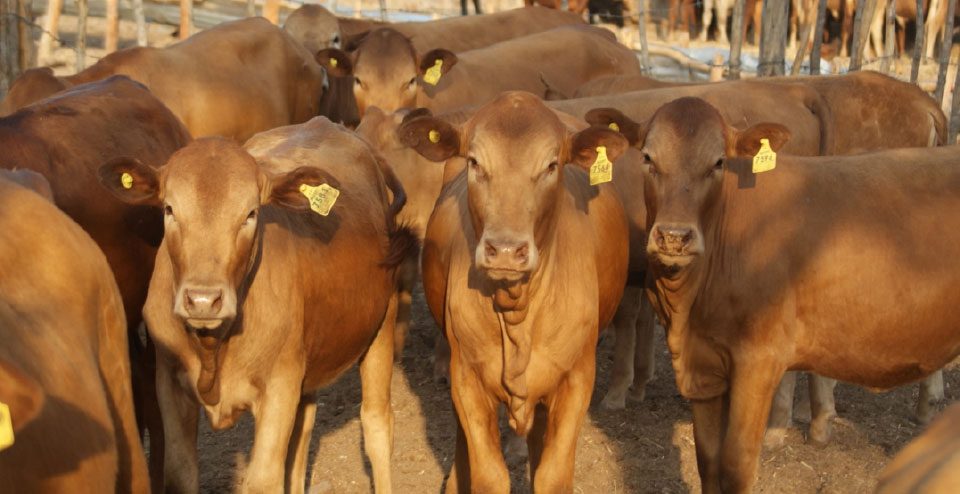
Farmers in several communities in Matabeleland say declining cattle productivity is threatening household incomes and food security, prompting renewed calls for practical training in breeding, nutrition and herd management.
Livestock owners say limited knowledge about reproductive cycles and feeding programmes is resulting in cows failing to conceive on time, leading to fewer calves and reduced earnings.
“We try our best to look after the cattle, but sometimes we do not fully understand the breeding cycle and proper feeding programmes,” said Nomandla Ndlovu, a farmer from Bulawayo. “Our cows end up failing to conceive on time, and that affects our income because we depend on selling calves to support our families.”
Others say high feed costs and reliance on natural grazing, particularly during dry seasons, are worsening the problem.
On this topic
“Feeds are costly and sometimes we rely on grazing alone, which is not always enough, especially during dry seasons,” said Bekezela Mahlangu, a farmer from Keisington. “When cows lose weight, they take longer to conceive, and this delays calving. We really need more guidance on nutrition and reproductive management.”
Farmers argue that limited access to extension services and training is leaving many to rely on traditional practices that may no longer be effective.
“Farmers, especially those in rural areas, cannot easily access training or afford the cost of getting proper livestock information,” said Nqabutho Sibanda, another Bulawayo-based farmer. “We need more guidance on nutrition, feed planning and reproductive management so that we can keep our cattle healthy and productive throughout the year.”
Livestock experts say improving knowledge and planning could significantly raise productivity.
Animal specialist at EL Ganado Consultancy, Nqobani Manyabi, said a profitable beef operation depends on aligning breeding, nutrition and overall herd management.
“Cows must have a marketable calf every 365 days,” he said. “This might sound easy, but when you look at the days and the obstacles to overcome, it becomes more complex.”
He said understanding the annual production cycle was central to achieving this goal, noting that the average gestation period for cattle is about 283 days.
“Day zero of the production cycle is calving, and the most critical phase is from calving to conception,” Manyabi explained. “With a 365-day production cycle, this phase can only last up to 82 days if a farmer is to produce a calf every year.”
During this period, he said, cows are lactating and under heavy nutritional stress, while the suckling of calves can suppress reproductive hormones, further delaying conception.
Manyabi added that after conception, cows must support their own bodies, a suckling calf and a developing fetus, increasing nutritional demands.
He said weaning, which usually occurs around day 200 of the cycle, presents the best opportunity for farmers to rebuild body condition because nutritional requirements drop once lactation stops.
“The final phase before calving is when most fetal growth occurs, and this is when the cow’s nutritional needs rise again,” he said. “Farmers must provide higher quality feed to ensure both the cow and calf remain healthy.”
Farmers say they hope that increased training programmes and accessible extension support will help reverse declining productivity and strengthen livelihoods dependent on cattle production.
Support CITE’s fearless, independent journalism. Your donation helps us amplify community voices, fight misinformation, and hold power to account. Help keep the truth alive. Donate today





Leave a Reply