

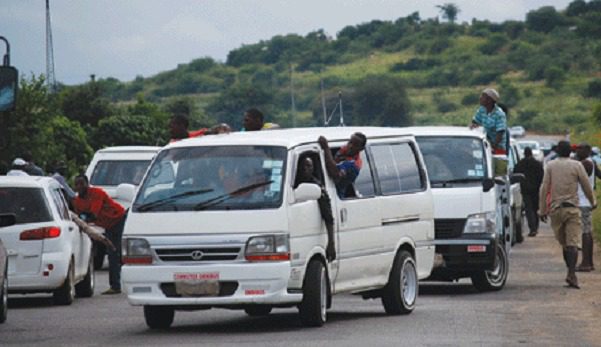
Bulawayo City Council’s pledge to restore order to the city’s chaotic public transport system by January 2026 has passed without tangible change, as congestion, illegal pick-up points and unlicensed operators continue to dominate the central business district (CBD).
Council had set January as a deadline to eradicate illegal pick-up and drop-off points following sustained complaints from residents, licensed transport operators and councillors.
Concerns intensified last week after two people were killed and at least 12 others injured in separate traffic incidents along Sixth Avenue, renewing calls for stricter enforcement and improved regulation of public transport in the city centre.
At the centre of the problem is a Public Transport Policy adopted in 2012, designed to establish a safe, efficient and coordinated system through clearly defined routes, designated termini and registered operators.
On this topic
Implementation of the policy stalled during the Covid-19 pandemic after the government declared the Zimbabwe United Passenger Company (Zupco) the sole public transport provider. Enforcement resumed in 2022 when the sector was reopened to other operators, but councillors say progress has been slow.
Council says six transport companies are currently operating under Service Level Agreements (SLAs), which outline approved routes and operational responsibilities. These include Tshova Mubaiwa Transport Co-operative Company (Private) Limited, Bulawayo City Transit Trust, BUPTA Limited, VUTA Taxis (Private), BUWTRA and Zupco.
However, council officials acknowledged that most of these operators are not servicing intra-city routes as intended.
Operators are required to pay annual operational fees to the municipality as part of the route permit application process with the Ministry of Transport. Fees are set at US$180 for commuter omnibuses carrying between seven and 19 passengers, US$200 for vehicles carrying more than 19 passengers, and US$150 for metered taxis.
Despite these requirements, council estimates that about 3,000 commuter omnibuses operate in Bulawayo, with only a fraction seeking formal route approval.
The city has three designated inter-city termini, Renkini Long Distance Bus Terminus, Entumbane and Nkulumane, but council says operators continue to operate illegally from the CBD.
According to council, many inter-city and cross-border operators regard the termini as unattractive due to dilapidated infrastructure, prompting them to pick up passengers from unauthorised locations.
Council minutes cite several challenges, including non-compliance with permit requirements, traffic congestion in the CBD, use of undesignated ranks, limited enforcement capacity, unbranded vehicles, including so-called mshikashika, funding constraints and the presence of heavy-duty trucks in the city centre.
Councillor Edwin Ndlovu blamed the council for inconsistent enforcement.
“Enforcement should be done on a level playing field,” he said, adding that illegal operators had established unauthorised pick-up points along Sixth Avenue, Leopold Takawira Street, Herbert Chitepo Street, Fourth Street and Eleventh Avenue.
He also raised concerns over Tshova Mubaiwa Transport Co-operative Company’s use of the Pick n’ Pay Hyper terminus to service routes outside its designated area, which he said created unfair competition.
Temporary barricades previously installed along Sixth Avenue had since been removed, further weakening enforcement, he added.
Councillor Ndlovu also cited complaints from local operators who alleged preferential treatment of outside companies, saying council had approved the use of a coach parking bay near a city hotel while rejecting similar applications from local businesses.
Ward 19 councillor Lazarus Mphadwe said the mushrooming of illegal pick-up points was contributing to littering and illegal dumping in the CBD.
“It is high time council implements a coordinated enforcement strategy with other stakeholders,” he said.
Ward 12 councillor Susan Sithole echoed the call, saying order must be restored in the city’s public transport system.
Council chairperson Dumisani Netha also criticised weak enforcement, urging authorities to engage stakeholders and fully implement the Public Transport Policy.
In response, the Director of Town Planning, Wisdom Siziba, said recent enforcement operations along Sixth Avenue had led to the impounding of several VUTA Taxis vehicles operating illegally.
He warned the company to comply with city by-laws and policies.
Siziba said the deadline for eliminating illegal pick-up and drop-off points had been set for January 2026, and that Tshova Mubaiwa had been instructed to relocate part of its fleet to designated termini.
Council said a report on Tshova Mubaiwa Transport Co-operative Company’s use of the Pick n’ Pay Hyper terminus for unauthorised routes would be presented in February 2026.
According to council minutes, the company’s chairperson had pledged compliance, while council indicated that all public transport ranks belong to the municipality and have specific routes assigned.
The minutes also noted that the Public Transport Policy is expected to be formalised into a city by-law.
Support CITE’s fearless, independent journalism. Your donation helps us amplify community voices, fight misinformation, and hold power to account. Help keep the truth alive. Donate today





Leave a Reply