
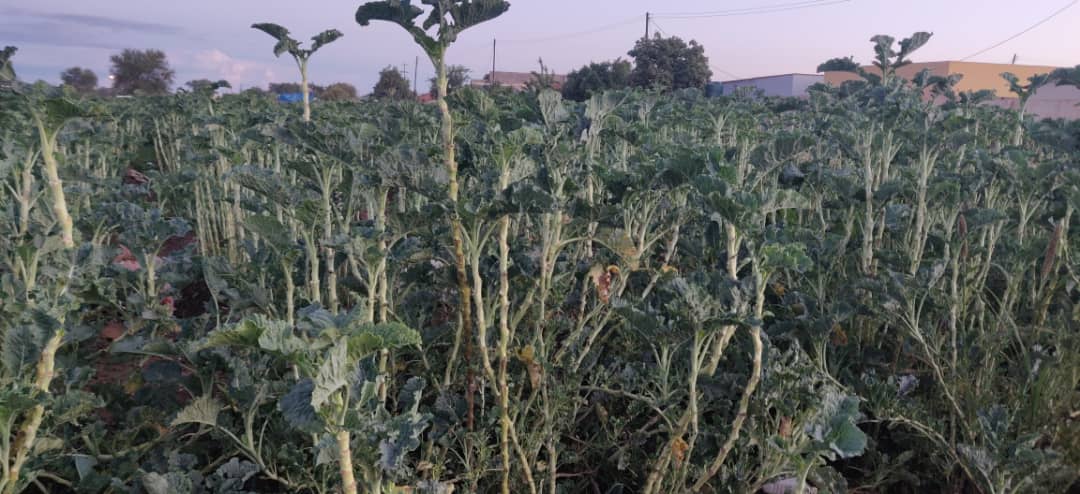
Bulawayo’s community gardens, started more than two decades ago as a grassroots solution to hunger, poverty and climate shocks, are facing acute challenges that are severely threatening their survival, an investigation has shown.
Chronic water shortages, failing boreholes, insecure land tenure and weak institutional support are pushing projects meant to protect vulnerable communities into a state of permanent crisis.
The investigation across Bulawayo’s high-density suburbs supported by Information for Development Trust (IDT) shows that, while community nutrition gardens continue to provide food and small incomes, their long-term sustainability is under threat.
Yet, despite these pressures, the gardens still deliver important, even if fragile, gains for women, widows, the elderly and unemployed youths.
On this topic
Birth of the gardens
Community gardens in Bulawayo began emerging in the early 2000s and were formalised through the city’s 2000 Urban Agriculture Policy.
The initiative aimed to improve food security, reduce poverty and create income for vulnerable urban households at a time when formal employment was already declining.
Donor organisations and the city council supported the establishment of gardens in suburbs such as Entumbane, Emganwini, Nkulumane, Nketa, Luveve and Lobengula.
World Vision, says its national operations director, Khumbulani Ndlovu, donated US$15 000 for the establishment of each garden, including the sinking of boreholes, land clearing and fencing but the exact number of projects funded by the organisation in Bulawayo could not be established.
The gardens were subsequently handed over to the communities, which have been running them on their own for years, with some intermittent support from the council.
But one of the problems in recent years has been the poor availability of water.
Water crisis
For Bulawayo City Council (BCC), water shedding has become a recurring feature of city life, driven by low dam levels, ageing infrastructure, power outages and rising demand.
According to council minutes of 28 November 2025, the combined storage capacity of dams supplying Bulawayo stood at 38.41 percent as of 20 October 2025.
While this represented an 11 percent increase compared to the same period in 2024, operational challenges drove actual daily water output down from a potential 165 mega litres to about 111 mega litres.
For community gardens, these figures translate into uncertainty, rationing and conflict.
According to the 2024 Urban Nutrition Assessment by the Zimbabwe Livelihoods Assessment Committee (ZimLAC), 92.2 percent of Bulawayo residents are dissatisfied with the city’s water supply.
Community gardens are no longer just food production sites but have become critical water points for entire neighbourhoods despite the fact they are grappling with serious maintenance problems and dwindling numbers.
During visits to gardens such as Siqalo, Sibambene, Mandlakhe and Simunye, where choumoellier, because of its long garden life, is the most popular vegetable, long queues of residents were waiting for water were a common sight.
Boreholes originally drilled to support only gardening and household use are now serving estimated thousands of people during extended water shedding periods.
This has placed gardens at the centre of daily conflict over water access.
At Sibambene Garden in Entumbane, with a population of 27 545 people and established in 2005 with support from World Vision, the farmers, now on their own, have to devise ways to ensure they keep going.
The garden has 100 members and relies on a borehole powered by solar and they are now resorting to making residents pay to draw water from the borehole.
“As you know, even in households, residents pay for water. We have solar panels and security guards here and we have to pay them. If we don’t, people vandalise the boreholes (because there will be no security),” said Enos Nyowa, a garden member.
“We spoke to council about it and we make them (residents) pay R5 (US 30 cents) for two (20-litre) buckets. We are then able to fix our borehole when there is a breakdown. We are not selling water but it’s a service (to the community),” he added.
Irrigation at the project is highly manual as farmers use buckets to water vegetables since they cannot afford modern means such as drip, a situation that is too demanding for the elderly who are forced to pay other people to do it for them.
Paslina Ncube, another member, said the garden members paid US$10 towards the purchase of solar panels planned for pumping water, with Prisca Lunga adding that the farmers also contributed US$2.50 each per month for the security guards’ US$100 monthly wages.
The high rate at which residents are drawing water from the borehole poses a new threat, a gradual drop in the water table and eventual drying up.
Another member, Paslina Ncube, defended the practice and said BCC granted them permission to charge residents small amounts during severe water shortages.
At Mandlakhe Garden in Emganwini, home to 22 300 people, garden members said they charge R1 per bucket.
“It’s for breakdown emergencies because we fix these pipes, water pump or taps ourselves,” said Sibongile Sibanda.
Reliance on a single borehole has become one of the greatest weaknesses of Bulawayo’s community garden model.
At Sibambene, the need to allow residents to draw water from the same borehole means that the members sometimes have to stop irrigating their gardens, says Lunga.
Just across the road from the Sibambene project is Simunye Garden, where 30 farmers are struggling after their borehole sunk by the council dried up.
Farmers now rely on shallow wells to water the garden.
“This is a council garden. They were meant to develop it for us and we are currently struggling to get water,” said Dingani Ncube, one of the garden farmers.
Poor support
Agronomist Walter Moyo observed that lack of consistent support for the gardens by the council and other supporters was widespread, warning of the danger of overuse.
“If many gardens rely on shallow wells or boreholes in the same aquifer, they can contribute to localised water depletion especially during droughts when recharge is low,” he said.
Farmers confirmed that water stress worsens toward the end of the year.
“From January to August, the garden is helping me,” said Silethokuhle Ndlovu. “From October to November, we will be really struggling.”
BCC’s ability to support gardens during crises has steadily declined, the investigation established.
In 2025, council minutes confirmed that only one of the city’s seven water bowsers was operational.
During a senate session on 19 August 2025, Tambudzayi Mohadi, a senator from the ruling Zanu PF, called for the procurement of 15 additional bowsers.
“Only one functional bowser for the City of over 650 000 residents is a gross mismatch,” she said.
Without bowser support, gardens are left to manage breakdowns and dry spells on their own, further exposing their vulnerability.
Beyond water, land tenure is a major threat to the sustainability of garden projects.
Disputes and uncertainty
The Entabeni community garden in Nkulumane, established around 2009, has collapsed due to a land dispute with Gospel Preaching Ministries (GPM).
According to a member, Mariah Moyo, the garden had five types of members, namely people with disabilities, the vulnerable, widows, the elderly and the sick.
They started with 100 members but the number has dropped to 60, because of frustration over the land dispute, failure to farm and no income, said Maria Moyo.
She said the dispute has delayed borehole repairs and excluded farmers from the land.
The then, caretaker councilor for Ward 20 in 2021 where the garden lies, Rodney Jele, had initially said the farmers were not entitled to the plot.
“It seems the church was given the stand in 2008 while the residents started farming in 2009. This place belongs to the church,” he said.
Similar uncertainty affects Millennium Garden in Emganwini where council allocated the beneficiaries a temporary plot on a residential stand. .
Since they are not guaranteed of permanence, the beneficiaries are reluctant to invest in the security of their project.
“Some members are now dragging their feet in terms of contributing money to buy a fence as we fear that the garden will be taken away from us,” said Juliet Moyo.
Limited access to technical knowledge further undermines sustainability as the farmers mostly rely on their own rudimentary knowledge of horticulture.
“We only get basic information from the council, like doing crop rotation,” said Noah Marandu from Hlanganani Garden. “We don’t get detailed information such as which diseases affect vegetables or how to eradicate them.”
An agronomist, Walter Moyo, bemoaned the repeated cultivation of the same crop on the land, poor soil management and lack of climate-resilient seeds at the gardens
“Tilling and leaving soil exposed increases evaporation,” he said. “Overdependence on a single borehole or shallow wells creates extreme vulnerability,” he added.
An environmental consultant, Tellmore Ndlovu, said the current model tended to also flood markets with the same crops, a trend that whittled the small profits that the farmers made.
“Because of lack of profits, some end up opting for retained seeds instead of hybrid certified seeds,” he said.
In the populous Cowdray Park, home to over 70,000 people according to the 2022 national census, residents feel excluded from garden horticulture.
“I am a widow and having a community garden will allow me to sell vegetables so that my family can survive,” said Sihle Nyathi.
Sewer vegetables
Dogged by perennial shortages of water amid frequent sewer failures, residents from Cowdray Park are now cultivating vegetables near unregulated sewerage ponds.
BCC has previously warned against the use of sewer water for cultivation but hardly enforces against the practice.
According to the BCC Cleansing Superintendent, Nkanyiso Ndlovu. vegetables grown on sewer water could retard the intellectual development of children and cause premature puberty, skin rash, stomach and respiratory problems, ulcers, weakened immune system, kidney and liver damage as well as lung cancer,.
A 2012 study on Bulawayo vegetables revealed that 97 percent choumoellier samples exceeded the World Health Organisation (WHO) and United Nations Food and Agriculture Organisation (FAO) maximum levels of cadmium, with 40 percent bearing excessive lead.
A community health worker in Cowdray Park, Silobile Hove, confirmed the use of sewerage to water vegetables in the suburb.
“The challenge is that there (are) no boreholes in Cowdray Park, so some people now follow burst sewer water and establish gardens,” said Hove
Ward 28 councillor, Ntando Ndlovu, said: “One of the major challenges has been the low water table in the area, which makes it difficult and costly to sink boreholes”, and added that he was “working with relevant stakeholders to ensure Cowdray Park residents can access safe and dignified means of urban farming.”
The current Bulawayo master plan, he said, did not allow for the establishment of community gardens for Cowdray Park even if the water table had permitted the sinking of moderate-depth boreholes,
But despite their fragility, community gardens continue to deliver important benefits.
Women say the gardens provide independence.
“We are now able to buy salt, we are also able to buy stationery for our grandchildren,” said Paslina Ncube.
Youth earn small incomes by assisting elderly farmers.
“There are some young people who come here seeking to water the garden for the elderly,” said Johnson Mutangi.
Widows describe the gardens as a lifeline.
“When I get two or three customers I can buy salt or soap,” said Marble Maphosa.
HOW WE REPORTED THIS
This investigation was conducted over several months through a combination of field reporting, interviews and document review across high-density suburbs in Bulawayo, including Entumbane, Emganwini, Nkulumane and Cowdray Park.
The reporter visited multiple community nutrition gardens, observing irrigation practices, water access arrangements, crop conditions and interactions between gardeners and surrounding residents during water shedding periods.
More than 15 interviews were conducted with women and elderly gardeners, youth, residents, vendors, community health workers, agronomists, climate change specialists, constitutional experts and local leaders.
To verify claims and provide context, the investigation reviewed Bulawayo City Council minutes, Zimbabwe Livelihoods Assessment Committee (ZimLAC) reports, the National Water Resources Master Plan 2020–2040 and public health studies on wastewater irrigation.
Efforts were made to obtain comments from municipal officials and organisations involved in the gardens.
Support CITE’s fearless, independent journalism. Your donation helps us amplify community voices, fight misinformation, and hold power to account. Help keep the truth alive. Donate today






Leave a Reply