


Zimbabwe recorded a surge in water-borne and sanitation-related diseases in the week ending 4 January 2026, with common diarrhoea and dysentery accounting for a large proportion of reported infections, according to the Ministry of Health and Child Care’s latest Weekly Disease Surveillance Report.
Health authorities recorded 4 903 cases of common diarrhoea and two deaths. Nearly four in 10 cases (39.6%) were among children under the age of five. Mashonaland West reported the highest number of cases at 835, followed by Manicaland with 716.
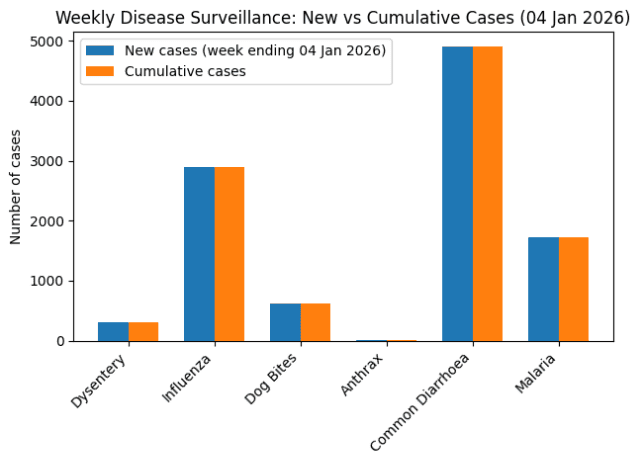
Dysentery accounted for 314 cases during the reporting period, with Manicaland (72) and Mashonaland West (63) the most affected provinces. No deaths were reported, and cumulative figures remain at 314 cases and zero fatalities.
The report also noted a sharp increase in suspected influenza cases, with 2,893 infections recorded nationwide. Manicaland (925) and Mashonaland West (898) reported the highest numbers. No influenza-related deaths were recorded.
On this topic
Malaria cases rose to 1 725, with four deaths reported, signalling a deadly start to the year for the mosquito-borne disease. The fatalities were recorded in Mashonaland Central, Mashonaland West and Harare Metropolitan Province. Children under five accounted for 11.1% of infections, while Mashonaland Central (630) and Manicaland (456) recorded the highest case numbers.
Health officials also reported 619 dog bite cases, though no deaths were recorded. More than half of the cases (57.7%) involved dogs of unknown vaccination status, while 23.7% were linked to unvaccinated dogs, raising concerns about the risk of rabies. Masvingo (109) and Midlands (96) recorded the highest numbers.
In addition, six anthrax cases were confirmed in Gokwe North (five) and Gokwe South (one) districts in Midlands Province. No fatalities were reported.
Support CITE’s fearless, independent journalism. Your donation helps us amplify community voices, fight misinformation, and hold power to account. Help keep the truth alive. Donate today




Leave a Reply