

Legal practitioners and children’s rights activists have called on Parliament to push for the enactment of the Child Justice Bill, citing that the ongoing delay denies child offenders access to child-friendly justice procedures.
The Bill, which was tabled in 2021 and passed in 2023, was developed to establish a separate justice system for children who come into conflict with the law; however, it still awaits presidential assent.
In line with the values and principles underpinning the Constitution and international obligations, the proposed system will be largely premised on the restoration and rehabilitation of juvenile offenders, rather than a punitive approach.
Section 81(1)(i) of the Constitution outlines the rights of children in detention, stating they have the right:
On this topic
- Not to be detained except as a measure of last resort and, if detained—
- To be detained for the shortest appropriate period;
- To be kept separately from detained persons over the age of eighteen years; and
- To be treated in a manner, and kept in conditions, that take account of the child’s age.
- Section 81(2): A child’s best interests are paramount in every matter concerning the child.
- Section 81(3): Children are entitled to adequate protection by the courts, in particular by the High Court as their upper guardian.
UNICEF notes that although the Government of Zimbabwe has made notable progress in ratifying the Convention on the Rights of the Child and establishing a National Case Management System (NCMS), the sector continues to face major constraints, including weak child-sensitive justice systems.
A recent case highlighting these challenges involves 14 juveniles from Bulawayo, aged 14 to 17, who were arrested on several counts of unlawful entry, burglary, and theft.
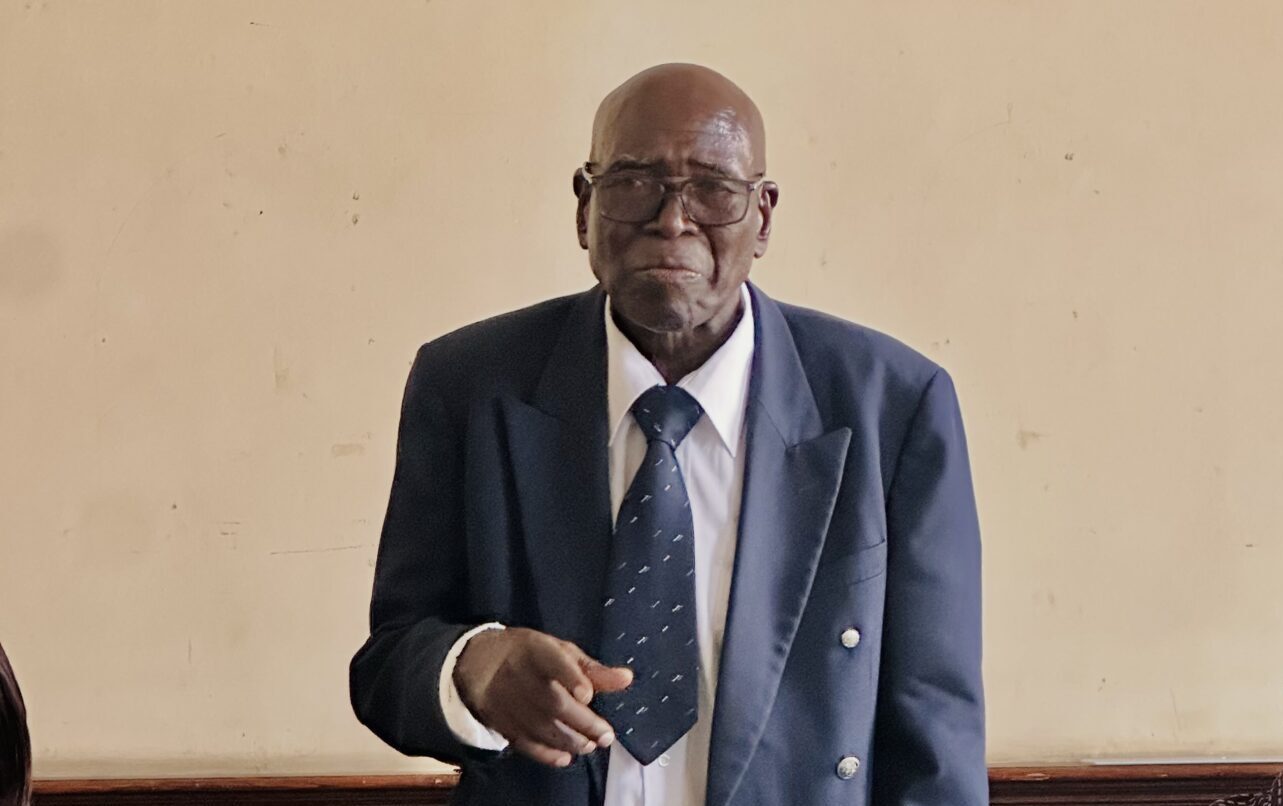
Legal practitioner Dr. Tanaka Muganyi, in an interview with CITE, said while detained children should be protected by law, there is a lack of a legal framework that gives effect to constitutional provisions on how they should be managed and protected by the courts.
He explained that there has been no specific legislation outlining how cases involving juvenile offenders should be handled. Consequently, matters involving children in conflict with the law have been left to general legislation and child-specific policies developed over time.
Dr. Muganyi noted that under current law, a child below the age of seven is irrebuttably presumed to lack criminal capacity and cannot be prosecuted, while the Bill seeks to raise the minimum age to at least 12 years.
“Clause 5 of the Bill speaks to, among other things, adherence to the rights and obligations of children as contained in international and regional instruments, with particular reference to the United Nations Convention on the Rights of the Child and the African Charter on the Rights and Welfare of the Child,” he outlined.
“Our Constitution, which is one of the best in Africa, gives us the basic right, but for that right to be enforced we need an Act of law. This Bill is thus the panacea to the challenge that we face in courts when dealing with children’s matters.
“Parliament now needs to push for the enactment of this Bill into law. It is now more a case of political will, but from the look of things, we do not think the President would refuse to pass such an important law which will align with international standards.”
A children’s rights activist, speaking on condition of anonymity, also stressed the importance of signing the Bill into law to effectively implement restorative justice.
“The issue is that the Bill was tabled in 2021 and underwent all procedures, from consultations countrywide, readings, parliamentary portfolio processes and all. By March 29, 2023, it had been passed by both the Senate and the National Assembly, but to date it has not been approved by Cabinet nor signed into law by the President,” the activist said.
“Zimbabwe has no set guidelines with regard to child offenders and, as such, it is difficult to handle such cases. There is a rise in child offenders, some of whom are involved in serious crimes such as murder, robbery, theft and malicious damage to property, among others.
“The Bill outlines clear procedures, diversion processes, due process, restitution and community service options. Stalling it for so long means challenges in dealing with children in conflict with the law will persist. We hope necessary procedures will be done to finalise the enactment.”
Support CITE’s fearless, independent journalism. Your donation helps us amplify community voices, fight misinformation, and hold power to account. Help keep the truth alive. Donate today




Leave a Reply